
How to Choose a Birding Tour Company in Uganda
Choosing the right birding tour company in Uganda can have a major influence on the quality of your birdwatching experience. Uganda offers an exceptional mixture of tropical forests, papyrus wetlands, open savannahs, lakes, rivers and montane habitats, but simply visiting these places does not automatically result in a well-planned birding safari.
Birding tours require a different approach from conventional wildlife safaris. On a general wildlife safari, the main objective may be finding elephants, lions, giraffes, buffaloes and other large mammals during game drives. A dedicated birding safari is usually slower and more detailed. It may involve listening for calls inside dense forest, walking quietly along trails, scanning wetlands, stopping repeatedly along roads, and spending considerable time searching for one difficult target species.
This makes specialist knowledge particularly important.
A capable birding operator should understand more than the names of Uganda’s popular national parks. The company and its guides should understand bird habitats, identification, calls and songs, seasonal movements, realistic driving distances and the times of day when different habitats are likely to be most productive.
The right company should also understand that not every birder wants the same safari.
A beginner may want an enjoyable introduction to Uganda’s birds while combining birdwatching with wildlife viewing. An experienced birder may arrive with a detailed target list and want to spend several hours searching for a particular forest species. A bird photographer may prefer fewer destinations, slower days and more time waiting for good light and positioning.
Price therefore should not be the only consideration when comparing Uganda birding companies.
A lower-priced itinerary may appear attractive but provide limited specialist guiding, long transfers, poorly located accommodation or insufficient time in important habitats. A more expensive itinerary is not automatically better either. Travelers should examine what they are actually receiving.
Important factors include licensing, birding-guide experience, itinerary design, responsible birdwatching practices, transportation, accommodation location, communication, inclusions, and the operator’s understanding of your personal birding objectives.
Wild Planet Safaris can organize customized Uganda birding itineraries according to the traveler’s available time, preferred habitats, accommodation category, photography interests, and target species. Travelers with specific bird targets should share their list before the itinerary is finalized so the route can be planned around appropriate habitats without promising sightings of wild birds.
Why Choosing the Right Birding Tour Company in Uganda Matters
Two Uganda birding itineraries of the same length can produce completely different experiences depending on how they are designed and guided.
A knowledgeable birding company does not simply connect famous national parks. It should consider what birds the traveler wants to search for, which habitats are relevant, how long transfers take, and how much genuine birding time remains after transportation and other activities.
The Quality of Your Birding Guide
Your guide can be one of the most important elements of the entire safari.
Uganda’s birdlife includes species occupying dense forests, papyrus wetlands, grasslands, woodland, lakeshores, river systems and high-elevation habitats. A guide needs to know how to work within these different environments.
In open savannah, visual identification may be relatively straightforward. Inside a dense forest, however, the experience can be completely different. A bird may call repeatedly from nearby vegetation without providing a clear view.
An experienced birding guide can use calls, habitat, behavior, and subtle field characteristics to help locate and identify species.
The guide should also know when to wait.
Constantly moving through a forest is not always productive. Sometimes the better approach is to stop, listen, and allow a mixed feeding flock or secretive bird to reveal itself.
The Amount of Actual Birding Time
When comparing companies, do not look only at the number of days advertised.
Ask how many of those days provide substantial birding.
For example, a 12-day itinerary containing several extremely long transfers may provide less productive birding time than a carefully designed 10-day itinerary concentrated on complementary habitats.
Birders should pay particular attention to:
- Departure times
- Transfer distances
- Number of nights at important birding destinations
- Time allocated to forest trails
- Boat excursions
- Morning and afternoon birding sessions
- Optional activities that may reduce birding time
A specialist itinerary should prioritize time in productive habitat, not simply the number of destinations mentioned in the brochure.
Choice of Birding Destinations
The best destinations depend on what the traveler wants to see.
A traveler interested primarily in wetland species requires a different itinerary from someone concentrating on Albertine Rift-associated birds.
Similarly, someone wanting to combine birds with large mammals may spend more time in savannah national parks, while a forest specialist may devote considerably more time to Bwindi, Kibale, or other forest environments.
A knowledgeable company should be able to explain why each destination appears in your itinerary.
Searching Appropriate Habitats for Target Species
Experienced birders frequently travel with target lists.
A useful birding company should study that list and identify which habitats and destinations are relevant.
For example, searching repeatedly in unsuitable habitat wastes valuable safari time regardless of how skilled the guide may be.
Target-species planning involves understanding:
- Habitat preferences
- Elevation
- Geographic distribution
- Seasonal considerations
- Bird behavior
- Recent local knowledge where available
- Realistic searching time
Even excellent planning cannot guarantee a sighting. Birds remain wild, and weather, movement, breeding behavior, and many other factors affect what is encountered on a particular day.
Safari Vehicle and Comfort
Birding safaris can involve many hours in a vehicle.
The vehicle therefore affects more than transportation.
Good visibility makes roadside birding and savannah observations easier. Photographers need space to handle camera equipment safely. Travelers also need sufficient comfort for long journeys between regions.
A private safari vehicle can provide additional flexibility because the group may be able to stop when interesting birds are encountered along the route.
Transfer days can therefore remain part of the birding experience rather than simply becoming transportation days.
Accommodation Location
For serious birders, where a lodge is located can sometimes matter more than how luxurious it is.
Imagine having to drive for an hour before reaching the forest every morning. A lodge closer to the birding area may allow the group to begin much earlier.
This is particularly important because morning can be a productive period for bird activity.
Accommodation should therefore be evaluated according to comfort, budget, and its relationship to the day’s birding activities.
Bird Photography Opportunities
Photographers have different requirements from checklist-focused birders.
A checklist-focused group may identify a bird and move on immediately. A photographer may want to remain with the bird, waiting for:
- Better light
- A cleaner background
- A more open perch
- Feeding behavior
- Flight
- Interaction between birds
- A more favorable angle
A company organizing photography-focused birding should understand that this requires a slower itinerary.
Park and Activity Arrangements
Birding itineraries can involve national park entry, forest walks, local guides, boat excursions, and other scheduled activities.
The company should coordinate these arrangements clearly and explain what is included in the safari price.
If gorilla trekking or chimpanzee tracking is added, the itinerary also needs to account for permits and activity schedules.
Overall Safari Pace
A good birding safari should not feel like a race around Uganda.
Serious birding often involves waiting, listening, and revisiting productive habitats.
A company that understands birding should be willing to recommend fewer destinations when that creates a better experience.
Dedicated Birding Safari vs a Normal Wildlife Safari
This distinction is important when choosing a birding tour company in Uganda.
A normal wildlife safari may certainly include birds. Travelers might stop for an African Fish Eagle, Grey Crowned Crane, kingfisher, hornbill, or other conspicuous species while searching primarily for mammals.
That is different from a dedicated birding safari.
On a specialist birding trip, birds influence the entire itinerary.
The group may leave before breakfast to reach productive habitat early. The vehicle may stop for small birds that a conventional safari would drive past. Forest walks may last several hours. Guides may identify birds by sound before they are visible. Accommodation may be selected partly because it provides convenient access to a birding location.
A dedicated birding safari may also spend considerable time searching for one target species.
Neither approach is inherently better. The right choice depends on the traveler’s interests.
Travelers who primarily want elephants, lions, gorillas, and general sightseeing with some casual birdwatching may prefer a conventional wildlife safari incorporating birds.
Travelers who have come specifically to explore Uganda’s birdlife should choose an itinerary designed around birding from the beginning.
1. Check Whether the Birding Tour Company Is Licensed
Before evaluating target species and accommodation, travelers should establish whether the company operates legitimately.
A professional website alone should not be treated as proof that an operator meets the relevant tourism and business requirements.
Verify the Company’s Tourism Credentials
Ask the company for its full business details and check the relevant tourism credentials through appropriate official sources.
Travelers should consider several areas.
Tourism licensing: Check whether the operator holds the appropriate tourism credentials required for its operations.
Business registration: A legitimate tourism company should operate through an identifiable business entity.
Official contact information: Look for consistent company contact details, including telephone numbers, email addresses, and other official communication channels.
Booking documentation: Before paying, travelers should receive documentation showing what they are booking, travel dates, services, and payment conditions.
Transparent payment procedures: The company should explain the deposit, balance, payment method, and any applicable transaction conditions clearly.
Be cautious when payment instructions suddenly change or when a person requests money through an account unrelated to the company without a clear explanation.
Why Licensing Matters
Licensing is an important trust signal because it helps travelers distinguish established tourism businesses from unidentified individuals presenting themselves online as safari operators.
However, licensing should be treated as one part of the evaluation process.
A licensed general safari company is not automatically a specialist birding company.
After verifying legitimacy, travelers should investigate the company’s actual birding expertise.
Ask about its guides, destinations, itinerary planning, and experience working with birders.
The ideal combination is an appropriately established operator with genuine birding knowledge—not simply one or the other.
2. Look for Genuine Uganda Birding Experience
A driver-guide can be excellent at finding elephants, lions and other large mammals without necessarily having the specialist knowledge required for a dedicated birding safari.
Bird identification can involve subtle differences in plumage, calls, habitat, behavior and distribution.
A genuine birding company should therefore be able to demonstrate an understanding of Uganda’s different bird communities.
Forest Birds
Forest birding requires patience and excellent listening skills.
Destinations such as Bwindi, Kibale, Budongo, Semuliki and Mabira can contain dense vegetation where birds are much easier to hear than see.
Guides should understand how to locate birds within different forest layers and how to interpret calls.
They should also recognize that forest birding cannot always be rushed.
Wetland Species
Wetlands provide a completely different experience.
A birding guide should understand open-water species, papyrus-associated birds, marsh species, and the different environments found around Uganda’s lakes and wetlands.
The Shoebill is one of the country’s most sought-after wetland birds, but specialist wetland birding should extend far beyond searching for a single famous species.
Savannah Birds
Savannah birding requires the ability to identify birds from a moving or stationary vehicle, recognize distant silhouettes, and understand how birds use open grassland, woodland, and bush habitats.
Uganda’s savannah parks can provide opportunities to search for raptors, hornbills, bee-eaters and numerous other species while simultaneously watching large mammals.

Raptors
Raptor identification can be difficult, particularly at a distance.
A specialist guide should be familiar with differences in shape, flight style, plumage, behavior and habitat.
This is especially useful when several potentially similar species occur within the same broader region.
Migratory Birds
Seasonal visitors add another dimension to Uganda birding.
A knowledgeable guide should understand that bird occurrence can change throughout the year and avoid assuming that every species recorded at a location is equally likely during every month.
Albertine Rift Specialties
Experienced international birders often place considerable importance on the Albertine Rift region.
Southwestern Uganda therefore becomes particularly significant for specialist itineraries.
A company planning this type of trip should understand the importance of destinations such as Bwindi and Mgahinga, as well as other suitable montane habitats, rather than treating southwestern Uganda only as a gorilla trekking destination.
Bird Behavior
Identification becomes easier when guides understand how birds behave.
Where does the bird normally feed? Does it prefer the canopy, understory, ground, or water’s edge? Is it usually solitary or encountered in groups? Does it regularly join mixed-species flocks?
Behavior can provide important clues even before plumage is clearly visible.
Calls and Songs
Sound identification is one of the clearest differences between casual birdwatching and specialist guiding.
In forests, birds can remain completely hidden while calling nearby.
A guide who recognizes vocalizations can alert the group, determine where to look, and distinguish between species that might otherwise remain undetected.
Habitat Preferences
A knowledgeable guide should understand not merely which birds occur in Uganda, but where they are most appropriately searched for.
This habitat knowledge becomes especially important for travelers arriving with target lists.
3. Ask Who Will Actually Guide Your Birding Safari
Do not choose a company solely because its website contains beautiful bird photographs.
Ask who will actually be with you in the field.
The guide’s knowledge, patience, and communication style can influence every day of the safari.
Who Will Be My Bird Guide?
Ask for information about the person or guiding arrangement expected for your trip.
If a particular specialist guide cannot be confirmed far in advance, the company should at least be able to explain what level of birding expertise will be provided.
Does the Guide Specialize in Birdwatching?
There is an important difference between someone who knows common safari birds and someone capable of leading a dedicated birding itinerary.
If birdwatching is your main reason for visiting Uganda, make this clear before booking.
Can the Guide Identify Birds by Calls?
This is particularly important for forest birding.
Ask whether the guide regularly works with vocal identification rather than depending entirely on visual sightings.
Which Birding Destinations Does the Guide Know?
Local familiarity matters.
Knowing a national park exists is different from understanding its productive trails, habitat changes, practical logistics, and birding patterns.
Guides familiar with particular regions may know where different habitats begin and which areas deserve additional time.
Will One Guide Accompany Us Throughout the Safari?
Continuity can be useful because the guide gradually learns the traveler’s interests and which birds have already been recorded.
However, specialist local guides may still be used at particular destinations.
Ask how the guiding arrangement will work throughout the itinerary.
Will Local Bird Guides Be Used?
Local guides can contribute detailed knowledge of specific forests, wetlands and community-managed areas.
Using a main birding guide together with appropriate local guides can provide additional site-specific knowledge.
The quotation should clarify how these services are arranged and whether they are included.
Can the Guide Work with My Target List?
Experienced birders should send their target list before the safari.
A useful guide should be able to interpret the list in relation to habitat and route planning.
The response should not simply be:
“Yes, you will see them.”
A more credible approach is to discuss which destinations provide suitable habitat and explain that sightings of wild birds cannot be guaranteed.
4. Choose a Company That Understands Uganda’s Birding Habitats
A Uganda birding itinerary should be built around habitats, not simply famous destination names.
Different bird communities occupy dramatically different environments. Visiting more national parks does not necessarily mean finding a greater variety of relevant target species if the itinerary repeatedly covers similar habitats.
A knowledgeable birding tour company in Uganda should understand how forests, wetlands, savannahs and mountains complement one another.
Tropical Forests
Uganda’s tropical forests can be among the most exciting environments for specialist birders.
Important forest birding areas include:

Bwindi Impenetrable National Park – particularly important for montane forest birding and Albertine Rift-associated species.
Kibale National Park – combines forest birding with the possibility of incorporating chimpanzee tracking into a wider itinerary.
Budongo Forest – can add valuable forest birding to itineraries incorporating the Murchison Falls region.
Semuliki National Park – offers a distinctive forest environment particularly interesting to experienced birders.
Mabira Forest – provides another forest birding option and can fit into routes through central and eastern Uganda.
Forest birding can be slow.
Dense vegetation means travelers may hear many birds before seeing them. A knowledgeable company should therefore allocate sufficient time rather than scheduling a quick forest visit between long transfers.
Wetlands and Papyrus Habitats
Uganda’s wetlands provide a major contrast to its forests.
Mabamba Wetland is particularly well known for excursions searching for the Shoebill. Birding is commonly undertaken from a small boat or canoe through wetland channels.
The experience should not be reduced to the Shoebill alone. Wetlands can support a wide variety of waterbirds and species associated with marsh and papyrus environments.
Bigodi Wetland Sanctuary, near Kibale, can also add wetland, woodland and community-based birding to a western Uganda itinerary.
Wetlands around the Lake Victoria region can contribute additional habitat diversity, particularly at the beginning or end of a trip based around Entebbe.
A specialist company should understand which wetland environments fit the traveler’s target list rather than simply adding Mabamba because it is famous.
Savannah and Woodland
Uganda’s savannah national parks combine birding with classic African wildlife viewing.
Murchison Falls National Park offers grassland, woodland and riverine environments. Birders can search for savannah species while also encountering giraffes, elephants, buffaloes and other mammals.
Queen Elizabeth National Park combines savannah, woodland, wetlands and the Kazinga Channel, allowing birding to continue during game drives and boat activities.
Lake Mburo National Park provides another combination of woodland, grassland and wetland habitats and can fit conveniently into many western Uganda circuits.
Kidepo Valley National Park introduces a drier northeastern environment that can be particularly valuable on longer specialist itineraries.
Savannah birding can often be conducted from the safari vehicle, making these destinations useful for travelers who want a mixture of serious birding and general wildlife viewing.
Montane and Albertine Rift Habitats
For specialist birders, southwestern Uganda can become one of the most important parts of the itinerary.
Bwindi Impenetrable National Park combines montane forest environments with opportunities to search for birds associated with the Albertine Rift region.
Mgahinga Gorilla National Park adds another high-elevation environment and can be incorporated into birding and gorilla trekking combinations.
The Rwenzori Mountains provide more specialized high-altitude environments for itineraries designed around mountain birding.
Echuya Forest can also be considered within longer southwestern Uganda routes when its habitats and potential target species match the traveler’s objectives.
These environments can be physically more demanding than roadside or vehicle-based birding.
Travelers should expect slopes, forest trails ,ls variablweathe r, nd potentially muddy conditions.
A knowledgeable company should consider the traveler’s fitness and mobility when recommending these destinations.
A Good Birding Company Should Know Why Each Destination Is Included
This is one of the easiest ways to evaluate an itinerary.
Ask:
“Why have you included this destination in my birding safari?”
The answer should be more meaningful than:
“Because it is a famous national park.”
A well-designed itinerary should connect destinations to particular habitats, birding opportunities, and the traveler’s interests.
For example, the operator should be able to explain how a wetland destination complements forest birding, why a particular montane region is relevant to the traveler’s target list, or why spending an additional night in one forest may be more productive than adding another distant national park.
This habitat-based approach is especially important for experienced birders.
Wild Planet Safaris can use a traveler’s target bird list, number of available days, preferred accommodation category, and additional safari interests when developing a Uganda birding itinerary.
SEND WILD PLANET SAFARIS YOUR TARGET BIRD LIST
The objective should be to place you in appropriate habitats with sufficient birding time—not to promise sightings that cannot ethically be guaranteed.
5. Check Whether the Company Knows Uganda’s Major Birding Destinations
Knowing the names of Uganda’s national parks is not enough for a specialist birding tour company in Uganda. The company should understand what makes each destination different, the habitats available, how the destination fits into a wider birding circuit, and how much time should realistically be allocated there.
This is particularly important because Uganda’s birding destinations are not interchangeable. A wetland excursion around Mabamba provides a completely different experience from montane forest birding in Bwindi, while the open landscapes of Kidepo Valley are very different from the dense forests of Kibale or Budongo.
When comparing birding companies, ask why specific destinations have been included in your itinerary. A knowledgeable operator should be able to connect each location to your interests rather than simply giving you a list of Uganda’s most famous national parks.
Bwindi Impenetrable National Park
Bwindi Impenetrable National Park is one of the most important destinations to consider on a specialist Uganda birding itinerary, particularly for travelers interested in montane forest environments and Albertine Rift-associated birds.
Birding in Bwindi is predominantly a forest experience. Travelers should expect to spend considerable time walking slowly, listening for calls and scanning different levels of dense vegetation.
This is not necessarily easy birding. A species may be calling nearby without immediately becoming visible, and birders may spend considerable time waiting for a clear observation.
The terrain can also be demanding. Hills, uneven paths, mud and changing mountain weather mean visitors should arrive with suitable footwear and rain protection.
A knowledgeable birding company should understand that Bwindi deserves sufficient time. Simply spending one night in the area between long transfers may not be appropriate for travelers whose main priority is specialist forest birding.
Bwindi also offers the significant advantage of combining birdwatching and mountain gorilla trekking. Travelers interested in both activities can allocate separate days to birding and gorilla trekking rather than trying to rush through the region.
Mabamba Wetland
Mabamba Wetland provides a completely different experience and is particularly convenient for itineraries beginning or ending around Entebbe.
The wetland is widely associated with searches for the Shoebill, one of the birds many international visitors hope to encounter in Uganda.
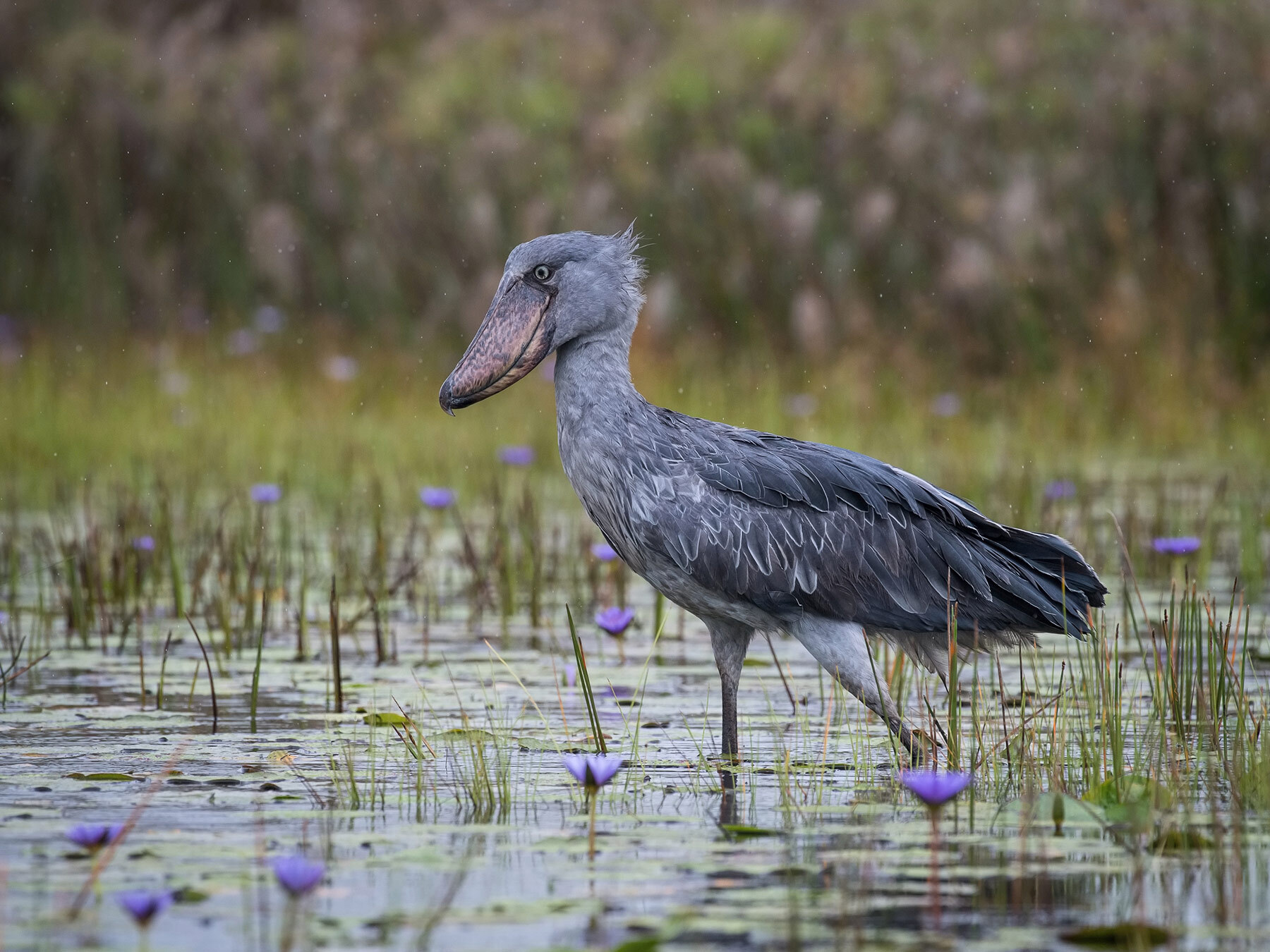
Birding is commonly conducted from a small boat or canoe through wetland channels. This makes Mabamba less physically demanding than a long mountain or forest walk, although travelers should be comfortable entering and sitting in a small boat.
A good guide should encourage visitors to appreciate more than one target bird. Wetland excursions can produce opportunities to observe a wider community of water-associated species.
Photographers should also consider Mabamba because the relatively open wetland environment can provide photographic opportunities very different from dense forest birding.
A responsible company should never guarantee a Shoebill sighting. Instead, it should explain that Mabamba provides suitable habitat and an opportunity to search for this wild species.
Kibale National Park
Kibale National Park adds another important forest environment to a western Uganda birding itinerary.
Birders should expect dense vegetation, forest trails, and extensive use of sound when locating birds. The ability of a guide to recognize calls can therefore become particularly important.
Kibale is also useful for travelers who want to combine birdwatching with chimpanzee tracking.
A well-designed itinerary can allocate dedicated time to each activity rather than assuming that chimpanzee tracking automatically provides sufficient birding.
For serious birders, the company should explain how much actual forest birding time is planned and whether additional nearby habitats are being incorporated.
Bigodi Wetland Sanctuary
Bigodi Wetland Sanctuary can complement a visit to the Kibale region.
Its combination of wetland, woodland, forest-edge and community landscapes provides a different birding environment from the deeper forest.
Birding is generally undertaken on foot, allowing visitors to move slowly through the habitat while looking and listening for birds.
Because Bigodi is conveniently located within the wider Kibale tourism area, it can be incorporated without requiring another major long-distance transfer.
For mixed-interest travelers, it can also add a community-based dimension to the safari.
Murchison Falls National Park
Murchison Falls National Park can provide an excellent combination of savannah, woodland and riverine birding.
Unlike dense forest destinations, much of the birdwatching here can be conducted from a safari vehicle. Open habitats provide opportunities to scan trees, grasslands and skies while simultaneously searching for mammals.
The Victoria Nile adds another habitat dimension.
Boat activities can provide opportunities to observe birds associated with the river and its banks while also viewing other wildlife.
Murchison can therefore work particularly well for couples or groups where some travelers are serious birders, and others are more interested in a traditional wildlife safari.
A knowledgeable operator should allow birding to continue throughout game drives rather than treating birds as secondary to mammals.
Queen Elizabeth National Park
Queen Elizabeth National Park contributes a broad mixture of savannah, woodland, wetlands and aquatic environments to a western Uganda birding circuit.
Birdwatching can take place during game drives, roadside stops and other scheduled activities.
One particularly useful component is the Kazinga Channel, where a boat excursion can provide a different perspective on water-associated birds and other wildlife.
Queen Elizabeth also fits logically into many overland itineraries connecting Kibale with Bwindi, reducing the need for unnecessary backtracking.
A specialist operator should nevertheless ensure that the park receives enough birding time rather than using it only as a convenient overnight stop between primate destinations.
Mgahinga Gorilla National Park
Mgahinga Gorilla National Park introduces high-elevation and montane environments to a southwestern Uganda birding itinerary.
The landscape and birding conditions differ considerably from Uganda’s wetlands and savannah parks.
Travelers should prepare for walking, slopes, cooler conditions, and rapidly changing mountain weather.
Mgahinga can be particularly relevant to experienced birders exploring southwestern Uganda’s specialist habitats.
Like Bwindi, it can also form part of a safari combining birdwatching with mountain gorilla trekking, subject to the activities and permits arranged for the trip.
Semuliki National Park
Semuliki National Park can be particularly interesting for experienced birders wanting to broaden their forest experience beyond Uganda’s better-known montane destinations.
Its forest environment contributes a different ecological component to a longer Uganda birding safari.
Dense vegetation can make birding challenging. Guides may rely heavily on calls, habitat knowledge,e and patience.
For this reason, Semuliki should not simply be added to an itinerary to increase the number of national parks visited.
The company should be able to explain how the destination relates to the traveler’s target species and whether the additional travel time is justified.
Lake Mburo National Park
Lake Mburo National Park can fit conveniently into many southwestern and western Uganda circuits.
Its combination of woodland, grassland and wetland habitats provides a contrast to the dense forests of Bwindi and Kibale.
Much of the birding can be incorporated into vehicle-based wildlife viewing, while other appropriately arranged activities may provide additional opportunities to explore the environment.
Lake Mburo’s location can also make it useful toward the beginning or end of an overland western Uganda safari.
Rather than treating it merely as a convenient stopover, a birding company should identify which habitats and birding opportunities make it relevant to the itinerary.
Kidepo Valley National Park
Kidepo Valley National Park offers a markedly different experience from Uganda’s western forests.
Its northeastern location and relatively dry savannah landscapes can introduce birding environments not encountered on a standard southwestern circuit.
Kidepo can therefore be particularly interesting for longer specialist safaris seeking greater habitat diversity.
The main planning consideration is distance.
Adding Kidepo to a road-based itinerary requires realistic travel planning. A company should not squeeze the park into an already crowded itinerary simply because it looks attractive on a destination list.
Travelers should consider whether the additional travel time fits their birding priorities and total number of days.
Budongo Forest
Budongo Forest can add specialist forest birding to a safari incorporating the Murchison Falls region.
This creates an attractive habitat contrast: travelers can experience forest birding and then move into Murchison’s open savannah and riverine environments.
As with other tropical forests, birding may involve slow walking, frequent listening, and patience.
The combination can be particularly useful for travelers wanting greater habitat diversity without repeatedly crossing the entire country.
Rwenzori Mountains
The Rwenzori Mountains introduce high-elevation environments and a more physically demanding style of birding.
These landscapes are more appropriate for travelers comfortable with mountain conditions, walking, and variable weather.
A specialist company should consider fitness, trip duration, and target species before incorporating the Rwenzori region.
Not every first-time Uganda birder needs to include it.
For the right traveler, however, the mountain environment can add an important dimension to a longer specialist itinerary.
Mabira Forest
Mabira Forest provides another opportunity to experience Uganda’s forest birdlife.
Its position in central-eastern Uganda can make it useful on itineraries that do not have sufficient time to travel immediately into the far west.
Mabira can also introduce travelers to tropical forest birding, where listening and patience become increasingly important.
A company should consider how the forest fits the overall route rather than adding it simply to increase the destination count.
Echuya Forest
Echuya Forest can complement longer specialist birding itineraries through southwestern Uganda.
Its montane environment makes it particularly relevant when the traveler’s priorities extend beyond the country’s standard wildlife circuit.
Because many travelers already spend significant time around Bwindi and Mgahinga, a knowledgeable operator should determine whether adding Echuya contributes meaningfully to the client’s target list.
For experienced birders, this type of detailed habitat planning is one of the clearest differences between a generic safari and a specialist birding itinerary.
6. Check Whether the Company Offers Customized Birding Itineraries
One itinerary cannot satisfy every birder.
This is one of the most important points to remember when choosing a birding tour company in Uganda.
A first-time birder traveling with a partner may want birds, gorillas, chimpanzees, and general wildlife. An experienced birder may care very little about conventional game viewing and instead want to spend an entire morning searching one forest trail. A photographer may happily spend two hours with one cooperative bird rather than moving quickly to increase the day’s species count.
The company should understand these differences before designing the safari.
Birding Safaris for Beginners
Beginners should not feel that they need to recognize hundreds of birds before joining a Uganda birding safari.
A good introductory itinerary should provide enough time to learn.
The guide can help travelers understand basic identification features such as:
- Size
- Shape
- Bill structure
- Plumage
- Flight pattern
- Behavior
- Habitat
- Calls
The pace should be comfortable enough for travelers to practice finding birds through binoculars rather than constantly being rushed to the next species.
Beginners may also appreciate environments where birds are relatively visible, such as wetlands, savannahs, and woodland.
This does not mean avoiding forests completely. Instead, the itinerary can gradually introduce more challenging environments.
General wildlife experiences can also be incorporated.
A first-time birder may enjoy watching an African Fish Eagle and then turning their attention to elephants, giraffes or other mammals during the same day.
Birdwatching should feel enjoyable rather than like an examination.
Birding Safaris for Experienced Birders
Experienced birders usually need a more specialized approach.
They may arrive with a target list containing species they have researched before traveling.
The itinerary should therefore concentrate on habitats and target species rather than simply famous tourist attractions.
This may require:
Earlier departures. Reaching productive habitats early can be important.
Longer birding sessions. A forest session may continue for several hours when target birds are active.
Specialist habitats. The itinerary may prioritize particular forests, wetlands, or elevations.
Flexible schedules. If an important target is missed in the morning, it may be worth trying again later.
Fewer general sightseeing activities. Serious birders may prefer additional birding time instead.
A company should discuss these priorities before finalizing the route.
Bird Photography Safaris
Bird photography requires another style of itinerary.
Seeing a bird and photographing it successfully are two different objectives.
A bird may be clearly identifiable but positioned behind branches. Another may be facing away from the photographer. The background may be distracting, or the light may be poor.
Photographers therefore benefit from slower travel.
A photography-oriented itinerary can allow more time for:
- Waiting for favorable light
- Improving positioning
- Observing natural behavior
- Waiting for an open perch
- Photographing birds in flight
- Capturing environmental portraits
- Repeating visits to productive locations
Morning and late-afternoon sessions can become particularly valuable because light may be more attractive than during the middle of the day.
Vehicle arrangements also matter.
Photographers carrying long telephoto lenses need enough space to use and store equipment safely.
The operator should know from the beginning whether photography is the main objective because this can influence the entire safari design.
7. Send the Company Your Target Bird List
If you already know which birds you hope to search for in Uganda, your target list is one of the most useful pieces of information you can provide before booking.
Do not wait until you arrive.
Send the list while the itinerary is still being designed.
Identifying Suitable Destinations
A target list helps the company determine which destinations are actually relevant.
Without it, an operator may design a broad introductory itinerary.
With it, the route can concentrate more specifically on the habitats associated with your priorities.
Identifying Relevant Habitats
Species are connected to habitats.
Your targets may require combinations of:
- Montane forest
- Lowland forest
- Papyrus wetland
- Open water
- Savannah
- Woodland
- Forest edge
- High-elevation habitat
This can completely change the itinerary.
Determining the Number of Days
A long target list spread across distant habitats cannot realistically be addressed during a very short safari.
Your list helps the company determine whether your requested trip length matches your objectives.
If not, a responsible operator should explain the trade-offs.
Identifying Priority Birding Areas
Not every target has equal importance.
Experienced birders should consider marking species as:
High priority, medium priority, and nice to see.
This can help guides decide where limited time should be concentrated.
Considering Seasonality
Bird occurrence and behavior can change according to season, rainfall, and movement patterns.
Providing your travel dates together with the target list allows the itinerary to be considered in the context of when you will actually visit.
Selecting Appropriate Local Guides
Some destinations may benefit from local guides with detailed knowledge of particular trails or habitats.
Knowing the target list in advance can help determine where additional site-specific guiding may be useful.
Planning a Realistic Route
Perhaps most importantly, a target list prevents the itinerary from becoming a generic collection of national parks.
The route can instead be designed around what the traveler actually wants to experience.
Important: Target Birds Cannot Be Guaranteed.
No ethical birding company should guarantee that every target species will be seen.
Birds are wild animals.
Their visibility can be affected by:
- Weather
- Feeding activity
- Breeding behavior
- Seasonal movement
- Habitat conditions
- Time of day
- Disturbance
- Simple unpredictability
Even when a species is known from a particular location, it may remain hidden during the visit.
A professional company can improve the opportunity by selecting appropriate habitats, allocating sufficient time, and using knowledgeable guides.
That is different from guaranteeing a sighting.
SEND WILD PLANET SAFARIS YOUR TARGET BIRD LIST
Share your target species, travel dates, available number of days, group size, and preferred accommodation level so your proposed itinerary can be designed around your priorities.
8. Examine the Proposed Birding Itinerary Carefully
Do not book simply because an itinerary contains many impressive destination names.
Read it day by day.
Ask yourself how much actual birding will happen.
Realistic Driving Times
Uganda’s major birding areas are spread across different regions.
Road journeys can take several hours, and travel times can be affected by traffic, road conditions, weather, and birding stops.
A good itinerary should account for these realities.
Enough Birding Time
Look beyond phrases such as “birding en route.”
How many mornings and afternoons are actually dedicated to birdwatching?
Important forests and specialist habitats may deserve full sessions rather than quick stops.
Early-Morning Birding Opportunities
Birding itineraries should make sensible use of morning periods.
If every morning begins with a long drive from accommodation to the birding site, the itinerary may be poorly positioned.
This is why accommodation location matters.
Appropriate Accommodation Locations
The lodge should make sense geographically.
A beautiful property that requires a lengthy morning drive to the birding site may be less useful than comfortable accommodation closer to the habitat.
Logical Destination Order
A well-designed route should minimize unnecessary backtracking.
Destinations should connect logically whenever possible.
This saves fuel, reduces tiring driving, and preserves more time for actual birding.
Time for Forest Birding
Forest birding should not be treated like a roadside photo stop.
Dense vegetation and secretive species require patience.
The itinerary should allow enough time for walking, listening, and waiting.
Boat Activities Where Relevant
Boat excursions can add valuable habitats to the trip.
Depending on the route, experiences around Mabamba, the Kazinga Channel or Victoria Nile can complement terrestrial birding.
These activities should be clearly scheduled rather than vaguely listed as possibilities.
Rest Periods
Birding can be surprisingly tiring.
Early departures, walking, long drives, and concentration through binoculars can accumulate over a multi-week trip.
Some travelers want maximum field time. Others perform better with occasional slower periods.
The itinerary should reflect the client’s preferences.
Flexibility for Difficult Targets
A completely rigid schedule can become frustrating for serious target birders.
If a priority species is missed during the first attempt, additional time can sometimes be valuable.
Longer specialist itineraries should therefore avoid unnecessary over-scheduling.
9. Avoid Birding Itineraries That Try to Cover Too Much
A long destination list can look impressive during the booking process.
It does not automatically produce a better safari.
One of the biggest mistakes in birding itinerary design is trying to cover too much of Uganda in too little time.
A rushed safari can become:
Hotel → vehicle → long drive → short birding session → hotel → repeat.
After several days, travelers may realize that they have technically “visited” many destinations while properly exploring very few of them.
Quality of Birding Time Matters More Than Destination Count
Birding requires observation.
There must be enough time to stop when something interesting is heard, investigate mixed flocks, search for difficult species, and wait for birds to emerge.
A schedule that requires departure for the next destination immediately after breakfast may remove this flexibility.
Some Destinations Deserve Multiple Sessions
Important birding destinations may require two or more sessions.
The first morning could be affected by rain.
A target species might be heard but never seen.
A productive trail may deserve another visit.
Photographers may want to return when the light is different.
Having an additional session creates possibilities that a one-night visit cannot provide.
Serious Birders May Benefit from Fewer Destinations
For a specialist birder, spending three productive nights around an important forest may provide more value than spending one night each in three distant locations.
This is especially true when the itinerary has been designed around a target list.
When comparing operators, do not ask only:
“How many destinations do I get?”
Also ask:
“How much quality birding time do I get in each habitat?”
10. Check the Quality of the Birding Guide
The guide can be one of the most important components of your entire Uganda birding safari.
Excellent accommodation cannot compensate for weak birding guidance when birds are the primary reason for traveling.
Visual Identification
The guide should recognize birds using relevant field characteristics such as plumage, shape, bill, tail, flight pattern, and behavior.
Identification by Sound
This becomes essential in forests.
A guide who recognizes songs and calls can detect species that would otherwise remain unnoticed.
Habitat Knowledge
A guide should understand where birds are likely to occur within a habitat.
Knowing that a species occurs somewhere in a national park is less useful than understanding the specific type of environment it normally uses.
Patience
Patience is essential.
Beginners may need additional time to locate a bird through binoculars.
Photographers may need to wait for better positioning.
Experienced birders may want to search repeatedly for a difficult target.
The guide should understand these different needs.
Communication
Finding the bird is only part of guiding.
The guide should also be able to explain where it is.
Directions such as using recognizable branches, tree shapes, or clock positions can help the entire group locate the same bird.
Knowledge of Target Species
When the traveler has provided a target list, the guide should understand which species deserve particular attention.
Priority targets should influence the day’s birding strategy.
Ethical Birding
A good guide should prioritize bird welfare.
This includes avoiding unnecessary disturbance, being cautious around nests, respecting protected-area rules,s and using playback responsibly where permitted.
Distinguishing Similar Species
Some identifications require careful attention to subtle field characteristics.
A specialist guide should be comfortable acknowledging uncertainty rather than forcing an identification when the evidence is insufficient.
This is an important sign of credible guiding.
Understanding Photographers
Photography groups need guides who recognize when a good opportunity deserves additional time.
The guide should understand light, viewing angles, and the need to position responsibly without disturbing birds.
Working with Beginners and Experts
The best style of guiding depends on the client.
A beginner may appreciate explanations and help learning identification.
An experienced birder may prefer concise information and immediate attention to target species.
Ask the company whether the proposed guiding arrangement suits your level of birding experience.
11. Check the Safari Vehicle
The safari vehicle can significantly affect comfort and birding opportunities, particularly on itineraries covering several regions.
Birders may spend many hours traveling and conducting observations from the vehicle, so transportation should not be treated as an insignificant detail.
Good Visibility
Birding frequently happens unexpectedly.
A raptor may appear overhead. A colorful bird may land beside the road. A guide may detect movement in nearby woodland.
Travelers should be able to look outside comfortably and react quickly.
Window Access
Ask how many passengers will share the vehicle and what viewing access they will have.
This becomes particularly important for photographers and groups where several people may want to observe the same bird simultaneously.
Roof Configuration
Depending on the vehicle and activity, an appropriate viewing roof can be valuable during savannah game drives.
It can provide improved visibility when scanning grassland, woodland and distant trees.
Use should always comply with protected-area rules and guide instructions.
Comfortable Seating
Birding safaris can involve long transfers.
Comfortable seating becomes increasingly important during itineraries lasting two or three weeks.
A slightly cheaper trip may feel considerably less attractive after repeated long journeys in an overcrowded vehicle.
Space for Binoculars
Binoculars should remain immediately accessible rather than being buried beneath luggage.
Birds can disappear within seconds.
Travelers should have enough personal space to keep essential equipment ready.
Space for Cameras and Telephoto Lenses
Photographers may travel with substantial equipment.
Long telephoto lenses, camera bodies, batteries, and other accessories require safe storage.
An overcrowded vehicle can make it difficult to move quickly between viewing positions without risking expensive equipment.
Luggage Space
The vehicle should have sufficient space for passengers and luggage without filling the seating area with suitcases.
This becomes particularly important on long private circuits.
4×4 Capability Where Appropriate
Some routes and national park tracks can become challenging depending on terrain and weather.
Vehicle choice should be appropriate to the actual itinerary.
Not every road requires difficult off-road driving, but the vehicle should be suitable for the places included in the safari.
Reliability During Long Journeys
A specialist birding circuit can cover considerable distances.
Vehicle maintenance and reliability therefore matter.
Travelers do not need detailed mechanical information, but they can reasonably ask what type of safari vehicle is proposed for their journey.
Why Private Safari Vehicles Can Benefit Birders
A private vehicle provides one particularly important advantage:
flexibility.
Imagine spotting an interesting raptor during a transfer.
A conventional group tour may need to continue because other passengers have different priorities.
A private birding safari can often stop where it is safe and permitted, giving the guide and travelers time to investigate.
The same flexibility applies to roadside wetlands, woodland edges and other productive habitats encountered between major destinations.
This is why transfer days on a carefully designed birding safari do not necessarily have to be wasted days.
For travelers considering Wild Planet Safaris, ask for an itinerary based not simply on how many places can be fitted into your holiday, but on how much meaningful birding time can be created within the days available.
SEND WILD PLANET SAFARIS YOUR TARGET BIRD LIST
Your target species, travel dates, trip length, photography interests and preferred accommodation category can all help shape a more focused Uganda birding itinerary.
12. Check Where You Will Stay
Accommodation is an important part of any Uganda birding safari, but serious birders should look beyond beautiful rooms, swimming pools and luxury facilities. The location of the accommodation can sometimes have a greater effect on the quality of a birding day than the lodge category itself.
Bird activity can be particularly rewarding during the early morning. If your lodge requires a long drive before reaching the forest trail, wetland or park area where you intend to bird, valuable time can be lost before the main activity even begins.
When examining a proposed itinerary, therefore, ask the birding company not only which lodge you will stay at, but also where it is located in relation to the next day’s birding site.
A strategically located mid-range lodge may sometimes make more sense for a dedicated birder than a luxury property located much farther from the target habitat.
Budget Birding Accommodation
Budget accommodation can be perfectly suitable for birders whose priority is spending maximum time in the field rather than enjoying extensive lodge facilities.
Depending on the destination, budget options may include guesthouses, camps, simple lodges and other modest properties.
Travelers should still check essential details such as whether rooms are private, whether bathrooms are en-suite, what meals are provided, whether hot water is available,ble and how close the property is to the birding location.
For a serious birder who leaves early in the morning and returns after a full day in the field, a simple but clean property in the right location can provide excellent practical value.
Budget should not mean poorly planned.
A good birding tour company should still select accommodation that makes geographical sense for the itinerary.
Mid-Range Birding Accommodation
Mid-range accommodation can provide an attractive balance between comfort, location and price.
After spending many hours walking forest trails, traveling between destinations or concentrating through binoculars, travelers often appreciate a comfortable room, private bathroom, good meal and convenient location.
For many Uganda birding itineraries, mid-range accommodation can therefore be a practical choice.
When comparing properties, consider how quickly the group can reach the next morning’s birding area. A lodge located near an important forest or park entrance can reduce unnecessary driving and allow the group to begin activities earlier.
Luxury Birding Accommodation
A luxury birding safari combines specialist birdwatching with higher levels of accommodation and service.
Depending on the destination, luxury properties may provide larger rooms, attractive natural settings, enhanced dining and more personalized services.
However, birders should still examine location.
Luxury should complement the birding experience rather than interfere with it.
If a high-end lodge requires a lengthy transfer every morning while another suitable property is positioned much closer to the birding habitat, travelers should decide which factor matters more to them.
For photography-focused or mixed-interest travelers, luxury accommodation can also provide comfortable downtime between intensive birding sessions.
Location Can Be More Important Than Luxury
Imagine two accommodation options.
The first is an impressive luxury lodge requiring a long morning drive before reaching the forest.
The second is a comfortable mid-range lodge close to the birding trail.
For someone visiting primarily to search for forest birds, the second property may provide a more practical experience.
When evaluating a birding itinerary, ask:
How far is my accommodation from tomorrow morning’s birding location?
That simple question can reveal whether the itinerary was genuinely designed for birders.
13. Compare Uganda Birding Safari Prices Carefully
The cheapest Uganda birding safari is not automatically the best value, and the most expensive safari is not automatically the most suitable.
Travelers should compare what each quotation actually provides.
Two 10-day birding itineraries can have very different prices because one may use budget accommodation and a shared vehicle while another provides private transportation, specialist guiding, higher-category lodges and additional activities.
Number of Safari Days
Longer trips normally cost more overall because additional days require accommodation, meals, guiding, transportation,n and other services.
However, longer itineraries can also provide more meaningful birding because they reduce the pressure to rush between habitats.
Number of Travelers
Group size can substantially influence the per-person cost.
Some expenses, particularly the safari vehicle and guiding, can be shared between travelers.
A solo traveler may therefore pay more per person than two or four travelers sharing certain safari costs.
Private Versus Group Arrangements
Private birding safaris usually provide greater flexibility.
Travelers can spend longer with interesting birds, make appropriate roadside stops and adjust the day’s emphasis according to their interests.
Group tours may distribute some costs among more travelers but require participants to follow a shared schedule.
Accommodation Category
Budget, mid-range and luxury properties have different rates.
Accommodation can therefore account for a significant difference between two quotations.
Always compare the actual accommodation category and, where possible, the named properties.
Specialist Birding Guide
Specialist birding guidance is another important component.
A safari led with serious birding expertise should not necessarily be compared directly with a general wildlife tour simply because both itineraries visit the same national parks.
Ask exactly what type of guiding is included.
Safari Vehicle and Fuel
Vehicle type, distance traveled,d and fuel requirements influence safari pricing.
A nationwide birding itinerary involving Murchison, western Uganda and southwestern forests will naturally involve substantial transportation.
National Park Fees
Protected-area entry fees can represent an important part of the total safari cost.
Check whether the quotation includes the park fees associated with the confirmed itinerary.
Boat Activities
Excursions at Mabamba, the Kazinga Channel, Victoria Nile or other waterways may involve additional costs.
The quotation should identify which scheduled boat activities are included.
Local Guides
Certain destinations may use local birding or site guides.
Ask whether their services are included in the quoted price or payable separately.
Domestic Flights
Domestic flights can reduce some long road journeys but increase the overall cost.
They can be useful for travelers with limited time, although road transfers can themselves provide birding opportunities.
Gorilla Permits
Adding mountain gorilla trekking can substantially change the price of a birding safari.
Never assume the gorilla permit is included merely because Bwindi or Mgahinga appears in the itinerary.
Chimpanzee Permits
The same principle applies to chimpanzee tracking.
If chimpanzee tracking is part of the safari, check whether the required permit has been included in the quotation.
For a deeper explanation of these factors, internally link this section to your Uganda Birding Safari Cost article.
14. Check Exactly What Is Included in the Price
Before comparing two safari prices, compare their inclusions.
A cheaper quotation may exclude expenses that another company has already incorporated.
Your confirmed quotation should clearly state what is included.
Depending on the safari, possible inclusions may cover accommodation, specified meals, safari transportation, fuel, professional guiding, scheduled birding activities, protected-area fees, airport transfers, drinking water and selected boat activities.
If local site guides are required at particular birding locations, ask whether their services are included.
Meals should also be clearly explained. Some itineraries may operate on full-board arrangements while others provide different meal plans.
The same applies to boat activities.
A line saying “visit Kazinga Channel” does not automatically tell you whether the boat trip itself is included in the safari price.
The most important rule is simple:
Rely on the written quotation—not assumptions.
If something matters to you, ask whether it is included and request clarification before confirming the safari.
15. Check What Is Not Included
Exclusions deserve the same attention as inclusions.
Typical exclusions can include international flights, visas, travel insurance, gratuities, alcoholic drinks,s and personal expenses.
International Flights
Flights between your home country and Uganda are normally arranged separately unless the quotation explicitly states otherwise.
Uganda Visa
Travelers should check current Ugandan entry and visa requirements applicable to their nationality through official sources before traveling.
Travel Insurance
Travel insurance is generally the traveler’s responsibility.
Travelers should select appropriate coverage for their planned activities and personal circumstances.
Tips and Gratuities
Tips for guides, lodge staff and other service providers are generally discretionary unless the booking documentation states otherwise.
Alcoholic Beverages
Alcoholic drinks and premium beverages are commonly excluded unless specifically included in the meal plan.
Personal Expenses
Souvenirs, additional snacks, telephone expenses and other personal purchases are normally paid directly by the traveler.
Laundry
Laundry arrangements vary between accommodation properties. Some may include it, while others charge separately.
Optional Activities
An activity described as optional should not automatically be assumed to be included.
Ask for the price before adding it to the itinerary.
Additional Accommodation
Hotel nights before the official safari begins or after it ends may be excluded unless specifically included.
Gorilla Permits
Gorilla permits should only be considered included when the quotation explicitly says so.
Chimpanzee Permits
Likewise, chimpanzee tracking permits should be confirmed separately unless clearly listed among the inclusions.
16. Read Reviews from Previous Travelers
Online reviews can help travelers evaluate a birding tour company in Uganda, but star ratings should not be the only consideration.
Read what previous travelers actually say.
A five-star review stating only that the safari was “great” provides much less information about specialist birding ability than a detailed review describing the guide’s identification skills, habitat knowledge,ge and handling of target species.
Look for Birding Knowledge
Search reviews for comments about whether guides recognized birds visually and by sound.
Repeated positive comments from serious birders can be particularly useful.
Guide Quality
Look for descriptions of patience, communication, professionalism,m and field knowledge.
Target Species
Reviews mentioning target-list planning can reveal whether the operator regularly works with specialist birders.
Be cautious, however, about interpreting one traveler’s successful sightings as a promise that you will see the same species.
Communication
Look for comments about how the company communicated before arrival and how clearly it handled itinerary changes or questions.
Vehicle Condition
On long birding circuits, transportation matters. Reviews can reveal whether travelers found vehicles comfortable and reliable.
Accommodation
Pay attention to comments about accommodation location as well as luxury level.
Organization
Well-organized permits, transfers, park activities, ie,s and accommodation arrangements can make a substantial difference during a complex itinerary.
Photography Support
Bird photographers should look specifically for reviews from other photographers.
Reliability and Problem Solving
Travel does not always proceed exactly as planned.
Weather, roads,s and other factors can require adjustments. Reviews describing how a company handled unexpected situations can therefore be particularly informative.
Reviews Written by Birders Matter
For a specialist birding safari, reviews written by birdwatchers can be more relevant than generic wildlife-safari reviews.
Someone who traveled specifically for birds is better positioned to comment on the quality of specialist bird guiding.
17. Evaluate the Company’s Communication
The booking process itself can reveal a great deal about a tour company.
A serious operator should respond to the traveler’s actual questions rather than simply sending the same itinerary to everyone.
If you provide a target list, the response should ideally demonstrate that someone has considered it.
Clear Communication
Answers should be understandable and directly address the question being asked.
Detailed Itinerary
The itinerary should explain where you will travel, what activities are planned,d and where you will stay.
Transparent Quotation
The price should correspond to clearly described services.
Named Accommodation
Where accommodation has been confirmed or proposed, travelers should know which properties or categories are being considered.
Clear Inclusions and Exclusions
Ambiguity can lead to disagreements later.
Ask questions before paying.
Permit Information
If the safari includes gorilla or chimpanzee tracking, clarify how permit arrangements are handled.
Payment Terms
Travelers should understand how much is required to confirm the booking and when the remaining balance becomes due.
Cancellation Policy
Read cancellation conditions before paying a deposit.
Realistic Birding Answers
Be cautious when every question about a difficult species receives an immediate promise of success.
Professional communication should distinguish between good opportunities and guaranteed sightings.
What If You Receive a Generic Itinerary?
Suppose you send a detailed target list focused on forest and Albertine Rift species and receive a standard wildlife itinerary dominated by game drives with almost no explanation of your targets.
That does not necessarily mean the company cannot organize birding, but it is a reason to ask more questions before booking.
18. Check the Booking, Payment and Cancellation Conditions
Do not send a deposit until you understand the booking conditions.
Required Deposit
Ask what percentage or amount is required to confirm the safari.
Balance Payment Deadline
Understand when the remaining amount becomes due.
Payment Methods
Ask which payment methods are officially accepted and whether additional processing charges apply.
Currency
Confirm which currency the quotation uses and how any currency conversion is handled.
Cancellation Conditions
Understand what happens if you cancel the safari after making payment.
Cancellation conditions may vary depending on how close the cancellation occurs to the travel date.
Refund Conditions
Ask which payments may or may not be refundable.
Some third-party services and permits may have their own conditions.
Permit Payment Conditions
Gorilla and chimpanzee permits may involve separate booking conditions.
Ask how permit payments are handled and what conditions apply after purchase.
Bank and Transaction Charges
International transfers and card payments can involve processing or bank charges.
Clarify who is responsible for those costs.
Understand these conditions before paying your deposit—not after.
19. Choose a Company That Practices Responsible Birdwatching
A specialist birding company should care about more than increasing the day’s checklist.
Bird welfare and habitat protection should remain central to the experience.
Respecting Birds and Habitats
Birders should avoid unnecessary disturbance and follow designated trails and protected-area regulations.
Vegetation should not be damaged simply to create an unobstructed photograph.
Avoiding Disturbance Around Nests
Nesting birds require particular care.
Repeated close approaches can interfere with normal breeding behavior and may expose a nest unnecessarily.
Guides and photographers should maintain appropriate distances.
Responsible Playback
Recorded bird calls can sometimes assist birders in locating difficult species, but playback should be used cautiously and in accordance with applicable rules and local guidance.
Repeatedly provoking a territorial bird simply to obtain a better photograph is not responsible birding.
Maintaining Appropriate Viewing Distances
If a bird repeatedly moves away, becomes visibly disturbed,d or changes its normal behavior because of the group, additional distance may be appropriate.
Following National Park Regulations
Birding does not exempt visitors from protected-area rules.
Travelers should follow instructions from guides, rangers and park authorities.
Supporting Local Bird Guides and Communities
Local guides can contribute detailed knowledge of specific forests, wetlands and community areas.
Using appropriate community tourism services can also help ensure that local people receive economic value from nature-based tourism.
A rare bird should never be pursued at the expense of the habitat or community that helps protect it.
20. Consider Whether the Company Understands Bird Photography
Bird photographers should evaluate tour companies differently from travelers primarily interested in recording species.
A checklist-focused birder may identify a bird and continue immediately.
A photographer may need considerably longer.
Slower-Paced Itineraries
Photography trips generally benefit from fewer destinations and longer stays.
Longer Periods at Productive Locations
If a productive wetland or forest edge is producing good photographic opportunities, the itinerary should not force the group to leave simply to maintain an unnecessarily busy schedule.
Space for Photography Equipment
Long telephoto lenses, multiple camera bodies, batteries and other equipment require sufficient vehicle space.
Vehicle Positioning
Where regulations, roads and wildlife welfare permit, small changes in vehicle position can improve light and backgrounds.
No photograph justifies leaving permitted tracks or disturbing wildlife.
Early-Morning Photography
Morning sessions can provide attractive light as well as productive birding conditions.
Boat-Based Photography
Mabamba, the Kazinga Channel,l and the Victoria Nile can provide interesting boat-based photographic opportunities.
Photographers should prepare for movement and protect equipment from water.
Waiting for Better Light
A photography-oriented guide should understand that seeing a bird is not always enough.
The photographer may need time for the subject to move into better light or adopt a more interesting position.
Can the Company Combine Birding with Other Uganda Experiences?
Uganda is particularly suitable for travelers who want more than birds.
A carefully planned itinerary can combine birdwatching with primates, traditional wildlife viewing, boat safaris and cultural activities.
Birding and Gorilla Trekking
Bwindi and Mgahinga make it possible to combine montane birding with mountain gorilla trekking.
The two activities should normally receive dedicated time rather than trying to rush both into one schedule.
Travelers interested in gorillas should mention this early because permits and itinerary timing need to be coordinated.
Birding and Chimpanzee Tracking
Kibale works particularly well for combining forest birding with chimpanzee tracking.
Additional time can be allocated to nearby birding areas such as Bigodi.
A bird-focused traveler should ensure that chimpanzee activities complement rather than replace dedicated forest birding.
Birding and Wildlife Safaris
Murchison Falls, Queen Elizabeth, Lake Mburo and Kidepo Valley can combine birding with large-mammal viewing.
Birding continues throughout the game drive.
A group can be watching elephants or giraffes while simultaneously checking nearby trees, grasslands and skies for birds.
Birding and Boat Safaris
The Kazinga Channel and Victoria Nile provide opportunities to observe aquatic and shoreline birdlife while enjoying a different perspective from land-based birding.
Boat activities can be particularly useful for photographers.
Birding and Cultural Experiences
Community and cultural activities can also be incorporated.
For serious birders, these should be scheduled carefully so that they do not unnecessarily consume productive early-morning birding periods.
For couples and mixed-interest groups, cultural activities can provide welcome variety and a broader understanding of Uganda.
Questions to Ask a Uganda Birding Tour Company Before Booking
Before paying a deposit, ask the operator questions that reveal how well the proposed safari matches your objectives.
- Is your company appropriately licensed to operate tours in Uganda?
- Who will guide my birding safari?
- Does the proposed guide specialize in Uganda’s birds and bird calls?
- Can I send you my personal target bird list before the itinerary is finalized?
- Which destinations and habitats would you recommend for my priority species, and why?
- How much genuine birding time does each day provide after driving and other activities?
- Will my safari be private or shared with other travelers?
- What type of safari vehicle will be used, and how many passengers will share it?
- Which accommodation is included, and how far is it from the main birding locations?
- Are national park entry fees included in the quotation?
- Are specialist local bird guides included where required?
- Which boat activities are included?
- Are gorilla or chimpanzee permits included if those activities appear in the itinerary?
- Which expenses will I need to pay separately?
- What are the deposit, cancellation,n and refund conditions?
- Can the itinerary be slowed down or modified specifically for bird photography?
The quality of the answers can be just as informative as the company’s promotional material.
Warning Signs When Choosing a Uganda Birding Tour Company
No single issue automatically proves that a company is unsuitable, but certain situations deserve additional investigation.
Every Target Bird Is Guaranteed
Wild birds cannot ethically be guaranteed.
A company can provide experienced guides and appropriate habitats, but it cannot control the birds.
The Company Cannot Explain Who Will Guide Yo..u
If specialist birding is the main purpose of the trip, the operator should be able to explain the proposed guiding arrangement.
Unrealistic Driving Times
An itinerary attempting to cross large sections of Uganda while promising full birding sessions every day deserves careful examination.
Unclear Inclusions
A price without clear inclusions makes meaningful comparison difficult.
Accommodation Is Not Identified
If accommodation has not yet been finalized, the operator should at least explain the proposed category and location.
Vague Payment Conditions
Deposits, balance deadlines,n, es and cancellation conditions should be understandable before payment.
Destinations Have No Clear Birding Purpose
Ask why each destination is included.
A specialist itinerary should have a habitat or birding rationale.
The Birding Safari Looks Identical to a Wildlife Safari
A dedicated birding itinerary should normally reflect different timing, guiding,g and habitat priorities from a conventional wildlife tour.
Birding Questions Receive Vague Answers
If specific questions about guides, habitats, ts or target species repeatedly receive generic responses, ask for additional clarification before booking.
Why Choose Wild Planet Safaris for Your Uganda Birding Safari?
The most appropriate birding safari depends on the traveler’s objectives. Wild Planet Safaris can organize itineraries around different trip lengths, habitats,s and combinations of birding with other Uganda experiences.
Customized Uganda Birding Itineraries
An itinerary can be developed according to your available days, preferred destinations, accommodation category,ry and birding interests rather than assuming one standard route suits every traveler.
Private Birding Safaris
Private arrangements provide flexibility for birding stops, pacing, and individual interests.
This can be particularly useful for couples, experienced birders,s and photographers.
Target-Species Planning
Travelers can provide a target bird list before the itinerary is finalized.
The list can help identify appropriate habitats and determine which areas deserve more time.
Target planning improves the focus of the trip but does not guarantee wild-bird sightings.
Bird Photography Itineraries
Photography-focused itineraries can operate at a slower pace, allowing more time at productive locations and fewer unnecessary transfers.
Birding and Gorilla Trekking Combinations
Birding in southwestern Uganda can be combined with mountain gorilla trekking in Bwindi or Mgahinga, subject to the required arrangements and permit availability.
Birding and Chimpanzee Combinations
Kibale can be incorporated into itineraries combining forest birding and chimpanzee tracking.
Birding and Wildlife Safari Combinations
Murchison Falls, Queen Elizabeth, Lake Mburo and other suitable destinations allow travelers to combine birdwatching with Uganda’s wider wildlife experience.
Short and Long Uganda Birding Safaris
A traveler with only a few days may concentrate on selected destinations such as Entebbe-area birding and Mabamba.
Longer itineraries can connect forests, wetlands, savannahs and montane habitats.
Serious birders with extensive target lists may benefit from longer routes that allow additional time in specialist habitats.
Plan Your Uganda Birding Safari
Tell Wild Planet Safaris:
Your travel dates
Number of travelers
Number of available days
Preferred accommodation level
Photography interests
Other activities you want to include
Your target bird list
PLAN YOUR UGANDA BIRDING SAFARI
SEND WILD PLANET SAFARIS YOUR TARGET BIRD LIST
Frequently Asked Questions About Choosing a Birding Tour Company in Uganda
How do I choose a birding tour company in Uganda?
Start by checking the company’s legitimacy, guiding arrangements, and experience with dedicated birding trips.
Then examine the proposed itinerary carefully. Look at how much time is actually allocated to birding, which habitats are included, where accommodation is located, what vehicle will be used,d and what the quotation covers.
Experienced birders should also ask whether the company can design the trip around a personal target list.
What should I look for in a Uganda birding tour company?
Look for strong birding knowledge, realistic itinerary planning, transparent pricing, clear communication,n and responsible birdwatching practices.
The proposed guides should understand identification, calls, habits, at,s and the different requirements of beginners, experienced birders, rs and photographers.
How do I check whether a Uganda tour company is licensed?
Ask the operator for its official company and tourism details and verify relevant credentials through the appropriate Ugandan tourism authorities.
Do not rely solely on logos displayed on a website.
Licensing is an important trust indicator, but it should be considered together with genuine specialist birding experience.
What makes a good birding guide in Uganda?
A good birding guide should combine visual identification with knowledge of calls, behavior, habitat,t and distribution.
Patience and communication are equally important.
The guide should be able to help beginners locate birds through binoculars while also understanding the more specialized requirements of experienced birders.
Ethical birding practices should be part of the guiding approach.
Should I choose a specialist birding company or a general safari company?
Choose according to the main purpose of your trip.
If birds are a secondary interest alongside mammals and sightseeing, a general wildlife itinerary incorporating birdwatching may be sufficient.
If birds are the main reason for traveling, prioritize an operator that can provide specialist birding knowledge and an itinerary designed around habitats and birding time.
Can a birding company guarantee specific birds?
No responsible company should guarantee sightings of wild birds.
An operator can select suitable habitats, experienced guides and appropriate times to search, but weather, movement and bird behavior remain unpredictable.
Be cautious of promises that every target will definitely be seen.
Should I send my target bird list before booking?
Yes, particularly if you are an experienced birder.
Sending the list before the itinerary is finalized allows the company to consider relevant habitats, destinations,n,s and the number of days required.
Marking your highest-priority targets can make the list even more useful.
Are private Uganda birding tours available?
Wild Planet Safaris can organize private birding itineraries.
Private travel can provide greater flexibility over departure times, roadside stops, target species,s and daily pacing.
Are private birding tours better for photographers?
Private arrangements can be particularly useful for photographers because the group can potentially spend longer with individual subjects and at productive locations.
The important factor is ensuring the itinerary has been designed around photography rather than simply booking a private version of a fast checklist-focused tour.
How much does a Uganda birding safari cost?
There is no single price.
The cost depends on safari length, number of travelers, accommodation category, transportation, guiding, park fees, boat activities,s and additional experiences.
Gorilla or chimpanzee permits and domestic flights can also change the final price substantially.
Internally link this answer to your Uganda Birding Safari Cost article for a complete breakdown.
How many days should I book for a Uganda birding safari?
A few days can work for a focused birding expedition while one or two weeks allow considerably more habitat diversity.
Experienced birders wanting a broader range of forests, wetlands, savannahs and specialist habitats may benefit from two or three weeks or longer.
The appropriate duration depends primarily on your targets and available time.
Can beginners book a birding tour in Uganda?
Yes.
Beginners do not need extensive identification knowledge before traveling.
A suitable itinerary can combine relatively accessible birding environments with guidance on using binoculars, recognizing common birds,r, ds and understanding basic calls.
Can I combine birding and gorilla trekking?
Yes.
Bwindi and Mgahinga provide opportunities to combine montane birding with mountain gorilla trekking.
The itinerary should allocate appropriate time to both activities, and the required gorilla arrangements should be made in advance.
Can I combine birding and chimpanzee tracking?
Yes.
Kibale is particularly useful for travelers interested in both forest birding and chimpanzee tracking.
Additional nearby birding can also be incorporated depending on the itinerary.
What should a Uganda birding safari price include?
It depends on the individual quotation.
Possible inclusions may cover accommodation, specified meals, safari transportation, fuel, guiding, park fees, scheduled birding activities, airport transfers, drinking water and selected boat excursions.
Never assume an item is included simply because it appears in the itinerary.
How far in advance should I book?
Booking early is particularly useful when the trip includes specific accommodation, specialist guiding or permit-based activities such as gorilla and chimpanzee tracking.
The ideal booking period depends on travel dates and itinerary requirements, so travelers should begin planning as soon as their dates become reasonably firm.
Can Wild Planet Safaris plan a safari around my target bird list?
Yes. Travelers can provide Wild Planet Safaris with a target list during the itinerary-planning stage.
The list can be used to identify relevant habitats, prioritize destinations,o, ns and determine how much time should be allocated to particular areas.
This does not guarantee sightings. Instead, it allows the itinerary to be designed around realistic opportunities to search for the birds that matter most to you.
SEND WILD PLANET SAFARIS YOUR TARGET BIRD LIST
Include your travel dates, trip length, number of travelers, accommodation preference,e and photography interests so these factors can be considered together when developing your Uganda birding itinerary.