
Uganda Birding Safari Packages – Best Birdwatching Tours 2027
Uganda offers birdwatchers an impressive combination of tropical forests, papyrus wetlands, open savannahs, woodlands, lakes, rivers and high-altitude landscapes. Its location in East Africa and the variety of habitats found within a relatively compact country make it possible to experience very different types of birding during a single journey. A traveler can begin with wetland birding near Lake Victoria, continue through open savannahs and woodlands, and later explore the montane forests of southwestern Uganda.
Uganda birding safari packages are designed for travelers who want more than a conventional wildlife safari. Depending on the itinerary, a birding tour can include shoebill tracking, guided forest walks, Albertine Rift birding, wetland excursions, savannah birding, boat-based birdwatching and dedicated bird photography. Longer itineraries can combine several habitats, giving birders opportunities to search for a wider variety of species while experiencing Uganda’s changing landscapes.
One of the major attractions is the opportunity to combine birdwatching with Uganda’s other wildlife experiences. A birding itinerary can include game drives in national parks, gorilla trekking in Bwindi Impenetrable or Mgahinga Gorilla National Park, chimpanzee tracking in Kibale National Park and golden monkey tracking in Mgahinga. This makes Uganda particularly suitable for couples or groups whose members have different wildlife interests.
Wild Planet Safaris offers customizable Uganda birding itineraries for first-time birdwatchers, experienced birders, photographers, solo travelers, couples and small groups. Tours can be planned around the traveler’s available time, preferred destinations, target species, photography interests, accommodation preference and additional wildlife or primate experiences.
Why Choose Uganda for a Birding Safari?
A carefully planned itinerary can take birders from the papyrus wetlands surrounding Lake Victoria to the savannahs of Murchison Falls, Queen Elizabeth or Lake Mburo before continuing into the forests and mountains of western and southwestern Uganda.
Exceptional Bird Diversity
Uganda’s bird diversity is closely connected to its geographical position and wide range of ecosystems. The country lies within a region where several ecological influences meet, including East African savannahs, Central African-influenced forests, the Lake Victoria basin, the Albertine Rift and the Nile system.
Uganda’s appeal as a birding destination goes beyond the number of species that can potentially be encountered. Its strength lies in the combination of varied ecosystems, accessible birding areas, specialized forest and wetland habitats, Albertine Rift landscapes and opportunities to combine birdwatching with traditional African wildlife safaris.
This creates opportunities to encounter different bird communities without traveling between several countries. Forest specialists can be searched for in places such as Bwindi, Kibale, Budongo and Semuliki, while wetlands provide habitat for waterbirds and papyrus-associated species. Uganda’s national parks also contain extensive grasslands, woodlands, riverine vegetation and lakeshores that support additional bird communities.
For birders, this variety means that individual days of a longer safari can feel remarkably different. Early-morning forest birding may involve walking quietly beneath a dense canopy and listening carefully for calls, whereas the following day could involve scanning an open savannah for raptors, rollers, bee-eaters and ground-dwelling birds.
Wetlands introduce another completely different environment, with opportunities to observe kingfishers, herons, egrets, jacanas, storks and other water-associated birds. In higher-altitude areas such as Bwindi, Mgahinga and the Rwenzori region, changes in elevation and vegetation create further opportunities for specialized montane birding.
Excellent Opportunities to See the Shoebill
The shoebill is one of the most sought-after birds for many visitors planning a Uganda birding safari. Its enormous shoe-shaped bill, tall body and patient hunting behavior make it immediately recognizable, while its dependence on extensive freshwater wetlands means that birders need to visit suitable habitats to search for it.
Uganda provides several opportunities for guided shoebill excursions, with Mabamba Wetland being among the country’s best-known locations for this experience.
Shoebill Birding at Mabamba Wetland
Mabamba is an extensive wetland associated with Lake Victoria and is particularly convenient for travelers beginning or ending their safari around Entebbe. Birding excursions normally involve exploring channels through the wetland with a local guide while searching suitable feeding areas.
Although the shoebill is usually the primary target, the excursion is also an opportunity to observe a broader range of wetland birds. Birders should therefore treat Mabamba as a complete wetland birding experience rather than simply a single-species excursion.
Early-morning outings are often incorporated into itineraries, particularly for travelers interested in photography and a quieter wetland experience. Because the shoebill is a wild bird, sightings should always be treated as opportunities rather than guarantees.
Shoebill Birding Around Murchison Falls
The greater Murchison Falls and Nile ecosystem can also form part of a birding itinerary interested in wetland and riverine species. This region has the advantage of combining birdwatching with savannah wildlife, Nile excursions and broader national park exploration.
A Murchison Falls birding safari can therefore include riverine birds, waterbirds, savannah species and raptors while travelers also look for mammals such as giraffes, elephants, buffaloes and antelopes.
What to Expect on a Shoebill Birding Excursion
A typical shoebill excursion starts early, followed by meeting a local guide and entering suitable wetland habitat. Depending on the location, exploration may take place by small boat or canoe.
The guide searches likely feeding areas while also identifying other species encountered along the way. Once a shoebill is located, responsible observation is important. Birders and photographers should maintain an appropriate distance, minimize disturbance and follow instructions from their guide.
Albertine Rift Birding
For specialist birdwatchers, the Albertine Rift adds another important dimension to a Uganda birding safari. The region contains mountainous and forested landscapes associated with a number of restricted-range species, making southwestern Uganda particularly attractive to travelers interested in specialized forest birding.
Unlike open-country birding, Albertine Rift birding frequently involves forest trails, changes in elevation, careful listening and patient searches for birds that may remain concealed within dense vegetation.
Birding in Bwindi Impenetrable National Park
Bwindi is particularly important for visitors interested in combining forest birding with Uganda’s famous mountain gorillas. Its varied elevations and extensive forest create opportunities for dedicated birding walks in addition to gorilla trekking.
Birding in Bwindi can involve searching along forest trails, forest edges and other suitable habitats while listening for calls and watching mixed feeding flocks. The experience can require patience, but it gives birders access to an environment very different from Uganda’s savannah parks.
A traveler can spend one day gorilla trekking and reserve additional mornings or full days specifically for birding.
Birding in Mgahinga Gorilla National Park
Mgahinga offers another important southwestern Uganda birding experience. Its montane environments, bamboo zones and higher-altitude vegetation make it particularly interesting for birders exploring the Albertine Rift.
Birding can also be combined with gorilla trekking, golden monkey tracking and scenic walks through the Virunga landscape.
Birding in the Rwenzori Region
The Rwenzori region introduces higher-elevation habitats into a Uganda birding itinerary. Changes in altitude bring changes in vegetation and bird communities, making the region attractive to birders interested in montane environments.
It can be incorporated into longer specialist itineraries exploring western Uganda rather than being treated as a conventional short safari stop.
Diverse Birding Habitats
One of Uganda’s strongest birding advantages is the ability to explore multiple habitats during the same safari. Each ecosystem provides a different style of birdwatching and supports different bird communities.
Tropical Forests
Uganda’s tropical and montane forests provide some of its most specialized birding experiences. Important destinations include Bwindi, Kibale, Budongo, Semuliki and Mabira.
Forest birding usually involves moving slowly along trails, listening carefully for calls, examining the canopy and understory and watching fruiting trees or mixed-species feeding flocks.
Dense vegetation can make photography more challenging than in open habitats, but it also makes forest birding particularly rewarding for travelers searching for specialized species.
Papyrus Wetlands
Papyrus wetlands are especially important for travelers interested in shoebills, wetland specialists and water-associated birds.
Mabamba is the most obvious example for many international visitors. Birding may be done from small boats or canoes, allowing visitors to move quietly through channels while scanning vegetation and open water.
Wetlands can provide opportunities to observe kingfishers, herons, egrets, jacanas and many other birds associated with freshwater ecosystems.
Savannah Grasslands
Uganda’s savannah national parks allow birdwatchers to combine open-country birding with traditional wildlife viewing.
Important destinations include Murchison Falls, Queen Elizabeth, Lake Mburo and Kidepo Valley National Parks.
Open grasslands can provide opportunities for searching for raptors, rollers, bee-eaters, storks, hornbills and various ground-dwelling species. Visibility is generally better than inside dense forests, which can also make these areas rewarding for photography.
Woodlands
Woodlands create an important transition between forests and open grasslands. They provide feeding and nesting habitats for a broad range of species and can be particularly productive during early-morning birding.
Birders may search for woodpeckers, barbets, hornbills, flycatchers, weavers, bee-eaters and raptors while moving slowly through woodland habitats.
Lake Mburo and parts of Murchison Falls are examples of destinations where woodland birding can complement savannah exploration.
Lakes and Rivers
Uganda’s lakes and river systems add another important birding dimension. Lake Victoria, the Nile, Kazinga Channel and Lake Mburo provide habitats for many water-associated birds.
Boat excursions can provide opportunities to observe African Fish Eagles, kingfishers, cormorants, pelicans, herons, egrets, storks and other waterbirds.
The advantage of boat-based birding is that it can also produce excellent wildlife encounters. For example, a Kazinga Channel excursion can combine birdwatching with observations of hippos, buffaloes and other animals along the shoreline.
Montane Forests
The higher elevations of Bwindi, Mgahinga and the Rwenzori region provide another distinctive environment. As altitude increases, changes in temperature and vegetation influence which species are likely to occur.
Montane birding often involves walking forest trails and exploring different vegetation zones. These environments are particularly important for travelers whose birding interests extend beyond Uganda’s better-known wetlands and savannahs.
Birding and Wildlife in One Safari
Uganda makes it possible to build a safari around birds without giving up the classic African wildlife experience.
A bird-focused game drive can still produce encounters with elephants, buffaloes, giraffes, hippos, zebras, antelopes and other mammals while allowing plenty of time to stop for interesting birds.
Birding and Wildlife in Murchison Falls National Park
Murchison Falls combines savannah, woodland, riverine and wetland habitats. Birders can search for open-country species and raptors while game drives provide opportunities for viewing giraffes, elephants, buffaloes and antelopes.
Exploration of the Nile adds waterbirds and riverine species to the experience.
Birding and Wildlife in Queen Elizabeth National Park
Queen Elizabeth provides a mixture of grasslands, wetlands, woodland and aquatic habitats.
Birding can be incorporated into game drives, while the Kazinga Channel provides opportunities for observing waterbirds alongside hippos and other wildlife around the shoreline.
Birding and Wildlife in Lake Mburo National Park
Lake Mburo combines woodland, grassland, wetlands and lakeshore habitats. This makes it useful for birders wanting to search several habitats within a relatively compact area.
Birdwatching can take place alongside wildlife viewing, with opportunities to encounter zebras, antelopes and other mammals.
Birding and Wildlife in Kidepo Valley National Park
Kidepo introduces the dry savannah landscapes of northeastern Uganda. It can add a noticeably different group of birds and habitats to a longer itinerary while also providing traditional game-viewing opportunities.
For travelers undertaking an extensive Uganda birding expedition, including Kidepo can significantly increase the geographical and ecological diversity of the journey.
Birding, Gorillas and Chimpanzees
One of the distinctive advantages of a Uganda birding holiday is the opportunity to combine birdwatching with primate encounters. Instead of choosing between a birding expedition and a gorilla or chimpanzee safari, travelers can incorporate both into the same itinerary.
Birding and Gorilla Trekking in Bwindi
Bwindi provides an obvious combination because the same forest landscape supports important birding opportunities and mountain gorilla trekking.
A well-planned itinerary can dedicate one day to gorilla trekking and additional time to guided birding. This is particularly suitable for travelers who want to experience Bwindi beyond the gorilla trek itself.
A typical arrangement could include arrival and afternoon birding, a full day dedicated to gorilla trekking, followed by a dedicated forest birding day before continuing to another destination.
Birding and Gorilla Trekking in Mgahinga
Mgahinga provides another opportunity to combine mountain gorillas with specialized highland birding.
The park’s montane forests and bamboo habitats can be explored during dedicated birding walks, while separate days can be allocated to gorilla trekking.
Birding and Chimpanzee Tracking in Kibale
Kibale combines tropical forest birding with one of Uganda’s best-known primate experiences.
Travelers can dedicate different periods of their stay to forest birding and chimpanzee tracking. This makes Kibale particularly useful in longer itineraries connecting Queen Elizabeth National Park with destinations farther north or south.
Birding and Golden Monkey Tracking in Mgahinga
Travelers staying longer around Mgahinga can also combine birdwatching with golden monkey tracking. This creates an itinerary incorporating montane birds, mountain gorillas, golden monkeys and the dramatic landscapes of southwestern Uganda.
Combining Birds, Primates and Wildlife in One Uganda Safari
For travelers with enough time, Wild Planet Safaris can combine several experiences into one route:
Mabamba Wetland – Shoebill and wetland birding
Lake Mburo National Park – Woodland and savannah birding
Bwindi Impenetrable National Park – Albertine Rift birding and gorilla trekking
Queen Elizabeth National Park – Savannah birding, wildlife and Kazinga Channel
Kibale National Park – Forest birding and chimpanzee tracking
Murchison Falls National Park – Savannah, Nile and wildlife experiences
Such an itinerary allows travelers to experience Uganda as both a specialist birding destination and a broader African safari destination.
Wild Planet Safaris can customize the route according to the number of days available, priority bird species, preferred habitats, accommodation level and whether the traveler wants to include gorilla trekking, chimpanzee tracking, golden monkeys or traditional wildlife viewing.
Best Uganda Birding Safari Packages for 2027
Wild Planet Safaris offers Uganda birding safari packages ranging from short shoebill excursions to longer journeys through wetlands, forests, savannahs and Albertine Rift habitats. The packages can be customized according to the number of travelers, available time, preferred accommodation category, target birds, photography interests and additional wildlife or primate experiences.
Travelers interested mainly in the shoebill can choose a short Mabamba excursion, while those seeking a broader birding experience can combine destinations such as Mabamba Wetland, Lake Mburo, Bwindi, Queen Elizabeth, Kibale and Murchison Falls.
Prices should be confirmed at the time of inquiry because accommodation choices, group size, park fees, activities and optional primate permits can affect the final safari cost.
1-Day Mabamba Shoebill Birding Tour
Duration: 1 Day
Route: Entebbe/Kampala → Mabamba Wetland → Entebbe/Kampala
Key destination: Mabamba Wetland
Birding focus: Shoebill and wetland birds
Accommodation: Not required for the standard day tour
Price from: Contact Wild Planet Safaris for current rates
Tour type: Private birding excursion
The 1-Day Mabamba Shoebill Birding Tour is designed for travelers who want a short but focused introduction to Uganda’s wetland birdlife. The main objective is to search for the shoebill while exploring the papyrus channels and other wetland habitats of Mabamba.
The tour can begin early in the morning from Entebbe or Kampala. On arrival at Mabamba, travelers join a local guide for a small-boat or canoe excursion through suitable wetland areas.
Although the shoebill is the main target, the excursion provides opportunities to observe a variety of waterbirds and papyrus-associated species. Birders should keep their binoculars and cameras ready for kingfishers, herons, egrets, jacanas, cormorants and other birds encountered while moving through the wetland.
Because the shoebill is a wild bird, sightings cannot be guaranteed. The experience should therefore be viewed as a complete wetland birding excursion rather than only a search for one species.
Main Birding Highlights
- Guided shoebill search
- Papyrus wetland birding
- Small-boat or canoe excursion
- Waterbird observation
- Kingfishers, herons and egrets
- Bird photography opportunities
- Lake Victoria wetland environment
Best For
This package is particularly suitable for short-stay visitors, bird photographers, first-time birdwatchers and travelers with a free day before or after a longer Uganda safari.
View Tour: 1-Day Mabamba Shoebill Birding Tour
Request Quote: Ask Wild Planet Safaris for a customized Mabamba birding excursion.
3-Day Uganda Birding Safari
Duration: 3 Days / 2 Nights
Route: Entebbe → Mabamba Wetland → Mabira Forest → Entebbe
Key destinations: Mabamba Wetland and Mabira Forest
Birding focus: Wetland and forest birds
Accommodation: Budget, mid-range or luxury
Price from: Contact Wild Planet Safaris for current rates
Tour type: Private/customizable birding safari
The 3-Day Uganda Birding Safari combines two contrasting birding environments: the papyrus wetlands of Mabamba and the tropical forest habitat of Mabira.
The safari can begin with birding around Entebbe before continuing to Mabamba Wetland for a guided shoebill search. Exploring the wetland by boat gives travelers opportunities to observe waterbirds and species associated with papyrus vegetation.
The itinerary then continues to Mabira Forest, where the birding experience changes considerably. Instead of scanning open wetlands, birders explore forest trails and edges while listening for calls and watching the canopy, understory and mixed feeding flocks.
This combination provides an excellent introduction to the diversity of birding experiences available in Uganda.
Main Birding Highlights
- Shoebill search at Mabamba
- Papyrus wetland birding
- Forest birding
- Waterbirds
- Guided forest walks
- Bird photography
- Early-morning birding
- Two contrasting habitats within a short itinerary
Best For
The 3-day safari suits travelers with limited time who want more than a single-day excursion. It is also suitable for beginners wanting an introduction to both wetland and forest birding.
View Tour: 3-Day Uganda Birding Safari
Request Quote: Customize the safari according to your accommodation preference and birding interests.
5-Day Uganda Birding Safari
Duration: 5 Days / 4 Nights
Route: Entebbe → Mabamba → Lake Mburo → Bwindi → Entebbe/Kampala
Key destinations: Mabamba Wetland, Lake Mburo National Park and Bwindi Impenetrable National Park
Birding focus: Wetland, woodland, savannah and Albertine Rift forest birding
Accommodation: Budget, mid-range or luxury
Price from: Contact Wild Planet Safaris for current rates
Tour type: Private/customizable safari
The 5-Day Uganda Birding Safari introduces travelers to several of the country’s major birding habitats within a relatively short itinerary.
The journey begins around Mabamba Wetland with a search for the shoebill and other wetland species. From the Lake Victoria region, the safari continues southwest to Lake Mburo National Park.
Lake Mburo adds woodland, grassland, wetland and lakeshore birding to the itinerary. Birding can be incorporated into game drives and nature activities while travelers also have opportunities to observe zebras, antelopes and other wildlife.
The journey then continues to Bwindi Impenetrable National Park, where birders enter a completely different environment. Bwindi’s forest and montane habitats make it particularly important for travelers interested in Albertine Rift birding.
Dedicated birding time can be spent exploring suitable forest trails and edges with a guide.
Main Birding Highlights
- Shoebill search
- Mabamba wetland birding
- Savannah birding
- Woodland birding
- Lakeshore birding
- Forest birding
- Albertine Rift specialties
- Wildlife viewing
- Bird photography
Optional Gorilla Trekking
Gorilla trekking can be added in Bwindi for travelers wanting to combine two of southwestern Uganda’s major nature experiences. Additional time may be recommended when adding the gorilla trek so that dedicated birding time is not significantly reduced.
Best For
This package suits travelers wanting a relatively short safari that covers several different habitats and combines birding with scenery and wildlife.
View Tour: 5-Day Uganda Birding Safari
Request Quote: Ask Wild Planet Safaris to include gorilla trekking or additional birding time in Bwindi.
7-Day Uganda Birding Safari
Duration: 7 Days / 6 Nights
Route: Mabamba → Lake Mburo → Queen Elizabeth → Bwindi
Key destinations: Mabamba Wetland, Lake Mburo National Park, Queen Elizabeth National Park and Bwindi Impenetrable National Park
Birding focus: Wetland, woodland, savannah and forest birding
Accommodation: Budget, mid-range or luxury
Price from: Contact Wild Planet Safaris for current rates
Tour type: Private/customizable birding and wildlife safari
The 7-Day Uganda Birding Safari provides a more balanced exploration of Uganda’s birdlife by combining four contrasting destinations.
The safari can begin at Mabamba Wetland with a guided shoebill excursion before continuing to Lake Mburo National Park for woodland, grassland and wetland birding.
From Lake Mburo, travelers continue to Queen Elizabeth National Park. The park’s mixture of savannah, wetlands, crater landscapes, woodland and aquatic habitats makes it useful for combining birdwatching with wildlife viewing.
A boat excursion on the Kazinga Channel can provide opportunities to observe waterbirds while also watching hippos, buffaloes and other wildlife along the shoreline.
The final major birding destination is Bwindi, where travelers move from open-country birding into dense forest and montane habitats associated with the Albertine Rift.
Main Birding Highlights
- Shoebill search
- Wetland birding
- Savannah species
- Woodland birds
- Forest birding
- Albertine Rift specialties
- Kazinga Channel birdwatching
- Raptors
- Waterbirds
- Bird photography
- Wildlife encounters
Optional Gorilla Trekking
Gorilla trekking can be incorporated into the Bwindi section of the itinerary. Travelers primarily interested in birds may instead dedicate the available time to guided forest birding.
Best For
This package is suitable for travelers seeking a balanced combination of birdwatching, wildlife viewing and varied landscapes without committing to a long expedition.
View Tour: 7-Day Uganda Birding Safari
Request Quote: Customize the tour with gorilla trekking, preferred accommodation and additional birding activities.
10-Day Uganda Birding Safari
Duration: 10 Days / 9 Nights
Route: Mabamba → Lake Mburo → Bwindi → Queen Elizabeth → Kibale
Key destinations: Mabamba Wetland, Lake Mburo, Bwindi, Queen Elizabeth and Kibale
Birding focus: Wetland, savannah, woodland, forest and Albertine Rift birding
Accommodation: Budget, mid-range or luxury
Price from: Contact Wild Planet Safaris for current rates
Tour type: Private/customizable birding safari
The 10-Day Uganda Birding Safari gives travelers considerably more time to explore western Uganda’s different ecosystems.
Beginning with the wetlands of Mabamba, the safari introduces travelers to shoebill birding before continuing into the woodland and savannah environments of Lake Mburo.
Bwindi then becomes a major focus for forest and Albertine Rift birding. More time can be allocated to guided walks, giving birders better opportunities to explore different forest environments than would normally be possible on a short visit.
Queen Elizabeth National Park introduces savannah, wetland and aquatic birding. Game drives can focus on both birds and mammals, while a Kazinga Channel excursion adds opportunities for waterbird photography.
The journey continues to Kibale National Park for tropical forest birding. Travelers interested in primates can also include chimpanzee tracking.
Main Birding Highlights
- Shoebill search at Mabamba
- Papyrus wetland birding
- Lake Mburo woodland birding
- Savannah species
- Bwindi forest birding
- Albertine Rift specialties
- Queen Elizabeth birding
- Kazinga Channel waterbirds
- Kibale forest birding
- Bird photography
- Wildlife viewing
Optional Gorilla Trekking
A gorilla trek can be added during the stay in Bwindi.
Optional Chimpanzee Tracking
Chimpanzee tracking can be included while visiting Kibale National Park.
Travelers who prioritize birding should allow enough time so that these primate activities complement rather than replace dedicated birding excursions.
Best For
This itinerary suits keen birders, photographers, couples with mixed interests and travelers wanting birds, primates and traditional safari wildlife within one journey.
View Tour: 10-Day Uganda Birding Safari
Request Quote: Ask Wild Planet Safaris to customize the itinerary around your target birds and primate interests.
12-Day Uganda Birding and Wildlife Safari
Duration: 12 Days / 11 Nights
Route: Mabamba → Murchison Falls → Kibale → Queen Elizabeth → Bwindi → Lake Mburo
Key destinations: Mabamba Wetland, Murchison Falls, Kibale, Queen Elizabeth, Bwindi and Lake Mburo
Birding focus: Wetland, Nile, savannah, forest, woodland and Albertine Rift birding
Accommodation: Budget, mid-range or luxury
Price from: Contact Wild Planet Safaris for current rates
Tour type: Private birding and wildlife safari
The 12-Day Uganda Birding and Wildlife Safari is designed for travelers who want birdwatching to remain a major focus while also experiencing Uganda’s classic wildlife destinations.
The journey begins around Mabamba Wetland with a guided search for the shoebill. From the Lake Victoria region, travelers head north toward Murchison Falls National Park.
Murchison introduces extensive savannah, woodland and Nile habitats. Birding-focused game drives provide opportunities to search for open-country species and raptors while simultaneously encountering wildlife such as giraffes, elephants, buffaloes and antelopes.
Exploration around the Nile adds waterbirds and riverine species to the trip.
The safari then continues into western Uganda and Kibale National Park. Forest birding provides a major contrast to Murchison’s open landscapes, while optional chimpanzee tracking can be incorporated for travelers interested in primates.
Queen Elizabeth National Park adds another mixture of savannah, woodland and wetland habitats. Birding can continue during game drives and along the Kazinga Channel, where concentrations of waterbirds can be observed alongside aquatic and terrestrial wildlife.
Bwindi becomes one of the specialist birding highlights of the journey. Guided forest excursions focus on the park’s rich montane environment and Albertine Rift birdlife. Gorilla trekking can also be included.
The journey can conclude through Lake Mburo National Park, adding further woodland, grassland and wetland birding before returning toward Entebbe or Kampala.
Main Birding Highlights
- Shoebill search
- Mabamba Wetland
- Nile birding
- Murchison Falls savannah birding
- Raptors
- Kibale forest birding
- Queen Elizabeth birding
- Kazinga Channel waterbirds
- Bwindi forest birding
- Albertine Rift specialties
- Lake Mburo woodland birding
- Wetland species
- Bird photography
Wildlife Highlights
In addition to birds, the itinerary can provide opportunities to encounter:
- Elephants
- Giraffes
- Buffaloes
- Hippos
- Antelopes
- Zebras
- Primates
- Other wildlife encountered along the route
Optional Primate Experiences
Travelers can customize the safari to include:
Gorilla trekking in Bwindi – combine dedicated forest birding with a mountain gorilla experience.
Chimpanzee tracking in Kibale – combine tropical forest birding with chimpanzee tracking.
Adding primate activities may require itinerary adjustments to preserve sufficient time for dedicated birdwatching.
Best For
The 12-day safari is particularly suitable for travelers who want a comprehensive combination of birds and wildlife rather than a specialist birding-only expedition. It also works well for couples or small groups where some travelers are primarily interested in birds and others want a broader Uganda safari experience.
View Tour: 12-Day Uganda Birding and Wildlife Safari
Request Quote: Contact Wild Planet Safaris to customize the route, accommodation level, target species and optional primate activities.
14-Day Uganda Birding Safari
Duration: 14 Days / 13 Nights
Suggested route: Entebbe → Mabamba → Murchison Falls → Kibale → Queen Elizabeth → Bwindi → Mgahinga → Lake Mburo → Entebbe
Birding focus: Wetlands, savannahs, tropical forests, montane forests, woodlands and Albertine Rift habitats
Accommodation: Budget, mid-range or luxury
Price from: Contact Wild Planet Safaris for current rates
Tour type: Private and customizable birding safari
The 14-Day Uganda Birding Safari is designed for travelers who want enough time to explore several of Uganda’s major birding ecosystems without rushing between destinations. The journey moves through wetlands, savannah national parks, tropical forests, montane environments and southwestern Uganda’s Albertine Rift landscapes.
The safari can begin with a guided birding excursion at Mabamba Wetland, where the shoebill is the primary target. Birders can also search for other waterbirds and species associated with papyrus wetlands.
From Mabamba, the journey continues north to Murchison Falls National Park, where open savannah, woodland and Nile habitats provide a major contrast to the wetlands around Lake Victoria. Birding-focused game drives can produce opportunities to search for raptors and open-country species while simultaneously viewing Uganda’s larger mammals.
The route then turns toward Kibale National Park for tropical forest birding. Birders can explore forest trails and edges, while travelers interested in primates can add chimpanzee tracking.
At Queen Elizabeth National Park, the birding experience expands into savannah, woodland, wetland and aquatic environments. A boat excursion along the Kazinga Channel can be particularly rewarding for waterbird observation and photography while also providing opportunities to see hippos, buffaloes and other wildlife.
The journey continues into the forests of Bwindi Impenetrable National Park, one of the most important stops for travelers interested in Albertine Rift birding. Dedicated guided walks allow birders to explore forest and montane habitats, while gorilla trekking can be added as a separate experience.
Mgahinga Gorilla National Park adds another highland environment. Birders can explore montane forest and bamboo habitats, with optional gorilla trekking or golden monkey tracking.
The final major birding destination can be Lake Mburo National Park, where woodland, savannah, wetland and lakeshore habitats provide a productive conclusion before returning to Entebbe.
Main Birding Highlights
- Shoebill search at Mabamba
- Papyrus wetland birding
- Murchison Falls savannah birding
- Nile and riverine birding
- Raptors and open-country species
- Kibale forest birding
- Queen Elizabeth savannah and wetland birds
- Kazinga Channel waterbirds
- Bwindi forest birding
- Albertine Rift specialties
- Mgahinga montane birding
- Lake Mburo woodland and savannah birding
- Bird photography
- Wildlife viewing
Optional Experiences
The itinerary can be customized to include gorilla trekking in Bwindi or Mgahinga, chimpanzee tracking in Kibale and golden monkey tracking in Mgahinga. Travelers primarily interested in birds can instead dedicate these days to additional guided birding.
Best For
This package is particularly suitable for keen birdwatchers, bird photographers, couples with mixed birding and wildlife interests, and travelers who want to experience several of Uganda’s major ecosystems in one journey.
View Tour: 14-Day Uganda Birding Safari
Request Quote: Contact Wild Planet Safaris to customize the itinerary around your target species, accommodation preference and optional primate activities.
18-Day Comprehensive Uganda Birding Safari
Duration: 18 Days / 17 Nights
Suggested route: Entebbe → Mabamba → Murchison Falls → Budongo → Kibale → Semuliki → Queen Elizabeth → Bwindi → Mgahinga → Lake Mburo → Entebbe
Birding focus: Comprehensive Uganda birding expedition
Accommodation: Budget, mid-range or luxury
Price from: Contact Wild Planet Safaris for current rates
Tour type: Private specialist birding safari
The 18-Day Comprehensive Uganda Birding Safari is intended for serious birdwatchers who want to explore a broad selection of Uganda’s important birding habitats. Compared with shorter itineraries, the additional days allow more time for early-morning birding, forest walks, target-species searches and photography.
The safari can begin around Entebbe and Mabamba Wetland, providing an introduction to Lake Victoria basin birdlife and an opportunity to search for the shoebill.
Travelers then continue north to Murchison Falls National Park, where extensive savannahs, woodlands and Nile habitats introduce open-country birds, raptors, waterbirds and wildlife.
Nearby Budongo Forest changes the experience to dedicated forest birding. The Royal Mile is particularly well known among birders visiting this region.
The journey continues to Kibale National Park, where tropical forest birding can be combined with optional chimpanzee tracking.
Semuliki National Park adds a particularly distinctive component to the itinerary because its lowland forest has strong Central African ecological influences. This makes Semuliki valuable to birders interested in species and habitats that differ from those encountered in Uganda’s better-known savannah parks.
From Semuliki, travelers continue to Queen Elizabeth National Park for savannah, wetland and Kazinga Channel birding before proceeding south to Bwindi Impenetrable National Park.
Bwindi becomes one of the major specialist birding areas of the safari, particularly for travelers interested in Albertine Rift species and montane forest environments.
The expedition can then continue to Mgahinga Gorilla National Park for further high-altitude and montane birding before finishing with the woodland, grassland and wetland habitats of Lake Mburo National Park.
Main Birding Highlights
- Shoebill tracking
- Papyrus wetland birding
- Nile birding
- Savannah birding
- Budongo forest birding
- Royal Mile birding
- Kibale forest species
- Semuliki lowland forest birding
- Queen Elizabeth savannah and wetland birding
- Kazinga Channel waterbirds
- Bwindi Albertine Rift birding
- Mgahinga montane birding
- Lake Mburo woodland birding
- Raptors
- Waterbirds
- Bird photography
- Wildlife viewing
Best For
The 18-day safari is especially suitable for:
- Serious birdwatchers
- Experienced birders
- Bird photographers
- Travelers with target-species lists
- Visitors interested in Albertine Rift birds
- Travelers wanting to explore several ecological regions
- Visitors who prefer a slower and more detailed birding itinerary
Travelers can provide Wild Planet Safaris with a target-species list before the safari so that the itinerary can be adjusted around suitable habitats and destinations. Wildlife remains unpredictable, so individual species should never be presented as guaranteed sightings.
View Tour: 18-Day Comprehensive Uganda Birding Safari
Request Quote: Send Wild Planet Safaris your travel dates, target birds, group size and preferred accommodation category for a customized itinerary.
Private Uganda Birding Safari Packages
A private Uganda birding safari differs from a conventional group wildlife safari because the itinerary can be organized around the interests and pace of the individual traveler or private group.
Birdwatching often requires patience. A productive tree, forest edge, wetland channel or savannah area may deserve considerably more time than it would receive on a conventional game drive. Private arrangements provide greater flexibility for these situations.
Wild Planet Safaris can customize private birding trips according to available time, target species, destinations, photography interests, accommodation preferences and additional wildlife or primate activities.
Dedicated Birding Guide
A dedicated birding guide allows the safari to focus more closely on identification, habitats, bird calls and the search for particular species.
Rather than moving quickly between wildlife sightings, a birding-focused guide can help travelers explore productive habitats carefully and determine where additional time may be worthwhile.
For experienced birders, travelers can provide a target-species list before arrival so that appropriate destinations and habitats can be incorporated into the itinerary.
Private Safari Vehicle
Private transportation provides considerably more flexibility during a birding safari.
Travelers can stop when interesting birds are encountered along the road, spend longer at productive locations and carry binoculars, cameras, field guides and photography equipment more conveniently.
It also reduces the need to balance the interests of unrelated travelers sharing the same vehicle.
Flexible Birding Schedule
Birding does not always fit neatly into a standard game-drive timetable.
Private itineraries can allow for:
- Early-morning departures
- Longer forest walks
- Additional roadside birding stops
- Afternoon wetland excursions
- Full-day target-species searches
- Photography sessions
- Changes based on local conditions
The exact schedule should still follow national park regulations and guidance from rangers and local guides.
Customized Target-Species Searches
Experienced birders frequently arrive in Uganda with specific species they hope to observe.
Wild Planet Safaris can use the traveler’s target list to help determine which habitats and destinations should receive more time.
For example, an itinerary emphasizing wetland species may prioritize Mabamba and aquatic environments, while an Albertine Rift-focused trip would dedicate more time to southwestern forests and montane habitats.
Sightings of wild birds cannot be guaranteed, but careful itinerary planning can place travelers in appropriate habitats.
More Time for Bird Photography
Bird photographers often require more time than ordinary safari travelers.
A private birding itinerary can provide additional time to:
- Wait for suitable bird activity
- Observe behavior
- Adjust camera equipment
- Work with changing light
- Photograph birds from responsible distances
- Return to productive locations where practical
This makes private tours particularly suitable for photographers carrying telephoto lenses and other specialized equipment.
Customized Birding Routes
There is no need for every birder to follow exactly the same Uganda itinerary.
A customized route can be created according to:
Available days → Target species → Preferred habitats → Photography interests → Budget → Accommodation category → Wildlife interests → Primate activities
A first-time birder may prefer a mixture of birds, wildlife and primates, while an experienced birder may prefer longer periods in forests and specialized habitats.
Private Birding Safaris for Solo Travelers
Solo travelers can choose a private itinerary designed entirely around their own interests and pace.
This can be particularly useful for photographers and experienced birders who want to spend considerable time searching for particular species without having to compromise with a larger group.
Because transport and guide costs are not divided among several travelers, solo pricing can differ from per-person rates for couples or small groups.
Private Birding Tours for Couples and Small Groups
Private birding safaris also work well for couples, families and small groups.
The itinerary can accommodate different interests within the same party. For example, one traveler may prioritize bird photography while another wants gorilla trekking, chimpanzees or traditional wildlife viewing.
A carefully designed itinerary can incorporate these interests without turning the journey into a conventional large-group tour.
Uganda Birding and Gorilla Safari Packages
Uganda provides an unusual opportunity to combine specialized birdwatching with encounters with mountain gorillas. Bwindi and Mgahinga contain important birding habitats while also providing gorilla trekking opportunities.
Wild Planet Safaris can therefore design itineraries in which particular days are dedicated to birds and separate days are reserved for primate trekking.
5-Day Uganda Birding and Gorilla Safari
A short combination can include Mabamba Wetland and Bwindi Impenetrable National Park.
The itinerary can begin with shoebill birding at Mabamba before traveling to southwestern Uganda. In Bwindi, one day can be dedicated to gorilla trekking while another period is reserved for guided forest birding.
This option works well for travelers with limited time whose two priorities are birds and mountain gorillas.
7-Day Uganda Birding and Gorilla Trekking Safari
A seven-day itinerary allows more habitat diversity.
A possible route is:
Mabamba → Lake Mburo → Bwindi
Mabamba provides wetland birding and a shoebill search, Lake Mburo introduces woodland and savannah species, and Bwindi provides Albertine Rift forest birding alongside gorilla trekking.
10-Day Uganda Birding, Gorillas and Wildlife Safari
A longer itinerary can combine:
Mabamba → Lake Mburo → Bwindi → Queen Elizabeth → Kibale
Travelers can experience:
- Shoebill tracking
- Wetland birding
- Woodland birding
- Savannah birds
- Albertine Rift forest birding
- Gorilla trekking
- Wildlife game drives
- Kazinga Channel birding
- Kibale forest birding
- Optional chimpanzee tracking
This is particularly suitable for couples or groups wanting birds, primates and classic African wildlife.
14-Day Uganda Birding, Gorillas and Chimpanzees Safari
A two-week itinerary provides considerably more time for dedicated birding while still incorporating Uganda’s major primate experiences.
A possible route can include:
Mabamba → Murchison Falls → Kibale → Queen Elizabeth → Bwindi → Mgahinga → Lake Mburo
Separate days can be reserved for chimpanzee tracking in Kibale, gorilla trekking in Bwindi or Mgahinga and golden monkey tracking in Mgahinga, while the remaining days focus on birding.
This approach prevents primate activities from taking away too much time from travelers whose main objective remains birdwatching.
Best Birding Destinations in Uganda
Uganda’s birding destinations range from papyrus wetlands and lowland forests to open savannahs and high-altitude montane environments. Combining several destinations allows birdwatchers to experience substantially different habitats during one safari.
Mabamba Wetland
Best for: Shoebill and wetland birding
Mabamba Wetland is one of Uganda’s best-known destinations for travelers hoping to search for the shoebill. Its papyrus channels and freshwater wetland environment also support numerous water-associated birds.
Birding is commonly conducted by small boat or canoe with a local guide. Mabamba’s proximity to Entebbe makes it convenient at the beginning or end of a longer Uganda birding safari.
Bwindi Impenetrable National Park
Best for: Albertine Rift and montane forest birding
Bwindi is a major destination for serious birders exploring southwestern Uganda. Its dense forest, varied elevations and Albertine Rift location create opportunities for specialized forest birding.
Guided walks can focus on forest trails, edges and productive feeding areas.
Bwindi also provides one of the strongest bird-and-primate combinations in Uganda because visitors can dedicate separate days to birding and mountain gorilla trekking.
Mgahinga Gorilla National Park
Best for: Montane and Albertine Rift birding
Mgahinga’s position within the Virunga landscape introduces high-altitude forest and bamboo environments.
Birders can explore montane habitats while travelers with broader interests can add gorilla trekking or golden monkey tracking.
Combining Bwindi and Mgahinga can be particularly useful for travelers wanting more time in southwestern Uganda’s highland ecosystems.
Queen Elizabeth National Park
Best for: Savannah, wetland and waterbird diversity
Queen Elizabeth contains a mixture of grasslands, wetlands, woodland, crater landscapes and aquatic environments.
Birdwatching can take place during game drives, along roads and around wetland habitats.
The Kazinga Channel adds an important aquatic element. Boat excursions provide opportunities for observing and photographing waterbirds while also encountering hippos, buffaloes and other wildlife along the shoreline.
Murchison Falls National Park
Best for: Savannah, Nile and wildlife birding
Murchison Falls combines extensive open savannah, woodland, riverine vegetation and the Nile ecosystem.
Bird-focused game drives can search for raptors and open-country species while travelers also encounter giraffes, elephants, buffaloes, antelopes and other wildlife.
Birding along the Nile introduces waterbirds and river-associated species, making Murchison useful for travelers seeking both bird diversity and a traditional wildlife safari.
Kibale National Park
Best for: Tropical forest birding and primate combinations
Kibale provides a contrasting birding environment dominated by tropical forest.
Guided birding can involve slow walks along forest trails and edges while listening for calls and searching the canopy and understory.
Kibale is also particularly valuable for mixed-interest itineraries because chimpanzee tracking can be scheduled alongside dedicated birding time.
Semuliki National Park
Best for: Lowland forest birding
Semuliki is particularly interesting to experienced birders because its lowland forest has strong ecological connections with the forests of the Congo Basin.
This gives the destination a different character from Uganda’s montane forests and open savannah parks.
Birding typically involves forest trails, careful listening and patient searches for species associated with dense lowland habitats.
Its distinctive ecology makes Semuliki a valuable addition to longer specialist birding itineraries.
Budongo Forest
Best for: Forest birding
Budongo is an important forest birding destination that can be incorporated into itineraries visiting Murchison Falls.
The Royal Mile is particularly well known among visiting birdwatchers. Birding involves walking slowly through forest habitat while guides search for birds using calls, movement and knowledge of feeding areas.
Combining Budongo with Murchison allows travelers to experience dense forest birding and open savannah birding within the same part of the country.
Lake Mburo National Park
Best for: Woodland, savannah and lakeshore birding
Lake Mburo provides a productive combination of woodland, grassland, wetlands and lakeshore environments.
Birdwatching can be incorporated into game drives and other park activities while travelers also encounter zebras, antelopes and other wildlife.
Its location between central and southwestern Uganda also makes Lake Mburo a useful stop on birding routes connecting Entebbe with Bwindi and Mgahinga.
Kidepo Valley National Park
Best for: Dry-country and northeastern Uganda birding
Kidepo Valley introduces a substantially different environment from the forests and wetlands of western Uganda.
Its open savannahs and drier northeastern landscapes provide opportunities for birders interested in open-country species and raptors while also offering wildlife viewing.
Because of its distance from Uganda’s main southwestern birding circuit, Kidepo is particularly suitable for longer comprehensive birding expeditions rather than short itineraries.
For serious birders with sufficient time, adding Kidepo can increase both the geographical and habitat diversity of a Uganda birding safari.
Top Birds to Look for on a Uganda Birding Safari
Uganda’s birding appeal comes from much more than a handful of famous species. Different parts of the country support distinctive bird communities, from shoebills and papyrus-associated birds in wetlands to forest specialists in western Uganda, open-country species in the savannah parks and montane birds in the Albertine Rift.
The birds encountered on a Uganda birding safari depend on the route, season, habitat, elevation and time spent at each destination. Wild birds are never guaranteed, so travelers with particular targets should share their species list with Wild Planet Safaris when planning their itinerary.
Iconic Birds of Uganda
Several birds have become strongly associated with birdwatching in Uganda. These species are attractive not only to experienced birders but also to photographers and first-time visitors.
Shoebill

The shoebill is among the most sought-after birds on Uganda birding safaris. Its enormous shoe-shaped bill, tall body and prehistoric appearance make it unmistakable.
It inhabits extensive freshwater wetlands and swamp systems where it hunts fish and other aquatic prey. Mabamba Wetland is one of the best-known destinations for guided shoebill searches, while suitable wetland environments also occur elsewhere in Uganda.
Shoebill excursions are often undertaken early in the day using small boats or canoes where appropriate. Because the species is wild, sightings should never be guaranteed.
Grey Crowned Crane
The Grey Crowned Crane is one of Uganda’s most recognizable birds and appears on the country’s national emblem.
Its golden crown, long legs and distinctive appearance make it an attractive photography subject. It can be associated with wetlands, grasslands and agricultural landscapes, depending on location and conditions.
Responsible observation is particularly important around breeding and nesting areas.
Great Blue Turaco
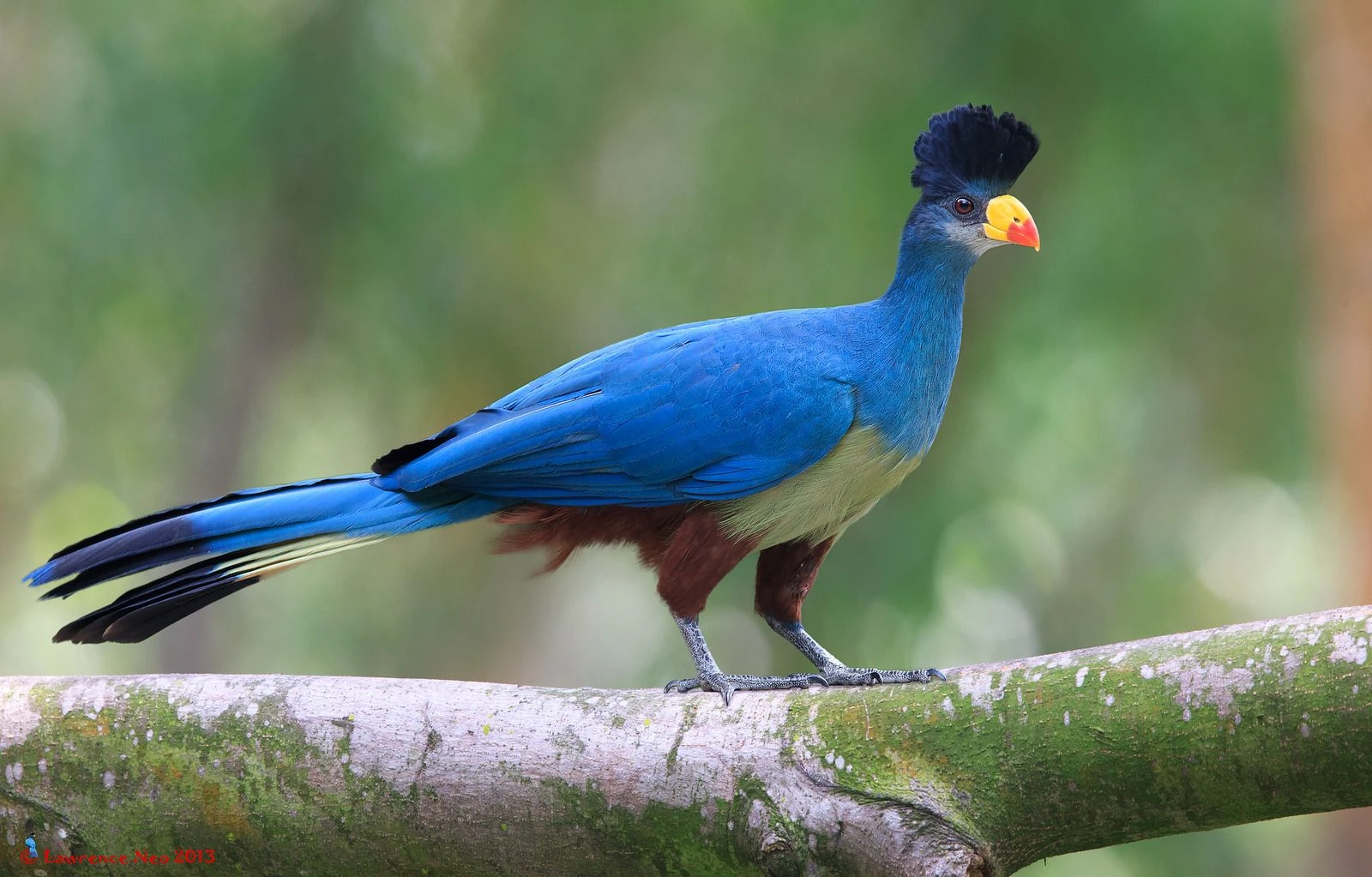
The Great Blue Turaco is a striking forest bird that birders may search for in Uganda’s wooded and forested environments.
Its large size and distinctive coloration make it especially memorable for first-time visitors. Forest birding destinations provide opportunities to listen for calls and watch fruiting trees where turacos and other fruit-eating birds may become active.
African Fish Eagle
The call of the African Fish Eagle is closely associated with many African lakes and rivers.
In Uganda, birders may encounter these impressive raptors around major water systems such as Lake Victoria, the Nile, Kazinga Channel and other lakes and wetlands.
Boat-based birding can provide particularly rewarding opportunities to observe and photograph African Fish Eagles in suitable habitats.
Albertine Rift Specialties
The Albertine Rift is particularly important for serious international birders because it supports a number of restricted-range species associated with its mountains and forests.
For travelers with specialist target lists, southwestern Uganda can therefore become one of the most important sections of a birding itinerary.
Key destinations include:
- Bwindi Impenetrable National Park
- Mgahinga Gorilla National Park
- Rwenzori region
- Other western Uganda montane environments
Birding in these areas differs from open savannah birding. Dense vegetation, steep terrain and elevation can make species harder to locate. Guides frequently rely on calls, knowledge of territories, feeding areas and habitat preferences.
This makes patience particularly important.
Birding for Albertine Rift Species in Bwindi
Bwindi is a major focus for Albertine Rift birding in Uganda. Different elevations and forest environments provide opportunities for birders to search for specialized forest species.
Rather than attempting to cover Bwindi quickly, serious birders may benefit from spending several days exploring appropriate trails and sectors.
Albertine Rift Birding in Mgahinga
Mgahinga adds high-altitude forest, bamboo and montane habitats to the experience.
Combining Bwindi and Mgahinga can therefore give dedicated birders access to a broader range of southwestern Uganda’s highland environments.
Forest Birds

A grey cheeked hornbill
Forest birding is one of the most rewarding but demanding components of a Uganda birding safari.
Important forest destinations include:
Bwindi | Kibale | Budongo | Semuliki | Mabira
Unlike open-country birding, many forest birds are heard before they are seen. Dense vegetation can restrict visibility, and some species remain in the canopy or thick understory.
A typical forest birding walk therefore involves moving slowly, stopping regularly and listening carefully.
Birders and guides may concentrate on:
- Fruiting trees
- Forest edges
- Mixed-species feeding flocks
- Canopy openings
- Understory vegetation
- Streams
- Forest clearings
- Productive trails
Early-morning walks can be particularly enjoyable because bird activity and vocalization may be higher.
Forest birding also rewards patience. Spending several minutes quietly observing one productive area can sometimes be more useful than covering a long distance quickly.
Wetland and Waterbirds
Uganda’s lakes, rivers, swamps and papyrus wetlands create extensive opportunities for wetland birding.
Important areas include:
- Mabamba Wetland
- Lake Victoria
- Kazinga Channel
- River Nile
- Lake Mburo
- Wetlands surrounding national parks and communities
Depending on the habitat, birders may encounter shoebills, kingfishers, herons, egrets, jacanas, storks, pelicans, cormorants and other water-associated species.
Papyrus Birding
Papyrus wetlands deserve particular attention because they support specialized bird communities.
Exploration may take place by boat, canoe, wetland-edge walk or roadside observation depending on the location.
Boat-Based Birdwatching
Boat excursions add a different perspective to a Uganda birding safari.
Instead of observing birds only from roads and trails, travelers can approach suitable shoreline and aquatic habitats from the water while maintaining responsible distances.
This can be especially rewarding along the Kazinga Channel, the Nile and suitable Lake Victoria wetlands.
Savannah Birds
Uganda’s open grasslands and woodland mosaics provide a completely different birding experience from its tropical forests.
Major savannah birding destinations include:
- Murchison Falls National Park
- Queen Elizabeth National Park
- Lake Mburo National Park
- Kidepo Valley National Park
Birders can search for species associated with grasslands, woodland edges, scattered trees and open plains.
Groups frequently encountered in suitable habitats can include:
- Bee-eaters
- Rollers
- Hornbills
- Storks
- Bustards
- Larks
- Weavers
- Ground birds
- Raptors
Savannah birding also combines naturally with game viewing, meaning a single drive can produce both bird and mammal sightings.
Raptors
Uganda’s varied landscapes provide opportunities to search for numerous birds of prey.
These include different eagles, hawks, kites, falcons, vultures and other raptors.
Open landscapes such as Murchison Falls, Queen Elizabeth, Lake Mburo and Kidepo can be particularly useful because birders can scan trees, cliffs, thermals and open skies.
Guides may watch for:
- Birds soaring on thermals
- Raptors perched in exposed trees
- Vultures around open plains
- Eagles near rivers and lakes
- Smaller raptors hunting over grasslands
Raptor identification can be challenging, making good binoculars and an experienced birding guide particularly valuable.
Uganda Birding Safaris by Habitat
A major advantage of birding in Uganda is the ability to experience several ecosystems within one itinerary. Understanding these habitats can help travelers choose a safari that matches their birding interests.
Forest Birding Safaris
Uganda’s major forest birding destinations include Bwindi, Kibale, Budongo, Semuliki and Mabira.
Forest birding is particularly suitable for travelers interested in specialized species, Albertine Rift birds and tropical forest environments.
Bwindi
Best for montane forest and Albertine Rift birding.
Kibale
Combines tropical forest birding with optional chimpanzee tracking.
Budongo
Offers dedicated forest birding and access to the well-known Royal Mile.
Semuliki
Provides lowland forest birding with strong Central African ecological influence.
Mabira
Provides accessible forest birding that can be incorporated into shorter itineraries.
Forest safaris generally involve guided walks rather than vehicle-based birding.
Wetland Birding Safaris
Uganda’s extensive wetlands are essential for birders interested in shoebills, papyrus-associated species and waterbirds.
Mabamba Wetland is particularly important because of its accessibility from Entebbe and its reputation as a shoebill birding destination.
Wetland birding may involve:
- Small-boat excursions
- Canoe trips
- Wetland-edge walks
- Roadside observation
- Bird photography
Wetlands can be included in both short day trips and longer nationwide birding expeditions.
Savannah Birding Safaris
Savannah birding provides better visibility than dense forest environments and combines easily with traditional wildlife viewing.
Murchison Falls
Offers savannah, woodland, Nile and riverine birding.
Queen Elizabeth
Combines grassland, woodland, wetland and aquatic habitats.
Lake Mburo
Provides woodland, grassland and lakeshore birding.
Kidepo Valley
Adds northeastern Uganda’s drier savannah habitats to comprehensive itineraries.
Birding-focused game drives should move at an appropriate pace and allow additional time for roadside stops.
Montane Birding Safaris
Uganda’s southwestern and western highlands provide opportunities for birding at higher elevations.
Major areas include:
- Bwindi
- Mgahinga
- Rwenzori region
Changes in altitude influence vegetation and bird communities, making montane birding particularly attractive to specialist travelers.
Trails can sometimes be steep, muddy or physically demanding, so suitable footwear, rain protection and realistic fitness expectations are important.
Lake and River Birding
Uganda’s extensive freshwater systems create excellent opportunities for waterbird observation.
Lake Victoria
Provides wetlands, shorelines and papyrus habitats, including the Mabamba area.
Kazinga Channel
Combines waterbird observation with wildlife viewing.
River Nile
Adds riverine and aquatic birding to itineraries visiting Murchison Falls.
Lake Mburo
Provides lakeshore and wetland birding alongside woodland and savannah habitats.
Boat excursions can be particularly useful for photographers because they provide different viewing angles from land-based birding.
Best Time for a Uganda Birding Safari
Uganda can offer rewarding birdwatching at different times of year, but conditions and priorities vary. Rather than choosing one month as universally “best,” travelers should consider their target species, destinations, preferred weather conditions and additional safari activities.
Birding During the Drier Periods
Drier conditions can make road travel and forest walking more convenient in some destinations.
Potential advantages include:
- Less muddy forest trails
- Easier road access
- More comfortable hiking conditions
- Convenient combination with wildlife safaris
- Better conditions for some photography situations
However, Uganda’s tropical climate means rainfall can still occur, particularly in forest and mountain environments.
Birders should carry rain protection regardless of travel period.
Birding During the Wetter Periods
Rain should not automatically discourage travelers from planning a birding safari.
Periods with greater rainfall can produce lush vegetation and active forest environments. Breeding activity and plumage can also vary by species and location.
The trade-off is that travelers may experience:
- Muddy forest trails
- Short heavy showers
- Slippery paths
- Greater difficulty on some unpaved roads
- Increased need for waterproof equipment
A good rain jacket, waterproof protection for cameras and suitable hiking footwear become especially important.
Migratory Bird Season in Uganda
Uganda’s resident birdlife can be supplemented by migratory species during appropriate periods of the year.
For birders interested in building a larger trip list, timing a safari when migrants are present can add another dimension to the experience.
Migrants may be encountered in wetlands, grasslands, forests, agricultural landscapes and around lakes and rivers depending on the species.
Travelers with specific migrant targets should discuss their preferred species and travel dates when planning the itinerary.
Best Time for Shoebill Birding
Shoebill searches depend more on visiting appropriate wetland habitat with knowledgeable local guides than on selecting one supposedly perfect month.
Early-morning excursions are commonly preferred because they can provide comfortable conditions, useful bird activity and favorable opportunities for photography.
Water levels, weather and local wetland conditions can influence each excursion.
As with all wildlife, shoebill sightings cannot be guaranteed.
Best Time for Forest Birding
Forest birding conditions vary with rainfall, elevation and individual destinations.
Early mornings are generally important because many forest birds are more vocal and active during the first hours of daylight.
Travelers visiting Bwindi, Mgahinga, Kibale, Budongo or Semuliki should prepare for rain regardless of the season.
Higher-elevation forests can also feel considerably cooler than Uganda’s savannah areas, particularly during early-morning excursions.
How Many Days Do You Need for a Uganda Birding Safari?
The ideal safari length depends on the traveler’s birding goals. Someone interested mainly in seeing a shoebill requires far less time than an experienced birder hoping to explore Uganda’s forests, wetlands, savannahs and Albertine Rift habitats.
1–3 Days – Short Birding Tours
Short trips work particularly well around Entebbe, Mabamba and other accessible birding locations.
A one-day itinerary may focus entirely on a shoebill excursion, while two or three days allow travelers to combine wetland birding with another nearby habitat.
Best for: Transit travelers, business visitors, beginners and travelers adding birding to another East African holiday.
4–7 Days – Classic Uganda Birding Safari
Four to seven days allow travelers to move beyond the Lake Victoria region and combine several habitats.
A possible route could include:
Mabamba → Lake Mburo → Bwindi
or
Mabamba → Lake Mburo → Queen Elizabeth
This duration can provide wetland, woodland, savannah and forest birding.
Best for: First-time birding visitors, photographers and travelers combining birds with wildlife or gorilla trekking.
8–12 Days – Extended Birding Safari
Eight to twelve days provide substantially more flexibility.
Travelers can combine destinations such as:
Mabamba → Lake Mburo → Bwindi → Queen Elizabeth → Kibale
Longer itineraries can also incorporate Murchison Falls.
This duration gives birders more time for dedicated morning walks, target-species searches and photography rather than spending most of the trip transferring between destinations.
Best for: Keen birders, photographers and travelers wanting birds, wildlife and primates.
13–18+ Days – Comprehensive Birding Expedition
Serious birders should consider a longer itinerary if they want to explore Uganda’s major ecological regions.
A comprehensive route can include:
Mabamba → Murchison Falls → Budongo → Kibale → Semuliki → Queen Elizabeth → Bwindi → Mgahinga → Lake Mburo
Additional destinations such as Kidepo can be considered when sufficient time is available.
Longer expeditions allow more time for:
- Target-species searches
- Repeated forest birding
- Early-morning excursions
- Photography
- Different elevations
- Multiple wetlands
- Savannah birding
- Rest and travel days
- Gorilla or chimpanzee tracking
Best for: Experienced birders, international birding groups, photographers and travelers with extensive target lists.
How Much Does a Uganda Birding Safari Cost in 2027?
The cost of a Uganda birding safari in 2027 depends on the itinerary rather than one standard price. A short shoebill excursion near Entebbe costs considerably less than a private two-week expedition involving several national parks, specialist guides and multiple accommodation stops.
Wild Planet Safaris should therefore provide transparent “From USD” prices for each package while giving travelers a customized final quotation based on their group size, travel dates and preferences.
What Determines the Price of a Uganda Birding Safari?
Number of Safari Days
Longer safaris require additional accommodation, meals, transportation, guiding and park activities.
A 14-day specialist itinerary will therefore cost considerably more than a three-day birding tour.
Number of Travelers
Safari vehicles, fuel and guiding costs can often be shared between travelers.
This means the per-person cost for two or four travelers may be lower than the cost for a solo traveler using the same private vehicle.
Accommodation Level
Wild Planet Safaris can structure packages around:
Budget → Mid-range → Luxury
The accommodation category can significantly affect the final safari price.
Private or Group Safari
Private tours normally cost more per traveler than larger group departures but provide greater flexibility.
For serious birders and photographers, this additional flexibility can be valuable.
Safari Vehicle and Fuel
Long itineraries covering destinations such as Murchison Falls, Kibale, Bwindi and Mgahinga involve substantial driving distances.
Vehicle and fuel costs therefore form an important part of the package price.
Birding Guide
Specialist birding guidance should be clearly included in the quotation where applicable.
Some itineraries may also involve local site guides at specific forests, wetlands or national parks.
Park Entrance Fees
National park entry fees must be considered for destinations such as:
- Murchison Falls
- Queen Elizabeth
- Bwindi
- Mgahinga
- Lake Mburo
- Kibale
- Semuliki
- Kidepo
Boat and Canoe Excursions
Activities such as Mabamba shoebill searches, Kazinga Channel excursions and Nile boat trips can add to the safari cost.
Domestic Flights
Travelers who prefer to reduce long road transfers may choose scheduled or chartered domestic flights where appropriate.
These should be quoted separately or clearly identified as included.
Gorilla Permits
Travelers combining birding with gorilla trekking must budget for the required gorilla trekking permit in addition to normal birding safari expenses unless it is explicitly included in the package price.
Chimpanzee Permits
Chimpanzee tracking also requires separate consideration when incorporated into a birding itinerary.
Additional Activities
Golden monkey tracking, specialized photography arrangements, cultural activities and other optional experiences can influence the final price.
Budget Uganda Birding Safari Packages
Budget packages are designed for travelers who prioritize the birding experience over luxury accommodation.
They can use clean, comfortable budget lodges and guesthouses while retaining the essential elements of the birding safari.
A budget safari should still prioritize:
- Reliable transportation
- Appropriate birding guidance
- Suitable locations
- Safe accommodation
- Sufficient birding time
Budget should not mean reducing the quality of the actual birdwatching experience.
Price from: USD ___ per person
Mid-Range Uganda Birding Safari Packages
Mid-range birding safaris provide a balance between comfort and price.
Travelers can stay in comfortable lodges with private facilities while maintaining access to Uganda’s major birding destinations.
This category is suitable for many international travelers undertaking trips of one to two weeks.
Price from: USD ___ per person
Luxury Uganda Birding Safari Packages
Luxury birding safaris combine specialist birdwatching with higher-end accommodation and enhanced comfort.
Depending on the itinerary, this can include:
- Premium safari lodges
- Private transportation
- Spacious rooms or cottages
- Higher service levels
- Carefully selected locations
- Domestic flights where requested
- Customized photography arrangements
The emphasis should remain on birding rather than allowing luxury features to reduce time in the field.
Price from: USD ___ per person
Private Uganda Birding Safari Cost
Private birding safari prices depend heavily on the number of travelers sharing the vehicle and guide.
A private safari can cost more than a scheduled group tour, but it provides important advantages:
- Flexible departure times
- Longer stops
- Target-species searches
- Private vehicle
- Customized itinerary
- More photography time
- Ability to adjust the pace
Wild Planet Safaris should quote private trips according to the actual itinerary and number of travelers.
Private safari price from: USD ___ per person
Solo Traveler Birding Safari Cost
Solo birding safaris generally have a higher per-person cost because one traveler carries vehicle, fuel and guiding expenses that would otherwise be divided between several people.
However, solo travelers receive maximum flexibility.
The itinerary can be designed entirely around the individual’s:
- Target species
- Photography interests
- Preferred pace
- Available days
- Accommodation budget
- Gorilla or chimpanzee interests
Wild Planet Safaris can provide a customized solo traveler quotation once the route and travel dates are confirmed.
Solo birding safari price from: USD ___
For all categories, the final quotation should clearly explain what is included, what is excluded, whether primate permits are included, and whether the price is per person sharing or based on a solo traveler. This makes it easier for travelers to compare packages and reduces uncertainty before they request a booking.
What’s Included in Uganda Birding Safari Packages?
The exact inclusions of a Uganda birding safari package depend on the itinerary, accommodation category, destinations and activities selected. Wild Planet Safaris should clearly state the inclusions on every individual tour so travelers understand what is covered before confirming a booking.
Unless otherwise stated in the individual itinerary, a Uganda birding safari may include the following services.
Airport Transfers
Airport transfers can be arranged between Entebbe International Airport and the traveler’s hotel or agreed safari starting point.
For travelers arriving before the safari begins, Wild Planet Safaris can also arrange transfers to accommodation in Entebbe or Kampala where this is included in the confirmed itinerary.
Private Safari Vehicle
Multi-day birding packages can include transportation in an appropriate safari vehicle for the duration of the tour.
A private vehicle is particularly useful for birdwatchers because it allows more flexibility for roadside birding, photography stops and longer periods at productive locations.
Vehicle type may vary according to the itinerary, group size and package category.
Fuel
Fuel required for the agreed safari itinerary is normally included where transportation is part of the package.
Travelers should therefore not have to pay separately for ordinary fuel expenses associated with the confirmed route.
Major changes to the itinerary requested during the safari may, however, result in additional costs.
Driver-Guide
A professional driver-guide can accompany travelers throughout the road safari, assisting with transportation, general wildlife interpretation and logistical arrangements.
On bird-focused itineraries, guiding arrangements should be selected according to the level of birding required.
Specialist Birding Guide Where Specified
Certain packages can include a specialist birding guide or local bird guide.
A birding guide can assist with:
- Bird identification
- Bird calls
- Habitat interpretation
- Target-species searches
- Locating productive birding areas
- Forest birding
- Wetland birding
- Birding checklists
Serious birders should inform Wild Planet Safaris about their target species when requesting a quotation so that appropriate guiding arrangements can be considered.
Accommodation
Accommodation is included on multi-day packages where specified in the confirmed itinerary.
Travelers may choose from:
Budget | Mid-range | Luxury
Accommodation can be selected according to price, comfort, location and access to important birding areas.
Where possible, staying close to the birding destination can help reduce morning transfer times and allow earlier access to productive habitats.
Meals According to the Itinerary
Meals are provided according to the meal plan stated in each safari itinerary.
Depending on the day’s activities, breakfast may be served early before a birding excursion, while packed lunches may be arranged for longer forest walks or full-day birding sessions.
Travelers with dietary requirements should communicate them before the safari.
Park Entrance Fees
National park entrance fees required for activities included in the confirmed itinerary can be incorporated into the package price.
This may apply to destinations such as:
- Bwindi Impenetrable National Park
- Mgahinga Gorilla National Park
- Queen Elizabeth National Park
- Murchison Falls National Park
- Kibale National Park
- Lake Mburo National Park
- Semuliki National Park
- Kidepo Valley National Park
Any activity requiring an additional permit should be clearly identified separately.
Scheduled Birding Excursions
Guided birding activities specifically listed in the itinerary are included according to the confirmed package.
These may include:
- Forest birding walks
- Savannah birding drives
- Wetland birding
- Shoebill searches
- Montane birding
- Woodland birding
- Bird photography sessions
- Early-morning birding excursions
Boat Trips Where Specified
Some Uganda birding packages incorporate boat or canoe excursions.
These can include birding experiences around:
- Mabamba Wetland
- Kazinga Channel
- River Nile
- Lake Mburo
- Other suitable waterways
Boat activities are included only where they are specifically stated in the confirmed itinerary.
Drinking Water During the Safari
Bottled or safe drinking water can be provided during safari travel and scheduled activities according to the package arrangements.
Travelers are encouraged to carry a reusable water bottle where practical to reduce unnecessary single-use plastic.
What’s Not Included in Uganda Birding Safari Packages?
Certain expenses are normally excluded unless Wild Planet Safaris specifically states otherwise in the quotation.
Understanding these exclusions helps travelers prepare a realistic overall travel budget.
International Flights
International flights to and from Uganda are generally not included in the safari price.
Travelers are responsible for arranging their international transportation unless a specific arrangement states otherwise.
Visa Fees
Uganda visa costs and any other immigration-related charges are normally the responsibility of the traveler.
Visitors should check current official entry requirements before traveling because immigration rules and fees can change.
Travel Insurance
Travel insurance is generally not included.
Travelers should consider comprehensive insurance appropriate to their trip, potentially covering medical emergencies, trip interruption or cancellation, baggage and the activities included in their itinerary.
Personal Expenses
Personal purchases are not normally included.
Examples can include:
- Souvenirs
- Laundry where charged separately
- Personal shopping
- Telephone expenses
- Additional snacks
- Personal equipment
Tips and Gratuities
Tips for guides, lodge staff, rangers, porters and other service providers are generally not included unless specifically stated.
Gratuities should remain at the traveler’s discretion.
Alcoholic and Selected Beverages
Alcoholic drinks, premium beverages and drinks outside the agreed meal plan are generally excluded unless the selected accommodation package specifically includes them.
Optional Activities
Activities not listed in the confirmed itinerary are normally charged separately.
Examples can include additional birding excursions, cultural visits, extra boat trips and activities requested during the safari.
Gorilla and Chimpanzee Permits
Gorilla trekking and chimpanzee tracking permits should not be assumed to be included in a birding package unless the itinerary and quotation clearly state that they are included.
Travelers wanting to combine birdwatching with primate tracking should inform Wild Planet Safaris during the planning stage so the required arrangements can be incorporated.
Additional Accommodation
Hotel nights before the official safari start or after the safari ends are excluded unless specifically included in the quotation.
Wild Planet Safaris can arrange additional nights when requested.
What to Pack for a Uganda Birding Safari
Packing correctly can make a substantial difference to a birding safari. Travelers may move between warm savannahs, humid wetlands, tropical forests and cooler montane environments during the same trip.
Equipment should therefore be practical, lightweight and suitable for changing weather conditions.
Binoculars
A reliable pair of binoculars is one of the most important pieces of equipment for any Uganda birding safari.
Binoculars help birders observe identification details without approaching birds too closely and are particularly important for canopy species, raptors and distant waterbirds.
Travelers should choose binoculars that are comfortable to carry for extended periods and perform well under different light conditions.
A comfortable binocular strap or harness can also be useful during long birding walks.
Camera and Telephoto Lens
Bird photographers should bring a camera and suitable telephoto lens.
Longer lenses are particularly helpful for photographing small birds, canopy species, raptors and wetland birds while maintaining responsible viewing distances.
Travelers should also consider:
- Lens protection
- Camera rain cover
- Cleaning cloth
- Dust protection
- Extra storage
- Comfortable camera strap
A monopod or lightweight support may be useful depending on the itinerary and equipment.
Uganda or East Africa Bird Field Guide or App
A good field guide can help travelers identify species and maintain a record of what they have seen.
A regional East African bird guide may be particularly useful on longer safaris.
Bird identification apps can also be valuable, especially when they include illustrations, range information and calls. However, travelers should download necessary resources before entering remote areas where internet connectivity may be limited.
Comfortable Walking Shoes
Good footwear is essential for forest and montane birding.
Trails can be uneven, muddy, steep or slippery, particularly after rainfall.
Choose footwear with:
- Good grip
- Ankle support where preferred
- Comfortable fit
- Reasonable water resistance
- Enough support for extended walking
Breaking in new hiking footwear before traveling is advisable.
Lightweight and Neutral-Colored Clothing
Lightweight, breathable clothing works well for many Uganda birding environments.
Neutral or subdued colors are preferable during wildlife and birding activities.
Travelers should pack:
- Lightweight long trousers
- Long-sleeved shirts
- Comfortable T-shirts
- Warm layer for cool mornings
- Socks suitable for walking
Bright or highly reflective clothing may be less suitable for quiet forest birding.
Rain Jacket
Rain is possible even during generally drier periods, particularly in Uganda’s forests and highlands.
A lightweight waterproof jacket should therefore remain easily accessible during birding walks.
Bird photographers should also carry waterproof protection for cameras and lenses.
Hat and Sunscreen
Open savannah and wetland excursions can involve extended sun exposure.
A comfortable hat and sunscreen are therefore useful, particularly during boat excursions and game drives.
Insect Repellent
Insect repellent is useful around forests, wetlands and other habitats where mosquitoes and biting insects may be present.
Travelers should also follow current professional travel-health advice regarding appropriate health precautions for Uganda.
Reusable Water Bottle
Birding walks can last several hours, so staying hydrated is important.
A reusable bottle is practical and can help reduce reliance on single-use plastic.
Daypack
A small comfortable daypack allows travelers to carry essential equipment without taking their full luggage into the field.
Useful items include:
- Water
- Rain jacket
- Field guide
- Notebook
- Spare batteries
- Memory cards
- Sunscreen
- Insect repellent
- Personal medication
- Small snacks where appropriate
Avoid carrying unnecessary weight during long forest walks.
Bird Checklist or Notebook
A checklist or notebook helps travelers record:
- Species observed
- Location
- Date
- Habitat
- Interesting behavior
- Photography notes
Serious birders may prefer a digital checklist, while others enjoy maintaining a traditional field notebook.
Spare Camera Batteries and Memory Cards
Birding days can be long, and charging opportunities may occasionally be limited during transfers or remote stays.
Photographers should therefore carry spare batteries, adequate memory cards and the appropriate chargers or power equipment.
Backing up photographs regularly during longer safaris is also advisable.
Uganda Bird Photography Safaris
Uganda’s combination of wetlands, forests, savannahs, rivers and montane habitats creates varied opportunities for bird photography safaris.
Photography-focused tours differ from ordinary birding trips because photographers often need more time at individual sightings. Instead of trying to record the greatest possible number of species, the itinerary can allow additional time for positioning, light, behavior and responsible observation.
Shoebill Photography
The shoebill is one of Uganda’s most recognizable bird photography subjects.
Mabamba Wetland provides opportunities to search for and photograph shoebills from small boats or canoes where conditions permit.
A photography-focused excursion should prioritize responsible positioning and avoid pressuring guides to approach birds too closely.
Patience often produces better photographic opportunities than trying to reduce the viewing distance.
Forest Bird Photography
Forest photography can be technically challenging because of:
- Low light
- Dense vegetation
- Moving subjects
- Obstructed views
- High canopy
- Changing weather
However, these challenges are part of what makes forest photography rewarding.
Bwindi, Kibale, Budongo, Semuliki and Mabira can all be incorporated into forest-focused photography itineraries.
Allowing more time at productive locations can significantly improve opportunities compared with moving rapidly through the forest.
Savannah Bird Photography
Savannah habitats generally provide more open views and brighter light than dense forests.
National parks such as Murchison Falls, Queen Elizabeth, Lake Mburo and Kidepo provide opportunities to photograph:
- Raptors
- Bee-eaters
- Rollers
- Hornbills
- Storks
- Ground birds
- Other open-country species
Photography can be combined with wildlife game drives.
Wetland Bird Photography
Uganda’s wetlands, lakes and rivers provide opportunities to photograph waterbirds in distinctive environments.
Potential subjects include kingfishers, herons, egrets, storks, jacanas, cormorants, pelicans and African Fish Eagles.
Boat-based birding can provide different angles from shore-based photography, but photographers should always follow guide instructions and maintain responsible distances.
Private Bird Photography Safaris
Private safaris are particularly suitable for photographers because the day’s pace can be adapted to photography rather than the expectations of unrelated group members.
Advantages can include:
- Longer stops
- Flexible departure times
- More space for camera equipment
- Repeated visits to productive areas where practical
- Early-morning photography
- Time to wait for bird behavior
- Greater control over the daily schedule
A private vehicle can also make handling large lenses and camera equipment easier.
Customized Photography Itineraries
Wild Planet Safaris can design photography-focused itineraries according to a traveler’s preferred subjects and available time.
For example:
Shoebill-focused: Entebbe → Mabamba
Forest photography: Kibale → Bwindi → Mgahinga
Birds and wildlife photography: Murchison Falls → Queen Elizabeth → Lake Mburo
Comprehensive photography safari: Mabamba → Murchison Falls → Kibale → Queen Elizabeth → Bwindi → Mgahinga → Lake Mburo
Photographers should communicate their equipment, preferred species, desired habitats and photography priorities when requesting a customized safari.
Responsible Birdwatching in Uganda
Birdwatching should contribute to appreciation and conservation rather than causing unnecessary disturbance. Responsible behavior is particularly important around nests, feeding sites, sensitive forest species and heavily visited locations.
Wild Planet Safaris should encourage guests to follow park regulations and guidance from rangers, birding guides and local conservation authorities.
Maintain a Responsible Distance from Birds
Birders and photographers should avoid approaching birds so closely that normal behavior changes.
Signs of disturbance can include repeated alarm calls, moving away, abandoning a feeding location or becoming visibly agitated.
A longer camera lens or binoculars provide a better solution than approaching too closely.
Avoid Disturbing Nesting Birds
Nesting birds require particular care.
Visitors should avoid crowding nests, touching surrounding vegetation, attempting to move chicks or repeatedly approaching nesting sites for photographs.
Guides should determine whether observing a particular nesting area is appropriate.
Use Bird-Call Playback Responsibly
Recorded calls can sometimes help locate difficult species, but excessive playback can disturb birds and alter natural behavior.
Playback should therefore be limited and used only when appropriate, with particular caution around nesting birds and sensitive species.
Travelers should follow the advice of experienced guides and applicable protected-area regulations.
Follow Ranger and Guide Instructions
National park rangers and local birding guides understand site conditions, wildlife behavior and local regulations.
Travelers should follow their instructions concerning:
- Viewing distances
- Trail access
- Photography
- Boat movements
- Wildlife encounters
- Restricted areas
- Appropriate birding behavior
Stay on Designated Trails Where Required
Leaving established trails can damage vegetation, disturb wildlife and create safety problems.
In forests and other sensitive environments, travelers should remain on designated routes whenever required by park management or their guide.
Avoid Littering
All waste should be carried out or placed in appropriate disposal facilities.
Birders should avoid leaving:
- Plastic bottles
- Food wrappers
- Batteries
- Plastic bags
- Cigarette waste
- Other rubbish
Using reusable water bottles and reducing unnecessary disposable packaging can help lower waste generated during a safari.
Protect Wetlands and Forest Habitats
Protecting birds ultimately requires protecting their habitats.
Wetlands, forests, grasslands and river systems provide feeding, breeding and shelter for many species. Visitors should avoid damaging vegetation, polluting waterways or participating in activities that unnecessarily disturb wildlife habitats.
Responsible tourism can also demonstrate the economic value of keeping natural areas intact.
Support Local Communities and Conservation
Birding tourism can provide economic benefits beyond national parks.
Travelers can support conservation by using local guides, staying in responsibly managed accommodation, purchasing locally produced goods where appropriate and participating in community-based tourism experiences.
When communities receive meaningful benefits from tourism associated with forests, wetlands and wildlife, conservation can become economically valuable alongside its ecological importance.
For Wild Planet Safaris, responsible birdwatching should therefore form part of the entire safari experience—from choosing guides and accommodations to how guests behave around individual birds in the field.
Why Book with Wild Planet Safaris?
Choosing the right safari operator is particularly important for a birding trip because birdwatchers often need more flexibility than travelers on a standard wildlife safari. Early departures, slower game drives, longer stops, forest walks and time spent searching for particular species can all influence how productive a birding itinerary becomes.
Wild Planet Safaris offers customizable Uganda birding safaris that can be planned around the traveler’s available time, preferred destinations and interests. Birdwatching can remain the main focus of the journey or be combined with gorilla trekking, chimpanzee tracking, wildlife viewing, boat safaris and photography.
Customized Birding Itineraries
Not every birdwatcher arrives in Uganda with the same objectives. A first-time visitor may want to see the shoebill and experience several of Uganda’s major habitats, while an experienced birder may arrive with a list of particular species and want to spend more time in specialist forests and wetlands.
Wild Planet Safaris can customize an itinerary according to factors such as:
- Number of available safari days
- Preferred birding destinations
- Target species
- Preferred habitats
- Bird photography interests
- Accommodation category
- Wildlife interests
- Gorilla trekking
- Chimpanzee tracking
- Golden monkey tracking
A traveler with only one day available may choose a shoebill excursion at Mabamba, while someone with two weeks or longer can explore wetlands, forests, savannahs and Albertine Rift habitats across several regions.
Travelers with a target-species list can share it during the planning process so that appropriate habitats and destinations can be considered. Because birds are wild, individual species cannot be guaranteed.
Local Destination Knowledge
A productive Uganda birding safari requires an understanding of how the country’s different destinations fit together.
Uganda’s important birding areas are spread across wetlands, forests, national parks and mountainous regions. Planning an efficient route helps travelers spend more time birding and less time making unnecessary transfers.
Depending on the itinerary, Wild Planet Safaris can arrange routes incorporating destinations such as:
Mabamba Wetland for shoebill and wetland birding.
Murchison Falls National Park for savannah, woodland, Nile and wildlife experiences.
Budongo Forest for dedicated forest birding.
Kibale National Park for tropical forest birding and optional chimpanzee tracking.
Semuliki National Park for distinctive lowland forest birding.
Queen Elizabeth National Park for savannah, wetland and Kazinga Channel birding.
Bwindi Impenetrable National Park for forest and Albertine Rift birding.
Mgahinga Gorilla National Park for montane birding and optional primate experiences.
Lake Mburo National Park for woodland, grassland, wetland and lakeshore birding.
Routes can be designed according to the traveler’s priorities rather than attempting to include every destination in a single trip.
Private Birding Safari Options
Private birding safaris provide additional flexibility compared with conventional group tours.
With private transportation, travelers can spend longer at productive birding locations, make suitable roadside stops and adjust the pace according to their interests and the day’s conditions.
This can be particularly valuable for serious birders and photographers.
Advantages can include:
- Private safari transportation
- Flexible departure times
- More birding stops
- Longer observation periods
- Space for cameras and binoculars
- More time for photography
- Customized daily schedules
- Greater focus on target species
Private tours can be arranged for solo travelers, couples, families and small groups.
Birding and Gorilla Safari Combinations
Uganda provides the opportunity to combine birdwatching with mountain gorilla trekking without requiring a separate holiday.
Bwindi Impenetrable National Park is particularly suitable for this combination. Travelers can reserve one day for gorilla trekking and additional time for dedicated forest and Albertine Rift birding.
A possible itinerary could include:
Mabamba Wetland → Lake Mburo → Bwindi
This combines shoebill tracking, wetland birds, woodland and savannah birding, forest species and mountain gorilla trekking.
Longer itineraries can also incorporate Mgahinga Gorilla National Park, Queen Elizabeth National Park and Kibale.
Birding, Chimpanzee and Wildlife Combinations
Travelers do not have to choose between birds, primates and traditional African wildlife.
A customized Uganda safari can combine all three.
For example:
Mabamba Wetland – Shoebill and wetland birding
Murchison Falls – Savannah birds, Nile birding and wildlife
Kibale – Forest birding and chimpanzee tracking
Queen Elizabeth – Savannah birds, Kazinga Channel and wildlife
Bwindi – Albertine Rift birding and gorilla trekking
Mgahinga – Montane birding and optional golden monkey tracking
Lake Mburo – Woodland, wetland and savannah birding
Such an itinerary works particularly well for couples and small groups where travelers have different interests.
Flexible Safari Durations
Wild Planet Safaris can arrange birding trips of different lengths depending on the traveler’s schedule and priorities.
1-Day Birding Excursions
Suitable for travelers interested in a short shoebill or wetland birding experience.
3–5-Day Birding Safaris
Suitable for combining two or three major birding environments within a relatively short trip.
7–10-Day Uganda Birding Safaris
Provide more time for wetlands, savannahs, forests and wildlife.
12–14-Day Birding Safaris
Allow travelers to explore several major birding destinations and incorporate primate experiences where desired.
18+ Day Comprehensive Birding Tours
Best suited to serious birders, photographers and travelers with extensive target-species lists who want to explore several ecological regions.
The duration should be determined by the traveler’s priorities rather than trying to fit too many destinations into too few days.
Frequently Asked Questions About Uganda Birding Safari Packages
Is Uganda a good destination for birdwatching?
Yes. Uganda offers a particularly varied birding experience because travelers can explore tropical forests, papyrus wetlands, open savannahs, woodlands, lakes, rivers and montane habitats within one country.
The variety makes Uganda suitable for beginners as well as experienced birders. Travelers can search for iconic birds such as the shoebill while also exploring forest, wetland, savannah and Albertine Rift bird communities.
Birdwatching can also be combined with gorilla trekking, chimpanzee tracking and traditional wildlife safaris.
What are the best birding destinations in Uganda?
The best destination depends on the birds and habitats a traveler wants to experience.
Important birding areas include:
- Mabamba Wetland
- Bwindi Impenetrable National Park
- Mgahinga Gorilla National Park
- Murchison Falls National Park
- Queen Elizabeth National Park
- Kibale National Park
- Semuliki National Park
- Budongo Forest
- Lake Mburo National Park
- Kidepo Valley National Park
A comprehensive itinerary normally combines several destinations because each provides a different habitat and birding experience.
Where can I see the shoebill in Uganda?
Mabamba Wetland, near Lake Victoria, is one of Uganda’s best-known destinations for guided shoebill searches.
Excursions typically involve exploring suitable wetland channels with a local guide using a small boat or canoe where appropriate.
Shoebills may also be searched for in other suitable wetland environments, including areas associated with the greater Murchison Falls and Nile ecosystem.
As with all wild birds, sightings cannot be guaranteed.
What is the best time for birding in Uganda?
Uganda can provide rewarding birdwatching during different periods of the year.
Drier conditions may make forest trails and road travel easier, while wetter periods can bring lush landscapes and different patterns of bird activity. Migratory species can also add to Uganda’s resident birdlife during appropriate periods.
The most suitable travel period therefore depends on the traveler’s target species, destinations and preferred conditions rather than one universally “best” month.
How many days do I need for a Uganda birding safari?
The ideal duration depends on your birding goals.
1–3 days can work for Mabamba and short excursions around Entebbe.
4–7 days can combine several habitats and destinations.
8–12 days provide enough time for a more extensive western Uganda birding circuit.
13–18+ days are better suited to serious birders who want to explore multiple forests, wetlands, savannahs and Albertine Rift habitats.
Travelers with extensive target-species lists generally benefit from longer itineraries.
How much does a Uganda birding safari cost?
There is no single fixed price because the final cost depends on:
- Safari duration
- Number of travelers
- Accommodation category
- Destinations
- Private or group arrangements
- Vehicle and fuel
- Guiding
- Park fees
- Boat excursions
- Domestic flights where requested
- Gorilla or chimpanzee permits
- Additional activities
Wild Planet Safaris can provide a customized quotation once the travel dates, group size, itinerary and accommodation preference are known.
Individual package pages should clearly show a “From USD” price once operational costs have been calculated.
Can beginners join a Uganda birding safari?
Yes. Travelers do not need to be experienced birdwatchers to enjoy a Uganda birding safari.
A beginner-friendly itinerary can focus on easily observed and recognizable birds while introducing the traveler to different habitats and basic identification.
Guided birding can also help beginners understand bird behavior, calls and habitat preferences.
Are private birding safaris available in Uganda?
Yes. Private birding tours can be arranged for solo travelers, couples, families and small groups.
Private safaris are particularly useful for birders because they provide more flexibility for early starts, roadside stops, target-species searches and photography.
They can also be customized around particular destinations and habitats.
Can I combine birding with gorilla trekking?
Yes. Birding and gorilla trekking can be combined particularly well in Bwindi Impenetrable National Park and Mgahinga Gorilla National Park.
Travelers can dedicate one day to gorilla trekking and reserve other days for forest and montane birding.
A longer itinerary can also combine Mabamba, Lake Mburo, Queen Elizabeth and other birding destinations with the gorilla experience.
Gorilla trekking requires the appropriate permit, which should be arranged in advance and clearly identified as included or excluded from the safari quotation.
Can I combine birding with chimpanzee tracking?
Yes. Kibale National Park provides an excellent opportunity to combine tropical forest birding with chimpanzee tracking.
Travelers can allocate separate periods or days to birding and chimpanzee activities so that one experience does not significantly reduce the time available for the other.
Chimpanzee permits should be arranged in advance where required.
What should I pack for birdwatching in Uganda?
Important items include:
- Binoculars
- Camera and telephoto lens
- Bird field guide or identification app
- Comfortable walking shoes
- Lightweight clothing
- Warm layer for high-altitude areas
- Rain jacket
- Hat
- Sunscreen
- Insect repellent
- Reusable water bottle
- Daypack
- Notebook or checklist
- Spare batteries and memory cards
Travelers visiting forests and montane areas should prepare for rain even during generally drier periods.
Are Uganda birding safaris suitable for photographers?
Yes. Uganda offers opportunities for wetland, forest, savannah, montane and wildlife photography.
Private safaris can be particularly useful for photographers because they allow more time at individual sightings and provide additional flexibility for early-morning outings and photography stops.
Travelers carrying large telephoto lenses should mention their equipment when planning the safari so vehicle space and other logistical considerations can be taken into account.
Can Wild Planet Safaris customize my birding tour?
Yes. A Uganda birding itinerary can be customized according to the traveler’s available time, group size, preferred destinations, target birds, accommodation category and additional interests.
Travelers with a specific bird list should provide it during the planning stage. The route can then prioritize suitable habitats and destinations while recognizing that sightings of wild species cannot be guaranteed.
Plan Your Uganda Birding Safari with Wild Planet Safaris
A successful birding safari begins with an itinerary designed around what you actually want to experience. A traveler interested mainly in photographing the shoebill needs a very different itinerary from a serious birder hoping to explore Uganda’s Albertine Rift forests, while couples may want to combine birds with gorillas, chimpanzees and classic wildlife viewing.
When requesting your customized Uganda birding safari package, send Wild Planet Safaris the following information:
Travel dates – Tell us when you plan to visit Uganda.
Number of travelers – Indicate whether you are traveling solo, as a couple, with family or as a small group.
Number of safari days – Let us know how much time you have available.
Target bird species – Experienced birders can send a target-species list.
Preferred destinations – Mention any places you particularly want to visit, such as Mabamba, Bwindi, Murchison Falls, Kibale or Queen Elizabeth.
Accommodation category – Choose budget, mid-range or luxury accommodation.
Photography interests – Tell us if bird photography is a major priority so additional time can be considered at productive locations.
Gorilla or chimpanzee interests – Let us know if you want to include gorilla trekking, chimpanzee tracking or golden monkey tracking.
Wild Planet Safaris can then use these details to prepare an itinerary that balances travel time, birding opportunities, accommodation and additional safari experiences.
Whether you have one day for a shoebill excursion, one week for a classic Uganda birding safari, or two to three weeks for a comprehensive birdwatching expedition, the itinerary can be adjusted around your available time and interests.
Ready to Start Planning?
View Uganda Birding Packages
Explore short and extended birding itineraries across Uganda’s wetlands, forests, savannahs and mountains.
Request a Customized Birding Safari
Tell Wild Planet Safaris your travel dates, target species and preferred destinations and request an itinerary designed around your interests.
Get a Safari Quote
Request a personalized quotation based on your group size, safari duration and accommodation category.
Contact Wild Planet Safaris
Speak with the Wild Planet Safaris team about birding, gorilla trekking, chimpanzee tracking, photography and wildlife combinations for your Uganda safari.