
Uganda Birding Safari vs Kenya – Which Destination Is Right for Birdwatching?
Introduction
Choosing between an Uganda birding safari vs Kenya is not simply a question of which country has more birds. Uganda and Kenya are both major East African birdwatching destinations, each recording more than 1,000 bird species, but their habitats, specialist birds and overall birding experiences differ considerably.
For birdwatchers planning their first East African trip, understanding these differences can help determine which country better matches a particular target-bird list, preferred habitats, available travel time and wider safari interests.
Uganda’s particular appeal comes from its remarkable concentration of habitats within a relatively compact country. The Uganda Wildlife Authority (UWA) reports more than 1,000 bird species nationally, with the agency’s current website putting the total above 1,060. Uganda’s position between East and Central African ecological regions contributes significantly to this diversity.
Experienced birders can move between Albertine Rift montane forests, lowland tropical forest, papyrus wetlands, lakes, rivers, acacia woodland and East African savannah during a single itinerary.
Some of Uganda’s strongest birding attractions include:
- Albertine Rift specialties
- Shoebill
- Papyrus-associated species
- Montane forest birds
- Guinea-Congo forest species
- Wetland and waterbirds
- Savannah species
- Migratory birds
- Forest specialists
Uganda also offers an unusual opportunity to combine serious birdwatching with mountain gorilla trekking and chimpanzee trekking. Bwindi and Mgahinga are important Albertine Rift birding destinations as well as mountain-gorilla habitats, while Kibale combines forest birding with chimpanzee experiences. UWA specifically identifies Bwindi and Mgahinga as key accessible sites for Albertine Rift endemics.
Kenya provides a different birding experience.
Kenya Wildlife Service (KWS) reports approximately 1,100 recorded bird species, including around 170 Palearctic migrants and about 60 intra-African migrants. The country’s avian diversity reflects its exceptional geographical range—from high mountains and the Rift Valley to arid and semi-arid landscapes and humid coastal ecosystems.
Kenya’s birding strengths include:
- Rift Valley lakes
- Open savannahs
- Extensive acacia woodland
- Arid and semi-arid habitats
- Northern dry-country birding
- Central highlands
- Montane forests
- Coastal forests
- Mangroves and marine environments
- Waterbirds
- Raptors
- Migratory birds
Kenya’s large open landscapes also make it particularly interesting for travelers who want birdwatching alongside traditional East African wildlife safaris.
Therefore, the question should not simply be:
“Is Uganda or Kenya better for birding?”
A more useful question is:
“Which habitats, specialist species and safari experiences do I want most?”
A birder concentrating on Albertine Rift species, Shoebill, Central African-influenced forests and primate experiences may build an itinerary heavily around Uganda.
A traveler interested in Rift Valley lakes, extensive dry-country habitats, coastal birding and large open savannah ecosystems may devote more time to Kenya.
Experienced birders looking for the broadest habitat diversity can also combine the two countries.
This Uganda birding safari vs Kenya guide compares bird diversity, specialist habitats, target species, forests, wetlands, savannahs, birding seasons, safari costs and wildlife combinations to help travelers understand what each destination can contribute to an East African birding safari.
Uganda Birding Safari vs Kenya at a Glance
Uganda and Kenya should be viewed as complementary rather than identical birding destinations.
The following table provides a general comparison:
| Birding Feature | Uganda | Kenya |
|---|---|---|
| Overall bird diversity | 1,000+ recorded species | Approximately 1,100 recorded species |
| Major specialist region | Albertine Rift | Rift Valley, drylands, highlands & coastal ecosystems |
| Famous target | Shoebill | Numerous dry-country, savannah & regional specialties |
| Montane forest birding | Strong, especially Albertine Rift forests | Strong in selected highlands |
| Lowland forest birding | Semuliki and its Central African influence | Western and coastal forest systems |
| Wetland birding | Extensive papyrus, lakes, rivers & deltas | Rift Valley lakes, freshwater & coastal wetlands |
| Savannah birding | Murchison, Queen Elizabeth, Lake Mburo & Kidepo | Extensive open-country ecosystems |
| Dry-country birding | Best represented toward northeastern Uganda | Extensive arid and semi-arid ecosystems |
| Gorilla combination | Mountain gorilla trekking available | No wild mountain gorilla trekking |
| Chimpanzee combination | Strong option, especially Kibale | Different primate experiences |
| Big-game combination | Strong | Strong |
| Coastal/beach extension | Landlocked country | Indian Ocean coast |
| Cross-country birding | Can be combined with Kenya | Can be combined with Uganda |
Important: National bird totals should be treated as approximate rather than permanent numbers. Taxonomic revisions, new national records and changes in checklist treatment can alter published species totals over time.
For example, current UWA material refers to Uganda as having more than 1,000 species, while a current UWA web page gives a figure above 1,060. KWS’s national wildlife census describes Kenya as having approximately 1,100 recorded species.
For serious birders, these differences in headline totals are less important than understanding which species occur in which habitats.
Bird Diversity – Uganda vs Kenya
Both Uganda and Kenya have exceptionally rich avifaunas, but they achieve their diversity through somewhat different combinations of geography, climate and ecosystems.
This distinction is particularly important for experienced birders.
A country with the larger national checklist does not automatically provide more new species for an individual traveler. A birder who has already explored dry East African savannahs extensively, for example, may gain more lifers from Uganda’s Albertine Rift and Central African-influenced forests.
Conversely, someone who has already spent substantial time birding western Uganda may find Kenya’s dry northern landscapes, Rift Valley and coastal ecosystems especially productive for new additions.
How Many Bird Species Are Recorded in Uganda?
Uganda has recorded more than 1,000 bird species, an extraordinary total considering the country’s relatively compact geographical area. UWA’s current conservation information reports more than 1,000 species nationally, with another current UWA page placing the total above 1,060.
Several major ecological influences contribute to this diversity.
Albertine Rift
Western and southwestern Uganda form part of the Albertine Rift, one of Africa’s important centers of biodiversity and endemism.
Destinations such as:
- Bwindi Impenetrable National Park
- Mgahinga Gorilla National Park
- Rwenzori Mountains
provide opportunities to search for birds associated with montane and high-altitude environments.
UWA specifically identifies Bwindi and Mgahinga as key accessible sites for Albertine Rift endemics.
This gives Uganda particular importance to experienced birders searching for restricted-range species.
Congo Basin and Guinea-Congo Forest Influence
Uganda’s western location also brings Central African bird communities within reach of an East African itinerary.
The strongest example is Semuliki National Park.
Semuliki lies on the floor of the Albertine Rift and represents the eastern limit of the Congo’s Ituri Forest. UWA describes it as East Africa’s only tract of true lowland tropical forest and notes that it supports numerous Congo-Guinea species at the eastern limits of their ranges.
This makes Semuliki especially interesting for serious birders.
Rather than simply adding another forest to an itinerary, visiting Semuliki introduces a substantially different Central African-influenced bird community.
Potential targets include forest hornbills, specialized raptors and other Guinea-Congo species, although sightings should never be guaranteed.
East African Savannah
Uganda is not exclusively a forest-birding destination.
Large savannah ecosystems occur in:
- Murchison Falls National Park
- Queen Elizabeth National Park
- Lake Mburo National Park
- Kidepo Valley National Park
These areas can contribute raptors, bee-eaters, hornbills, grassland birds, woodland species and numerous other open-country birds.
Kidepo is particularly interesting because its northeastern location introduces drier habitats that differ from Uganda’s heavily forested southwest.
Lake Victoria Basin
The Lake Victoria basin adds another important ecological component.
Wetlands, shorelines and surrounding vegetation provide habitat for waterbirds and wetland specialists.
Mabamba Bay is particularly famous among international birders because of opportunities to search for the Shoebill.
Papyrus Wetlands
Papyrus is another important component of Uganda’s birding identity.
Extensive wetland systems provide habitat for specialist birds while supporting large numbers of other water-associated species.
Uganda’s 2026 wildlife report identifies major papyrus wetlands—including Mabamba Bay and Lutembe Bay—as important Shoebill habitats.
For serious birders, however, Uganda’s wetlands should not be treated simply as places to tick Shoebill.
Papyrus-associated species and broader wetland bird communities can make these habitats productive components of longer itineraries.
Migratory Birds
Uganda’s resident species are joined seasonally by migrants.
This means a specialist safari can combine resident Albertine Rift, forest, wetland and savannah birds with migratory species depending on travel dates.
For travelers building a large checklist, season can therefore influence itinerary design.
How Many Bird Species Are Recorded in Kenya?
Kenya Wildlife Service reports approximately 1,100 recorded bird species, placing Kenya among Africa’s most bird-rich countries.
The country’s exceptional diversity is strongly connected to its size and dramatic ecological variation.
KWS attributes Kenya’s bird diversity to habitats ranging from high mountains and the Rift Valley to flat arid and semi-arid landscapes and humid coastal ecosystems.
Rift Valley
Kenya’s Rift Valley is one of the country’s defining geographical features.
Its chain of lakes provides important habitat for resident and migratory waterbirds.
KWS identifies Rift Valley lakes including Bogoria, Nakuru, Naivasha and Elementaita among important waterbird-monitoring areas.
Lake Elementaita, for example, is designated as an Important Bird Area and supports diverse waterbirds and migratory species in its shallow alkaline waters.
These lake systems create a birding experience quite different from Uganda’s papyrus-dominated wetlands.
Central Highlands and Mountains
Kenya’s central highlands and mountain environments add another important bird community.
Montane forests occur in several areas, allowing birders to combine open-country destinations with cooler, high-elevation habitats.
This makes it possible to build itineraries that move from highland forests to Rift Valley lakes and then into dry savannah landscapes.
Savannah
Kenya’s open savannahs are internationally famous for wildlife, but they are also important birding environments.
Large open landscapes can be productive for:
- Raptors
- Bustards
- Hornbills
- Bee-eaters
- Rollers
- Larks
- Pipits
- Cisticolas
- Vultures
- Other grassland and woodland birds
Bird-focused game drives can therefore produce a substantial checklist while travelers also observe large mammals.
Semi-Arid Northern Kenya
One of Kenya’s major differences from Uganda is the extent of its arid and semi-arid landscapes.
KWS conservation reporting identifies the Somali-Masai biome as Kenya’s most widespread avian biome, with much of it associated with the country’s arid and semi-arid lands.
These dry-country habitats can be particularly valuable for experienced birders seeking species not easily added on Uganda’s wetter western circuits.
Indian Ocean Coast
Kenya also has something Uganda cannot offer geographically: an Indian Ocean coastline.
Coastal forests, mangroves, beaches, creeks and marine wetlands add another completely different collection of habitats.
KWS identifies Kenya’s coastline as one of the country’s major migratory flyways, alongside the Rift Valley lake chain.
Coastal birding can therefore be incorporated into longer Kenyan itineraries, particularly for experienced birders interested in maximizing ecological diversity.
Forests
Kenya also offers important forest birding.
Kakamega Forest, for example, is described by KWS as Kenya’s only surviving remnant of the once extensive Central African tropical rainforest and is designated as an Important Bird Area.
This is an important nuance when comparing Uganda and Kenya: Central African forest influence is not exclusive to Uganda.
The difference is in the extent, composition and location of the relevant habitats.
Species Count Is Not the Only Difference
Comparing Uganda and Kenya purely by asking which has more recorded species can be misleading.
For experienced birders, a more useful question is:
Which destination contains the birds I have not already seen?
Imagine two travelers.
The first has already completed several birding safaris in Kenya and Tanzania. They may already have a strong list of widespread East African savannah and dry-country species.
For that traveler, Uganda’s Albertine Rift forests, papyrus wetlands and Semuliki’s Guinea-Congo influence may provide a large number of valuable new targets.
The second traveler may have previously birded Rwanda, Uganda or Central Africa but has limited experience with northeastern East African drylands.
Kenya’s semi-arid ecosystems, Rift Valley, highlands and coast could then provide a completely different set of targets.
Experienced birders should therefore compare:
- Target species
- Restricted-range species
- Habitats
- Previous sightings
- Bird families of interest
- Migration season
- Available safari days
A life list or target-bird list is far more useful for itinerary planning than comparing headline national species totals.
Habitat Diversity – Uganda vs Kenya Birding
Habitat is one of the most important differences between a Uganda birding safari and a Kenya birding safari.
Both countries contain forests, wetlands, savannahs and mountain environments, but the scale and ecological character of those habitats differ.
For serious birders, this is precisely why combining Uganda and Kenya can be so rewarding.
Uganda’s Main Birding Habitats
Uganda’s bird diversity is concentrated within a relatively compact network of ecosystems.
Albertine Rift Montane Forest
This is one of Uganda’s strongest specialist birding habitats.
Bwindi, Mgahinga and the Rwenzori region provide access to montane ecosystems supporting Albertine Rift specialties.
These forests are particularly valuable for birders whose priorities include restricted-range species.
Lowland Tropical Forest
Semuliki National Park adds a completely different forest type.
UWA describes Semuliki as the eastern limit of the Congo’s Ituri Forest and notes its numerous Congo-Guinea species.
This makes Uganda particularly interesting for travelers who want to combine East African and Central African-influenced birding within one country.
Papyrus Wetlands
Uganda’s extensive papyrus systems support some of its most distinctive wetland birding.
Mabamba and other wetlands can be incorporated into itineraries searching for Shoebill and papyrus-associated species.
Savannah
Murchison Falls, Queen Elizabeth, Lake Mburo and Kidepo provide extensive open-country birding.
This allows a Uganda itinerary to combine difficult forest targets with raptors, waterbirds and savannah species.
Acacia Woodland
Lake Mburo, Murchison and other suitable environments contribute woodland birds that may be absent from closed-canopy forests.
Lakes and Rivers
Uganda’s freshwater environments include:
- Lake Victoria
- Lake Albert
- Lake Edward
- Lake George
- Kazinga Channel
- Victoria Nile
- Numerous smaller lakes and wetlands
These systems provide opportunities for kingfishers, herons, storks, jacanas, fish eagles and numerous other water-associated species.
Mountain Environments
The Rwenzori and Virunga landscapes provide high-altitude habitats.
Birders interested in montane species can therefore move through significant elevational changes without leaving Uganda.
Kenya’s Main Birding Habitats
Kenya’s major strength is the enormous geographical spread of its ecosystems.
Open Savannah
Kenya contains extensive open savannah landscapes.
These environments are important for raptors, grassland birds, bustards, hornbills and numerous other open-country species.
They also provide excellent opportunities to combine birdwatching with classic African wildlife viewing.
Acacia Woodland
Acacia-dominated habitats occur across substantial areas and support diverse dry woodland bird communities.
For experienced birders, these areas can provide a major contrast to Uganda’s humid western forests.
Rift Valley Lakes
Kenya’s Rift Valley lakes are internationally significant birding habitats.
Different lakes vary in salinity, water levels and food availability, meaning bird numbers and concentrations can change substantially over time.
This is particularly important when planning trips around flamingos. KWS reported in 2026 that changing water levels and lake chemistry have shifted major Lesser Flamingo concentrations between Kenyan lakes, demonstrating why birders should use current information rather than assuming one lake will always hold enormous flocks.
Montane Forests and Highlands
Kenya’s mountains and central highlands provide forest and high-elevation birding that contrasts with its better-known savannah landscapes.
These habitats can be incorporated between Rift Valley and open-country destinations.
Semi-Arid Scrub and Northern Drylands
This is one of Kenya’s strongest ecological contrasts with Uganda.
Large arid and semi-arid areas support dry-country species that may be absent or much less accessible on a typical western Uganda birding circuit.
For experienced birders, these habitats can be among the strongest reasons to include Kenya.
Coastal Forests
Kenya’s coastal forests contribute another specialist ecosystem.
These habitats belong to the East African coastal region and can contain localized species that would not be encountered in Uganda.
Mangroves and Indian Ocean Habitats
Mangroves, tidal creeks, beaches and marine environments add yet another habitat category.
Uganda is landlocked, so these coastal bird communities represent a genuine ecological addition rather than simply another version of a shared habitat.
Which Habitats Are Most Different?
The clearest difference between Uganda and Kenya becomes visible when comparing their specialist ecosystems rather than their shared habitats.
Uganda has particular strengths in:
Albertine Rift montane forests – especially Bwindi, Mgahinga and the Rwenzori region.
Central African-influenced lowland forest – particularly Semuliki.
Papyrus wetlands – including important Shoebill habitat.
Forest-and-primate combinations – particularly Bwindi, Mgahinga and Kibale.
Kenya contributes especially strongly through:
Extensive arid and semi-arid landscapes – supporting dry-country bird communities.
Rift Valley lakes – important for waterbirds and migrants.
Indian Ocean coastal ecosystems – including coastal forest, mangroves and marine habitats.
Large open-country systems – providing extensive savannah and woodland birding.
Neither set of habitats makes one country universally superior for birdwatching.
They answer different birding objectives.
A traveler primarily interested in Albertine Rift specialties, Shoebill and Central African-influenced forest species can concentrate heavily on Uganda.
A traveler whose targets are concentrated in dry-country, Rift Valley and coastal habitats can devote more time to Kenya.
For birders wanting a broader East African experience, combining the two creates a particularly diverse route: Uganda’s Albertine Rift forests and papyrus wetlands followed by Kenya’s Rift Valley, drylands, savannahs and coastal ecosystems.
That is why the most useful way to plan a Uganda-versus-Kenya birding safari is not to ask which country has the longer national checklist, but to start with the traveler’s target species and preferred habitats.
Albertine Rift Birding – A Major Uganda Advantage
One of the clearest differences in an Uganda birding safari vs Kenya comparison is Uganda’s direct access to the Albertine Rift, a globally important region for biodiversity and restricted-range birds.

For experienced birders, this can be one of the strongest reasons to include Uganda in an East African birding itinerary. Rather than simply adding widespread savannah species, birders can concentrate on montane forests containing species with comparatively restricted distributions.
Uganda’s most important Albertine Rift birding areas include Bwindi Impenetrable National Park, Mgahinga Gorilla National Park and the Rwenzori Mountains.
What Is the Albertine Rift?
The Albertine Rift forms the western branch of the East African Rift and extends through parts of Uganda and neighboring countries in the African Great Lakes region.
Its landscape contains mountains, volcanic areas, valleys, lakes and extensive montane forests.
Long-term geographical isolation and dramatic elevation differences have helped produce high levels of biodiversity and endemism.
For birders, this means access to species with restricted regional distributions that cannot simply be found across the open savannahs of East Africa.
This makes Albertine Rift birding particularly valuable for experienced travelers who have already completed conventional birding safaris in Kenya or Tanzania and want to expand their African life lists.
Uganda’s Albertine Rift destinations can also be incorporated into itineraries that include mountain gorilla trekking, golden monkey tracking, chimpanzee trekking and traditional wildlife safaris.
Bwindi Impenetrable National Park
Bwindi Impenetrable National Park is one of Uganda’s most important destinations for specialist forest birding.
The park protects extensive montane and lowland forest across considerable elevation differences. Uganda Wildlife Authority records approximately 350 bird species in Bwindi and identifies the park as particularly important for Albertine Rift endemics.
For experienced birders, however, the attraction is not simply the overall species total.
Bwindi provides opportunities to search for restricted-range forest birds and Albertine Rift specialties that may be high on an international birder’s target list.
Potential targets include species such as:
- African Green Broadbill
- Shelley’s Crimsonwing
- Rwenzori Batis
- Regal Sunbird
- Strange Weaver
- Handsome Francolin
- Rwenzori Turaco
Individual species should always be regarded as potential targets rather than guaranteed sightings.
Specialist Birding in Bwindi
Birding in Bwindi can be demanding.
Dense forest vegetation means birds may remain hidden even when calling nearby. Some species occupy the understory, while others move rapidly through the canopy or join mixed-species feeding flocks.
Vocal identification, patience and adequate time in productive habitat are therefore important.
Experienced birders should consider allocating several dedicated birding days rather than attempting to cover Bwindi in a single morning.
Areas around Ruhija are particularly important on many specialist birding itineraries, while other sectors provide additional forest habitats.
Bwindi also gives travelers the option of combining specialist birding with mountain gorilla trekking.
A well-planned itinerary should normally dedicate separate time to each activity so that serious birding is not reduced to a few hours around the gorilla trek.
Mgahinga Gorilla National Park
Mgahinga Gorilla National Park adds another important Albertine Rift environment.
Situated in southwestern Uganda within the Virunga landscape, Mgahinga contains high-altitude forest, bamboo and montane vegetation associated with the slopes of volcanic mountains.
Its elevation distinguishes it from many of Uganda’s lower-altitude birding destinations.
For experienced birders, this provides opportunities to search for highland and Albertine Rift species while working through different vegetation zones.
The spectacular Rwenzori Turaco is among the potential targets associated with these montane habitats.
Other Albertine Rift birds can also form part of a specialist target list depending on habitat, season and current distribution information.
Mgahinga can complement Bwindi rather than simply duplicate it.
A serious southwestern Uganda birding safari can therefore include both parks, particularly when the traveler has a detailed Albertine Rift target list.
Birding can also be combined with golden monkey tracking or mountain gorilla trekking where desired.
Rwenzori Mountains
The Rwenzori Mountains introduce yet another level of Albertine Rift birding.
Unlike many conventional safari destinations, the Rwenzori experience involves birding across substantial changes in elevation.
Vegetation changes as birders move higher into the mountains, creating different habitat zones and associated bird communities.
This can make the Rwenzori particularly interesting for experienced birders interested in:
- Montane birds
- High-altitude species
- Albertine Rift specialties
- Elevational changes in bird communities
- Mountain ecology
Birding here requires more physical preparation than roadside or vehicle-based birdwatching.
Depending on the route, birders should be prepared for steep trails, rain, mud, cooler temperatures and extended walking.
The Rwenzori is therefore best incorporated when travelers have sufficient time and are comfortable with mountain trekking.
Albertine Rift Birds Experienced Birders May Target
Uganda’s Albertine Rift supports a range of species that can be particularly attractive to serious birders.
Potential targets include:
African Green Broadbill (Pseudocalyptomena graueri) – a highly sought-after montane forest species associated with the Albertine Rift.
Rwenzori Turaco (Gallirex johnstoni) – a striking montane species associated with the Albertine Rift highlands.
Rwenzori Batis (Batis diops) – another characteristic regional specialty.
Regal Sunbird (Cinnyris regius) – a colorful highland species sought by many birders visiting the region.
Handsome Francolin (Pternistis nobilis) – associated with highland environments in the Albertine Rift.

Shelley’s Crimsonwing (Cryptospiza shelleyi) – a particularly sought-after and difficult montane forest bird.
Strange Weaver (Ploceus alienus) – another regional target associated with Albertine Rift highlands.
These birds should never be presented as guaranteed sightings.
Some are naturally difficult to locate, while others occupy specific elevations or habitats. Weather, season and bird activity can also affect observations.
For experienced birders, the best strategy is to provide Wild Planet Safaris with a target-species list before travel so that adequate time can be allocated to appropriate habitats.
Dry-Country Birding – A Major Kenya Strength
Where Uganda contributes strongly through Albertine Rift and Central African-influenced forests, Kenya adds extensive arid and semi-arid ecosystems.
This is an important distinction in an Uganda-versus-Kenya birding comparison.
Large parts of northern and eastern Kenya contain dry savannah, thorn scrub, acacia woodland and semi-desert environments.
These habitats support bird communities that differ substantially from Uganda’s humid western forests.
For experienced birders, Kenya’s dry-country ecosystems can therefore contribute species that may be difficult or impossible to add on a typical western Uganda itinerary.
Samburu and Northern Kenya
The Samburu region and northern Kenya provide some of the country’s characteristic semi-arid birding.
The landscape contains dry bush, acacia woodland, rocky terrain and riverine vegetation.
This mixture can support a diverse community of dry-country birds.
Birding in such open environments also differs significantly from forest birding.
Instead of listening for concealed birds inside dense vegetation, birders can scan:
- Open ground
- Thorn scrub
- Acacia canopies
- Rocky areas
- Riverine vegetation
- Open skies for raptors
This makes northern Kenya particularly complementary to Uganda’s forest-heavy specialist circuits.
Tsavo Ecosystem
The Tsavo ecosystem provides another extensive area of dry woodland and savannah birding.
Tsavo East and Tsavo West cover large landscapes containing dry bush, grassland, woodland, rocky areas and seasonal water sources.
For birders, the scale of these habitats creates opportunities to search for a wide range of open-country and dry-environment species.
Tsavo can also be incorporated into routes continuing toward Kenya’s Indian Ocean coast, allowing experienced birders to move from dry savannah into completely different coastal habitats.
Kenya’s Arid and Semi-Arid Specialists
Kenya’s arid and semi-arid landscapes are especially valuable for birders who already have substantial East African experience.
A traveler who has previously spent considerable time birding Uganda’s western forests may find that northern Kenya adds many species associated with:
- Dry thorn scrub
- Semi-desert
- Acacia woodland
- Open grassland
- Rocky country
- Seasonal rivers
This illustrates why species totals alone do not determine which destination will produce more lifers.
A birder’s existing list is far more important.
For some travelers, Uganda’s Albertine Rift may generate the most important additions.
For others, Kenya’s dry-country species may fill larger gaps in their African checklist.
Raptors and Open-Country Birding
Large open landscapes can be particularly productive for raptor watching.
Savannahs and semi-arid environments provide long sight lines, making it easier to scan the sky, isolated trees and exposed perches.
Kenya’s open-country circuits can provide opportunities to observe:
- Eagles
- Vultures
- Falcons
- Hawks
- Kites
- Other birds of prey
Open habitats also support hornbills, bee-eaters, rollers, bustards, larks and numerous grassland species.
For bird photographers, open-country environments can sometimes provide cleaner backgrounds and better natural light than dense tropical forest.
Shoebill Birding – Uganda vs Kenya
The Shoebill (Balaeniceps rex) is one of Africa’s most recognizable birds and an important target for many international birdwatchers.
When comparing Uganda and Kenya specifically for Shoebill-focused travel, their roles are very different.
Shoebill Birding in Uganda
Uganda is well established as a destination where birding itineraries can be specifically designed around searches for wild Shoebills in suitable wetland habitat.
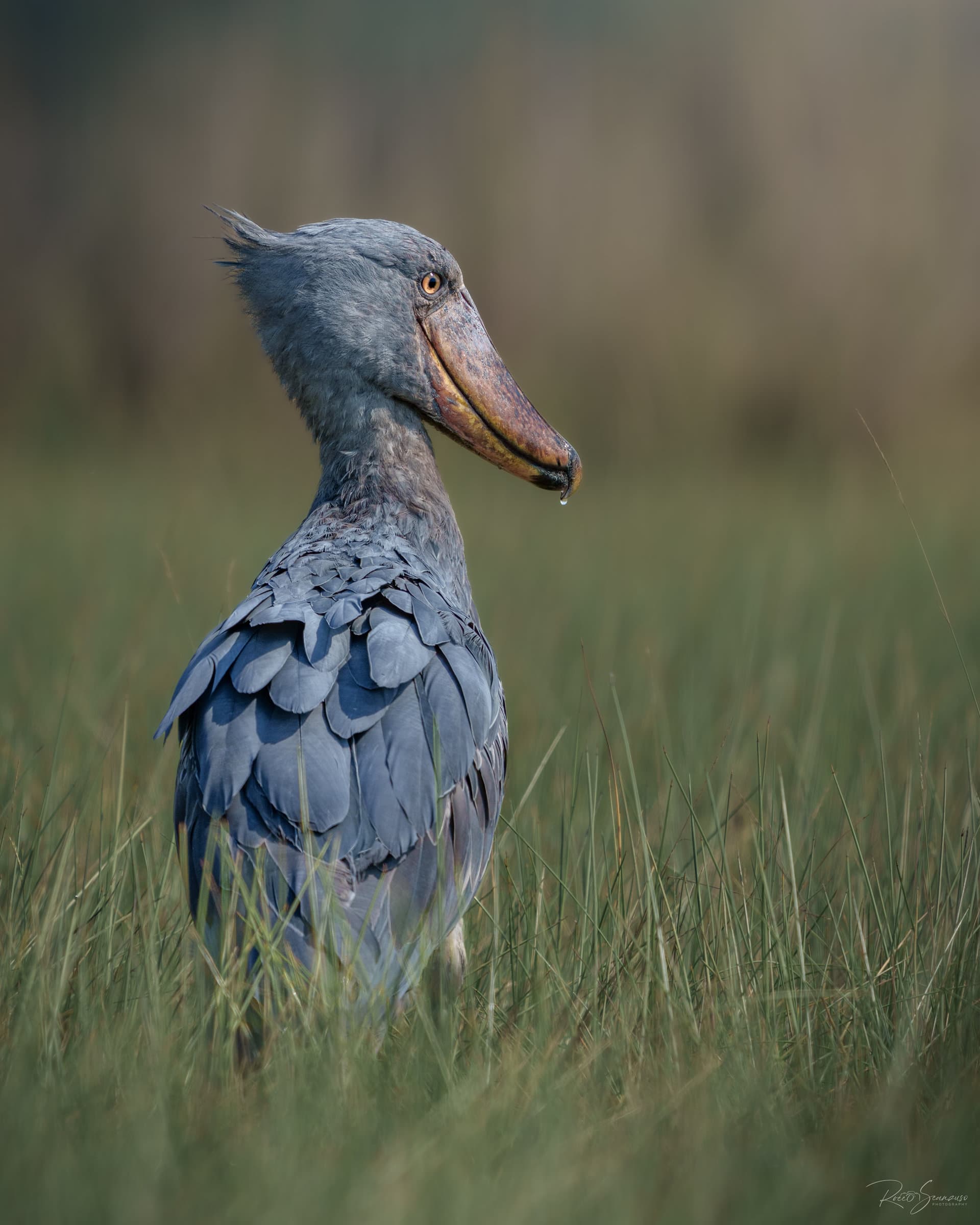
Two of the best-known areas are:
Mabamba Bay Wetland
Mabamba Bay lies within the Lake Victoria wetland system and is one of Uganda’s best-known Shoebill birding destinations.
Birding typically involves exploring wetland channels by small boat while scanning papyrus, floating vegetation and open-water areas.
Mabamba is particularly convenient because it can be incorporated near the beginning or end of an itinerary using Entebbe.
However, experienced birders should not treat Mabamba as a single-species destination.
The wetland also supports numerous other waterbirds and papyrus-associated species.
Murchison Falls Nile Delta
The Nile Delta in Murchison Falls National Park provides another important opportunity to search for Shoebills.
Here the birding experience can be combined with waterbirds along the Nile, savannah birding inside the national park and forest birding in nearby Budongo.
This makes Murchison particularly valuable for longer specialist itineraries.
Uganda’s Papyrus Wetlands
Uganda’s extensive papyrus and freshwater wetland systems create suitable habitat for a broader community of specialized birds.
Birders searching for Shoebill can therefore simultaneously pay attention to papyrus specialists, herons, kingfishers, jacanas and other wetland species.
Even at established sites, Shoebill sightings cannot be guaranteed.
Can You See Shoebills in Kenya?
The Shoebill’s main modern range is associated with large freshwater swamp systems in parts of tropical East and Central Africa rather than Kenya’s principal mainstream birding circuits.
Kenya should therefore not be marketed as equivalent to Uganda for a dedicated Shoebill safari.
Historical or occasional records should also not be confused with a reliable tourism experience.
Birders whose Shoebill sighting is a major priority should base their travel planning on established habitat and current reliable field information rather than assuming that a rare national record means a species can routinely be found.
This distinction is important when comparing national bird lists.
A species appearing on a country’s historical checklist does not necessarily mean that visiting birders have a realistic chance of finding it during a normal safari.
Adding Shoebill to an East Africa Birding Safari
For travelers combining Uganda and Kenya, Uganda can provide the Shoebill and papyrus-wetland component of the itinerary.
For example, a longer East African route could begin with:
Entebbe → Mabamba → western Uganda forests → Bwindi
The traveler could then continue or fly onward to Kenya for:
Rift Valley lakes → savannah → dry-country habitats → coastal birding
This approach allows the two countries to complement one another rather than duplicate the same birding environments.
Forest Birding – Uganda vs Kenya
Forest birding is another area where simply comparing national species totals does not tell the whole story.
Both Uganda and Kenya contain important forests, but the biogeographic character of those forests differs.
Forest Birding in Uganda
Uganda contains several major forest-birding destinations.
Bwindi
Bwindi Impenetrable National Park is particularly important for Albertine Rift and montane forest species.
Experienced birders may allocate several days to working different trails and elevations.
Semuliki
Semuliki National Park introduces lowland forest with strong Guinea-Congo influence.
For serious birders, Semuliki can add species with Central African affinities that differ considerably from Uganda’s montane forest community.
Kibale
Kibale National Park provides productive tropical forest birding and is particularly associated with searches for the Green-breasted Pitta.
It also allows travelers to combine birdwatching with chimpanzee trekking.
Budongo
Budongo Forest, particularly the Royal Mile, is another important specialist forest-birding area.
Its proximity to Murchison Falls allows forest birding to be combined efficiently with savannah and Nile birding.
Mabira
Mabira Forest provides another forest environment within relatively easy reach of central Uganda.
It can be useful for birders with additional time before or after longer western circuits.
Together, these forests mean that Uganda’s forest birding is not represented by a single ecosystem.
Forest Birding in Kenya
Kenya also provides several types of forest birding.
The country’s forest habitats range from western rainforest remnants to central highland forests and Indian Ocean coastal forests.
Kakamega Forest is particularly significant in western Kenya because of its Central African rainforest affinities.
Kenya’s highland forests add different montane bird communities, while coastal forests introduce species associated with the East African coastal region.
This means serious forest birders should not view Kenya as exclusively a savannah destination.
Guinea-Congo Forest Influence in Uganda
Semuliki is particularly important in this comparison.
The park represents the eastern extension of the Congo’s Ituri Forest and contains numerous species associated with the Guinea-Congo forest biome.
For experienced birders, this can make Semuliki one of Uganda’s most valuable specialist destinations.
The forest environment is demanding.
Birds may remain high in the canopy or hidden in dense vegetation, and vocal identification can be essential.
The reward is access to a bird community very different from Uganda’s open savannahs and montane forests.
Coastal Forest Birding in Kenya
Kenya’s Indian Ocean coastal forests represent a habitat that Uganda, as a landlocked country, cannot provide.
These forests form part of the distinctive East African coastal ecosystem.
Longer Kenyan itineraries can combine coastal forest birding with mangroves, tidal areas and marine environments.
This creates a completely different birding experience from Uganda’s Albertine Rift and Congo-influenced forests.
For travelers trying to maximize ecological diversity, Kenya’s coast can therefore be an important addition.
Which Country Should Forest Birders Choose?
The answer depends on the birder’s target species.
Birders prioritizing:
- Albertine Rift specialties
- Montane forest birds
- Guinea-Congo species
- Gorilla-and-birding combinations
may devote more time to Uganda’s forest circuit.
Birders prioritizing:
- Kenyan highland species
- Western Kenyan forests
- East African coastal forest species
- Coastal and mangrove combinations
may need more time in Kenya.
Experienced birders wanting the widest possible forest experience can combine both.
Savannah Birding – Uganda vs Kenya
Both Uganda and Kenya provide excellent savannah birding, but the scale, dryness and ecological character of their open landscapes vary considerably.
Savannah birding is especially important because it adds species unlikely to occur in dense tropical forests.
Uganda Savannah Birding
Uganda’s principal savannah birding destinations include:
Murchison Falls National Park
Murchison combines open savannah, woodland, riverine habitat and the Nile.
This creates opportunities for raptors, hornbills, bee-eaters, waterbirds and grassland species.
Its proximity to Budongo Forest makes it particularly useful for habitat-diverse itineraries.
Queen Elizabeth National Park
Queen Elizabeth combines savannah with wetlands, woodland, crater environments and the Kazinga Channel.
This mixture can contribute substantially to a longer Uganda checklist.
Lake Mburo National Park
Lake Mburo adds acacia woodland, grassland and wetland birding.
It is particularly useful as a habitat transition between central Uganda and southwestern forest destinations.
Kidepo Valley National Park
Kidepo offers Uganda’s strongest contrast with the wetter western circuit.
Its northeastern location and semi-arid environment provide opportunities to search for dry-country and savannah species that may be absent from Bwindi, Kibale and other western destinations.
Kenya Savannah Birding
Kenya contains some of East Africa’s most extensive and recognizable savannah landscapes.
Maasai Mara
The Maasai Mara provides open grassland, riverine habitat and woodland birding alongside one of Africa’s best-known large-mammal ecosystems.
Birders can search for raptors, grassland birds and open-country species while simultaneously observing traditional safari wildlife.
Amboseli
Amboseli combines open plains, wetlands and woodland against the broader Kilimanjaro landscape.
The mixture of aquatic and dry-country habitats can create particularly diverse birding.
Samburu
Samburu adds semi-arid bush and dry woodland.
For experienced birders, this can be particularly useful for species associated with northern Kenya’s drier environments.
Tsavo
The enormous Tsavo ecosystem provides extensive dry woodland, scrub and savannah birding.
Its location also makes it possible to connect dry-country birding with Kenya’s coastal ecosystems on longer itineraries.
Raptors, Hornbills, Bee-eaters and Grassland Birds
Both countries provide excellent opportunities to search for raptors and open-country birds, but they do so across somewhat different landscapes.
Uganda combines savannah birding with nearby forests, freshwater wetlands and Albertine Rift habitats.
Kenya provides a much larger geographical extent of dry and semi-arid open country, along with Rift Valley and coastal ecosystems.
Birders in both countries may encounter diverse groups such as:
- Eagles
- Vultures
- Hawks
- Falcons
- Hornbills
- Bee-eaters
- Rollers
- Larks
- Pipits
- Cisticolas
- Bustards
- Nightjars
The actual species composition varies according to habitat, region and season.
For experienced birders, this is another reason why Uganda and Kenya work particularly well as complementary destinations.
Uganda can concentrate the itinerary around Albertine Rift forests, Shoebill wetlands and forest-primate combinations, while Kenya can extend the trip into Rift Valley, dry-country, extensive savannah and coastal ecosystems.
Rather than choosing a destination solely according to its national bird total, serious birders should compare their existing life list with the habitats and target species available in each country.
Wetland and Waterbird Safari – Uganda vs Kenya
Wetlands are an important part of any serious Uganda birding safari vs Kenya comparison. Both countries provide productive waterbird habitats, but the character of their wetland birding is different.
Uganda is particularly notable for its papyrus wetlands, freshwater lakes, river systems and channels, while Kenya adds the famous Rift Valley lake system, alongside freshwater wetlands, alkaline lakes and coastal habitats.
For birders, these differences mean that Uganda and Kenya can complement each other particularly well on a longer East African birding safari.
Uganda Wetland Birding
Uganda’s position within the Great Lakes region, together with its extensive freshwater systems, creates numerous opportunities for wetland birding.
The country contains several Ramsar-designated Wetlands of International Importance, including Mabamba Bay, Lutembe Bay and other important aquatic ecosystems.
Experienced birders should not treat Uganda’s wetlands solely as places to search for Shoebill. They can also provide opportunities for papyrus specialists, kingfishers, herons, storks, jacanas, rails, waders and seasonal migrants.
Mabamba Bay Wetland
Mabamba Bay is one of Uganda’s best-known wetland birding destinations.
Situated within reach of Entebbe, it is particularly famous for Shoebill searches.
Birding usually involves exploring narrow channels and open areas by small boat while scanning papyrus edges and floating vegetation.
For serious birders, the excursion should continue beyond the headline target. Mabamba’s papyrus ecosystem supports a broader wetland bird community and can provide an excellent introduction to Uganda birding.
Because of its location, Mabamba can be included at either the beginning or end of a longer Uganda safari.
Lutembe Bay
Lutembe Bay is another important Lake Victoria wetland and a designated Ramsar site.
It can be particularly interesting for waterbirds and seasonal migrants.
For experienced birders, combining Lutembe with Mabamba provides an opportunity to explore different wetland environments around Lake Victoria rather than relying on one location.
Kazinga Channel
The Kazinga Channel in Queen Elizabeth National Park connects Lake George and Lake Edward.
A boat excursion can provide opportunities to observe waterbirds along shorelines, shallow areas and waterside vegetation.
Birding may produce herons, storks, kingfishers, African Fish Eagles, cormorants and other aquatic species.
The advantage of Kazinga is that wetland birding can be combined with Queen Elizabeth’s savannah, woodland and crater habitats, making the park useful for building a broad checklist.
Murchison Falls Nile Delta
The Nile Delta in Murchison Falls National Park adds another important wetland environment.
Where the Victoria Nile approaches Lake Albert, shallow waters and surrounding vegetation support a diverse waterbird community.
The delta is also one of Uganda’s established areas for searching for the Shoebill.
A specialist itinerary can combine delta birding with savannah birding in Murchison and forest birding in nearby Budongo.
Lake Mburo
Lake Mburo National Park combines wetland habitats with acacia woodland and savannah.
This gives birders the opportunity to move between water-associated species and dry woodland birds within one destination.
Suitable waterways can also provide opportunities to search for secretive species such as the African Finfoot, although sightings cannot be guaranteed.
Kenya Rift Valley Lakes
Kenya’s Rift Valley lakes create one of East Africa’s most distinctive waterbird circuits.
Important systems include lakes such as:
- Lake Nakuru
- Lake Bogoria
- Lake Naivasha
- Lake Elementaita
- Other suitable Rift Valley wetlands
These lakes differ considerably in water chemistry, depth, surrounding vegetation and seasonal conditions.
Some are alkaline, while others provide freshwater habitats.
This ecological variation means birders can encounter different communities by moving between several lakes rather than visiting only one.
Waterbird itineraries may include:
- Flamingos
- Pelicans
- Herons
- Storks
- Cormorants
- Grebes
- Ducks
- Gulls and terns
- Waders
- Fish eagles
- Migratory species
For experienced birders, the Rift Valley lakes can therefore contribute significantly to a Kenya checklist.
Flamingo Birding in Kenya
Flamingos are among the most recognizable birds associated with Kenya’s Rift Valley.
Both Lesser and Greater Flamingos may occur in suitable lake systems, but travelers should avoid assuming that enormous concentrations will always be present at one particular lake.
Flamingo distribution can change significantly.
Factors such as:
- Water depth
- Salinity
- Food availability
- Algal productivity
- Rainfall
- Lake chemistry
can influence where large numbers gather.
This is why historic photographs of vast flamingo concentrations at a particular lake should not automatically be treated as a prediction of current conditions.
Experienced birders and photographers should use recent field information when deciding which Rift Valley lakes to prioritize.
This flexibility is especially important for photography-focused itineraries.
Papyrus Specialists in Uganda
One of Uganda’s most distinctive wetland-birding features is its extensive papyrus habitat.
Papyrus swamps support specialized bird communities that can be particularly interesting to experienced birders.
Potential targets may include:
- Papyrus Gonolek
- Papyrus Canary
- White-winged Swamp Warbler
- Carruthers’s Cisticola
Distribution varies between species, so not every papyrus wetland should be expected to contain every target.
The Papyrus Gonolek (Laniarius mufumbiri) is particularly attractive to visiting birders because of its striking coloration and association with papyrus environments in the Great Lakes region.
As with all specialist birds, sightings should never be guaranteed.
Uganda vs Kenya for Migratory Birds
Migratory birds add another seasonal dimension to birding in both Uganda and Kenya.
Resident birds remain the foundation of each country’s birding experience, but travelers visiting during appropriate months may also encounter species arriving from Eurasia or moving within Africa.
Palearctic Migrants in Uganda
Uganda’s wetlands, savannahs and open habitats receive Palearctic migrants during the northern winter.
Uganda Wildlife Authority’s 2026 wildlife reporting places the general Palearctic migrant period around October to March.
During this period, migrant species join Uganda’s extensive resident bird population.
Wetlands such as Mabamba and Lutembe, together with national parks and other aquatic habitats, can become particularly interesting.
March and October should be viewed as transitional months rather than exact boundaries.
Different species arrive and depart at different times, and annual weather conditions can affect migration.
Migratory Birding in Kenya
Kenya also lies on important migration routes.
Its geography provides migrants with a particularly wide range of habitats, including:
- Rift Valley lakes
- Freshwater wetlands
- Savannah
- Grassland
- Highlands
- Coastal wetlands
- Mangroves
- Indian Ocean shoreline
Kenya Wildlife Service reports substantial numbers of both Palearctic and intra-African migrants within the country’s national bird list.
The combination of inland and coastal habitats makes Kenya especially interesting for birders who want to incorporate migration into a broad multi-habitat itinerary.
Combining Resident Specialties and Migrants
Experienced birders should not choose travel dates solely because migrants are present.
The stronger strategy is to consider both resident target species and seasonal visitors.
For example, a traveler may prioritize Uganda’s Albertine Rift species while selecting dates that also provide opportunities for Palearctic migrants.
Similarly, a Kenya itinerary might combine dry-country resident specialties with seasonal visitors using Rift Valley lakes or coastal habitats.
Wild Planet Safaris recommends building travel dates around the highest-priority target species first, then considering what additional migrants may be present during the same period.
Uganda vs Kenya for Experienced Birders
For experienced birders, the Uganda-versus-Kenya decision becomes much more specific.
Travelers who already have substantial African life lists should not choose according to national species totals alone.
The most important question is:
Which country contains the largest number of species you still need?
Uganda for Target-Species Birding
Uganda can be particularly valuable for birders targeting species associated with Albertine Rift, montane forest, papyrus wetland and Central African-influenced habitats.
Important targets may include:
Albertine Rift Specialties
Bwindi, Mgahinga and the Rwenzori region provide access to birds associated with the Albertine Rift.
Potential targets include Rwenzori Turaco, Rwenzori Batis, Regal Sunbird and other restricted-range species.
Shoebill
Mabamba and the Murchison Nile Delta are established destinations for incorporating Shoebill searches into a Uganda birding itinerary.
Green-breasted Pitta
Kibale National Park is one of Uganda’s principal destinations associated with specialist searches for the Green-breasted Pitta.
The species can be difficult to locate, so experienced birders should allocate adequate time.
African Green Broadbill
The African Green Broadbill, also known as Grauer’s Broadbill, is another highly sought-after Albertine Rift target.
Suitable montane forest in southwestern Uganda, particularly around Bwindi, forms an important part of specialist searches.
Guinea-Congo Forest Species
Semuliki National Park provides opportunities to search for species associated with Central African lowland forests.
For experienced birders who have already traveled extensively through East African savannahs, Semuliki can be especially valuable.
Kenya for Target-Species Birding
Kenya’s value to experienced birders lies partly in habitats that are either absent from Uganda or much more extensively represented in Kenya.
These include:
Dry-country habitats – particularly in northern and eastern Kenya.
Rift Valley systems – adding distinctive waterbird environments.
Highland forests – supporting regional montane species.
Coastal forests – introducing East African coastal specialists.
Mangroves and tidal habitats – absent from landlocked Uganda.
Experienced birders can therefore design Kenya routes around specific ecological zones rather than simply following a standard big-game safari circuit.
Which Country Adds More to Your Life List?
There is no universal answer.
A birder who has already traveled extensively in Kenya and Tanzania may find that Uganda produces more new birds because of its Albertine Rift and Central African forest influence.
A traveler who has already explored Uganda, Rwanda or Central African forests may gain more from Kenya’s drylands, Rift Valley and coastal ecosystems.
Before choosing a destination, experienced birders should compare their existing checklist with:
- Albertine Rift species
- Guinea-Congo species
- Papyrus specialists
- Dry-country species
- Coastal specialists
- Highland birds
- Migratory targets
For the most precise itinerary planning, travelers can send their existing East Africa life list and target-bird list before the safari.
Uganda vs Kenya for First-Time African Birders
Uganda and Kenya can both work well for travelers taking their first African birding safari, but they provide somewhat different introductions to the continent.
Beginners do not need to recognize every call or arrive with a long target list.
The priority should be choosing an itinerary that provides sufficient observation time without moving too quickly between destinations.
Uganda for First-Time Birders
Uganda provides a particularly varied introduction to African birding because different habitats can be combined within one circuit.
A first-time birder can experience:
- Forest birds
- Savannah species
- Wetland birds
- Shoebill searches
- Raptors
- Waterbirds
- Albertine Rift species
Birding can also be combined with gorilla trekking and chimpanzee trekking, creating a particularly varied nature-focused trip.
For travelers with limited African wildlife experience, this combination can be appealing because the safari does not need to concentrate exclusively on birds.
Kenya for First-Time Birders
Kenya’s large open-country environments can also be particularly accessible for new birders.
Savannah species are often easier to observe than birds concealed inside dense tropical forests.
Destinations such as the Maasai Mara, Amboseli and other open landscapes allow travelers to combine birdwatching with famous large-mammal experiences.
Kenya’s established safari circuits also allow first-time travelers to combine birding with Rift Valley lakes, highlands and other habitats.
Choosing According to Your Wider Safari Interests
First-time birders should consider what they want in addition to birds.
Travelers prioritizing:
- Mountain gorillas
- Chimpanzees
- Shoebill
- Albertine Rift forests
may build their trip around Uganda.
Travelers particularly interested in:
- Extensive open savannah
- Rift Valley lakes
- Dry-country landscapes
- Indian Ocean extensions
may devote more time to Kenya.
Travelers interested in both sets of experiences can combine the countries.
Birding and Gorilla Trekking – Uganda vs Kenya
The possibility of combining specialist birding with wild mountain gorilla trekking creates one of the clearest differences between Uganda and Kenya.
Birding and Gorillas in Uganda
Uganda protects mountain gorillas in:
- Bwindi Impenetrable National Park
- Mgahinga Gorilla National Park
These are not simply gorilla destinations.
Both also lie within the Albertine Rift and provide important specialist birding.
This allows travelers to combine two major wildlife interests without traveling to completely separate regions.
A typical specialist itinerary can allocate several days to birding and reserve one separate day for gorilla trekking.
Can You Go Gorilla Trekking in Kenya?
Kenya does not offer trekking to wild mountain gorillas.
Mountain gorillas occur in the Bwindi-Sarambwe and Virunga landscapes of Uganda, Rwanda and the Democratic Republic of the Congo.
Therefore, travelers wanting to combine East African birding with wild mountain gorilla trekking need to include one of the gorilla-range countries.
Uganda is particularly practical because Bwindi and Mgahinga themselves are important birding destinations.
Combining Albertine Rift Birds and Mountain Gorillas
For experienced birders, the strongest approach is to avoid treating Bwindi as a one-night gorilla stop.
Instead, several days can be allocated to the region.
For example:
Day 1: Specialist forest birding
Day 2: Gorilla trekking
Days 3–4: Additional target-species birding
This provides time for both experiences without forcing serious birding into the few hours left after a gorilla activity.
Birding and Chimpanzee Experiences
Primates provide another important safari combination, although Uganda and Kenya should not be presented as offering identical experiences.
Uganda Birding and Chimpanzee Trekking
Kibale National Park is one of Uganda’s major destinations for combining forest birding with chimpanzee trekking.
Experienced birders may visit Kibale to search for forest species including the Green-breasted Pitta, while another part of the stay can be dedicated to chimpanzee trekking.
Nearby Bigodi Wetland adds forest-edge, wetland and community-landscape birding.
A western Uganda route can therefore combine:
Semuliki → Kibale → Bigodi → Queen Elizabeth → Bwindi
This progression moves through dramatically different habitats while also allowing primate and wildlife experiences.
Primate Experiences in Kenya
Kenya has its own primate diversity, including monkeys and other primates in various forest and protected habitats.
However, these experiences should not be marketed as direct equivalents to Uganda’s established chimpanzee trekking in Kibale or mountain gorilla trekking in Bwindi and Mgahinga.
For travelers whose safari priorities specifically include structured gorilla and chimpanzee trekking alongside specialist birding, Uganda offers a particularly practical combination.
Birding and Big-Game Safaris – Uganda vs Kenya
Birders do not have to choose between birds and classic African wildlife.
Both Uganda and Kenya allow travelers to combine serious birdwatching with opportunities to observe large mammals.
The main difference is how the birding is incorporated into the game-drive schedule.
Wildlife and Birding in Uganda
Important Uganda destinations include:
Murchison Falls National Park
Combines savannah, woodland, Nile birding and large mammals.
It can also be paired with nearby Budongo Forest.
Queen Elizabeth National Park
Combines game drives with the Kazinga Channel, wetlands, woodland and crater landscapes.
Lake Mburo National Park
Adds acacia woodland, wetland birding and open-country wildlife.
Kidepo Valley National Park
Provides extensive northeastern savannah and semi-arid birding alongside traditional wildlife viewing.
Together, these parks mean a Uganda birding itinerary can move from specialist forests into classic African savannah without leaving the country.
Wildlife and Birding in Kenya
Kenya’s internationally known wildlife areas are also major birding environments.
Maasai Mara
Open grassland, riverine vegetation and woodland provide birding opportunities alongside large mammals.
Amboseli
Wetlands, plains and woodland create a diverse birding environment within a famous wildlife landscape.
Samburu
Semi-arid bush and riverine habitats add dry-country birds while travelers observe northern Kenya’s characteristic mammals.
Tsavo
The vast Tsavo ecosystem combines dry woodland, savannah and bush habitats with extensive wildlife viewing.
For travelers interested equally in birds and large mammals, these destinations allow both interests to be incorporated into the same safari.
Bird-Focused Game Drives
A conventional game drive and a bird-focused game drive are not exactly the same.
Standard wildlife drives may concentrate heavily on finding lions, elephants, leopards and other large mammals.
Serious birders generally need a slower pace.
A bird-focused drive may stop for:
- Raptors perched in distant trees
- Small birds moving through shrubs
- Hornbills
- Bee-eaters
- Rollers
- Bustards
- Larks
- Pipits
- Cisticolas
- Waterbirds
- Mixed feeding groups
The vehicle may remain in one productive area for much longer than a conventional game drive.
Birders should therefore communicate their priorities before the safari.
This is especially important when arranging a private birding safari, because the guide and daily schedule can then be structured around birdwatching rather than attempting to follow the pace of a general-interest wildlife group.
For travelers considering Uganda vs Kenya for birding and wildlife, both countries can provide strong combinations. The more important distinction is the surrounding habitat: Uganda can connect savannah wildlife with Albertine Rift forests, Shoebill wetlands and primate trekking, while Kenya can connect big-game areas with Rift Valley lakes, extensive drylands and Indian Ocean coastal ecosystems.
Bird Photography – Uganda vs Kenya
Bird photography adds another dimension to the Uganda birding safari vs Kenya comparison. Both countries offer excellent photographic opportunities, but the conditions can be very different.
Uganda can be particularly rewarding for photographers interested in forest birds, Shoebill, papyrus wetlands, primates and combinations of forest and savannah photography. Kenya adds extensive open landscapes, dry-country birds, raptors, waterbirds and classic savannah photography.
The right destination therefore depends partly on the photographer’s preferred subjects and photographic style.
Uganda Bird Photography
Uganda’s varied habitats allow photographers to work with birds in forests, wetlands, waterways, savannahs and mountain environments during the same trip.
Forest Photography
Forest photography can be one of the most rewarding but technically challenging parts of a Uganda birding safari.
Important forest destinations include:
- Bwindi Impenetrable National Park
- Kibale National Park
- Semuliki National Park
- Budongo Forest
- Mabira Forest
Dense vegetation and low light can make photography difficult. Birds may remain behind foliage, move rapidly through the canopy or appear briefly in the understory.
Photographers should be prepared to work with higher ISO settings and relatively fast shutter speeds while maintaining realistic expectations about obtaining unobstructed images of every target.
Patience is particularly important when photographing specialist forest birds.
Shoebill Photography
The Shoebill is one of Uganda’s most distinctive bird-photography subjects.
Mabamba Bay Wetland is particularly practical for photographers because excursions can be incorporated near Entebbe.
The Murchison Falls Nile Delta provides another established Shoebill-search area.
Photographers should prioritize responsible observation. Boats and birders should maintain appropriate distances and follow local guide instructions rather than approaching birds aggressively for photographs.
Shoebill sightings are opportunities rather than guarantees.
Wetland Photography
Uganda’s wetlands provide photographic opportunities extending far beyond Shoebill.
Potential subjects include:
- Kingfishers
- Herons
- Storks
- Jacanas
- Cormorants
- African Fish Eagles
- Papyrus-associated birds
- Migratory waterbirds
Boat excursions can sometimes provide low viewing angles and relatively open backgrounds, although photographers should protect equipment from water and sudden rain.
Birding and Primate Photography
Uganda also provides the unusual opportunity to combine bird photography with mountain gorilla and chimpanzee experiences.
A photography-focused itinerary can include specialist birding in Bwindi followed by a dedicated gorilla trek, or Kibale forest birding combined with chimpanzee trekking.
The activities should generally be scheduled separately to avoid rushing either experience.
Savannah Photography
Uganda’s savannah destinations include Murchison Falls, Queen Elizabeth, Lake Mburo and Kidepo Valley.
These areas provide more open photographic conditions than forests and can produce opportunities for raptors, hornbills, bee-eaters, rollers and grassland species.
Bird photography can also be combined with mammals and landscape photography.
Kenya Bird Photography
Kenya’s extensive open habitats make it particularly attractive to photographers who prefer savannah, dry-country and waterbird photography.
Open Landscapes
Large open environments can make locating and photographing birds easier than in dense tropical forest.
Open backgrounds, isolated trees and broad skies can provide useful opportunities for both environmental compositions and closer portraits.
Raptors
Kenya’s savannah and semi-arid landscapes can be productive for raptor photography.
Photographers may encounter eagles, vultures, hawks, falcons and other birds of prey using exposed trees, cliffs or open skies.
Savannah Species
Open-country photography may include:
- Bee-eaters
- Rollers
- Hornbills
- Bustards
- Larks
- Pipits
- Cisticolas
- Storks
- Vultures
Bird-focused vehicles should move slowly and allow adequate time at productive locations.
Waterbirds
Kenya’s Rift Valley lakes and other wetlands provide opportunities to photograph flamingos, pelicans, storks, herons and other waterbirds.
Photographers should remember that water levels and bird concentrations change. Historic images of enormous flamingo gatherings at one particular lake do not guarantee identical conditions during a future visit.
Dry-Country Species
Northern and eastern Kenya add birds associated with semi-arid scrub, acacia woodland and dry savannah.
These habitats provide photographic opportunities that contrast sharply with Uganda’s humid western forests.
Forest vs Open-Country Photography
For photographers, one of the clearest differences between Uganda and Kenya is the balance between closed forest and open-country environments.
| Photography Factor | Uganda Forest Birding | Kenya Open-Country Birding |
|---|---|---|
| Light | Often limited | Generally more abundant |
| Background | Dense vegetation | Often cleaner/open |
| Bird visibility | Frequently challenging | Often easier |
| Photography pace | Patient and target-focused | More scanning and vehicle-based |
| Typical strength | Forest specialists | Savannah and dry-country species |
| Main challenge | Low light and foliage | Distance, heat and harsh midday light |
This does not mean Uganda is only suitable for forest photography or Kenya only for open-country photography. Both countries contain a wide range of environments.
Photographers should choose according to their priority subjects rather than expecting one country to be universally better.
Best Time for Birding in Uganda vs Kenya
There is no single best month for every Uganda or Kenya birding safari.
The right season depends on target species, habitats, migration, photography priorities and tolerance for rain.
Best Time for Uganda Birding
Uganda offers birdwatching throughout the year.
The relatively drier periods can make road travel and forest trails easier, particularly on longer multi-destination circuits.
Broadly, December to February and June to September are commonly treated as relatively drier periods in many parts of Uganda, although rainfall varies considerably by region and year.
The wetter periods should not be dismissed.
Rain can increase vegetation growth and bird activity, while some forest species may be particularly interesting during breeding or nesting periods.
Uganda Wildlife Authority identifies May and June as important nesting months in Bwindi and Mgahinga, making this period interesting for Albertine Rift birding.
For migrant-focused travelers, the period around October to March is particularly relevant for many Palearctic visitors.
The best period therefore depends on whether the traveler’s priority is:
- Migratory birds
- Albertine Rift specialties
- Forest birds
- Shoebill
- Photography
- Gorilla trekking
- Chimpanzee trekking
- Savannah birding
Best Time for Kenya Birding
Kenya also offers year-round birdwatching, but its considerable geographical size makes simple national seasonal statements less useful.
Conditions can vary between:
- Northern drylands
- Rift Valley
- Central highlands
- Maasai Mara
- Tsavo
- Indian Ocean coast
Rainfall patterns and bird movements therefore need to be considered according to the actual itinerary.
For experienced birders, planning around target habitats and species is more useful than selecting a month based solely on a generic national dry-season description.
Best Time for Migratory Birds
Both Uganda and Kenya receive seasonal migrants.
The northern winter period, broadly around October through March, is particularly relevant for many Palearctic migrants in East Africa.
Traveling during this period can add seasonal visitors to an already extensive resident bird list.
However, experienced birders should prioritize resident target species first and use migration as an additional planning factor.
Traveling During the Green Season
The rainy or green season can be rewarding for birders and photographers.
Potential advantages include:
- Green landscapes
- Active birdlife
- Breeding activity
- Dramatic photographic backgrounds
- Fewer visitors in some locations
Potential challenges include:
- Muddy forest trails
- Rain interruptions
- Difficult road sections
- Equipment protection
- Cloudier photography conditions
A rain jacket, waterproof footwear and camera protection are particularly important.
Uganda vs Kenya Birding Safari Cost
The cost of a Uganda vs Kenya birding safari varies considerably according to itinerary design.
Rather than advertising one generic price, travelers should compare what is actually included.
What Determines Uganda Birding Safari Cost?
Major cost factors include:
Number of days: Longer specialist itineraries require additional accommodation, guiding, transport and park fees.
Private safari vehicle: Serious birding generally works best with a private vehicle rather than a conventional group wildlife safari.
Specialist birding guide: Target-species trips may require experienced bird-focused guiding.
Accommodation: Budget, mid-range and luxury properties can substantially change the final price.
Park and conservation fees: Visiting multiple protected areas increases the overall cost.
Gorilla permits: Adding mountain gorilla trekking significantly affects the trip budget.
Chimpanzee permits: Chimpanzee trekking or habituation experiences also need to be included when applicable.
Boat excursions: Mabamba, Kazinga Channel, Murchison and other boat-based activities may add separate costs.
Number of travelers: Vehicle and guiding costs can often be shared, so per-person prices commonly decrease as the private group becomes larger.
What Determines Kenya Birding Safari Cost?
Kenya’s birding safari costs depend on similar factors:
- Safari duration
- Private vehicle
- Specialist birding guide
- Accommodation
- Park/reserve fees
- Boat or wetland excursions
- Domestic flights where used
- Number of travelers
The destinations selected also matter.
A relatively concentrated route differs substantially from a long itinerary incorporating Rift Valley lakes, northern drylands, major savannah reserves and the coast.
Long internal distances may increase transport costs and travel time.
Budget, Mid-Range and Luxury Birding Safaris
Both destinations can be planned at different accommodation levels.
Budget birding safaris generally prioritize simpler accommodation while maintaining the core guiding, transportation and birding experiences.
Mid-range birding safaris balance comfortable accommodation with private transportation and extensive birding time.
Luxury birding safaris may include higher-end lodges, premium camps, upgraded rooms and domestic flights where appropriate.
Wild Planet Safaris should provide actual quotations according to the final route rather than publishing unrealistic fixed prices that may quickly become outdated.
Why Specialist Birding Can Cost More Than a General Safari
A specialist birding safari is often structured differently from a conventional wildlife holiday.
Experienced birders may require:
- Private transportation
- Specialist guiding
- Very early starts
- Longer daily guiding hours
- Multiple days in one habitat
- Repeat searches for difficult targets
- Boat excursions
- Night birding where permitted
- Less rigid schedules
A general tourist may spend one night near a forest and continue onward after breakfast.
A specialist birder may spend three days there searching for a small number of priority species.
The additional time and expertise can affect the overall safari cost.
How Many Days Do You Need – Uganda vs Kenya?
Safari duration should be based on birding objectives, not simply how many attractions can be placed into an itinerary.
7-Day Uganda Birding Safari
Seven days can work well for a focused Uganda route.
For example:
Entebbe → Mabamba → Lake Mburo → Bwindi → Entebbe
Alternatively, experienced birders can concentrate on fewer destinations and spend more time searching for target species.
Seven days is not enough to comprehensively cover Uganda’s major birding regions.
7-Day Kenya Birding Safari
Seven days can similarly provide a focused Kenyan birding experience.
The itinerary should concentrate on a limited geographical area rather than attempting to cover northern Kenya, the Rift Valley, major savannah parks and the coast simultaneously.
10–14 Day Uganda Birding Safari
Ten to fourteen days provides much more flexibility.
A route might include:
Mabamba → Murchison/Budongo → Kibale → Queen Elizabeth → Bwindi → Lake Mburo
Specialist itineraries can substitute or add Semuliki depending on target species.
10–14 Day Kenya Birding Safari
A 10–14-day Kenya trip can incorporate several contrasting environments such as:
- Central/highland birding
- Rift Valley lakes
- Savannah
- Selected dry-country habitats
Coastal birding can be added where travel time and target species justify it.
14–21 Day Uganda and Kenya Birding Safari
Travelers combining both countries should avoid trying to cover too much territory too quickly.
Fourteen days can provide a selective two-country itinerary.
Around 18–21 days gives considerably more room for serious birding, habitat diversity and repeat searches.
The exact duration should be determined by the traveler’s target list.
Sample Uganda vs Kenya Birding Itineraries
These routes are examples rather than fixed programs. Specialist itineraries should be adjusted according to target species, season and available time.
10-Day Uganda Birding Route
Day 1: Arrival in Entebbe
Day 2: Mabamba Bay – Shoebill and wetland birding
Day 3: Transfer toward Kibale with birding en route
Day 4: Kibale specialist forest birding
Day 5: Kibale/Bigodi and transfer toward Queen Elizabeth
Day 6: Queen Elizabeth – savannah and Kazinga Channel birding
Day 7: Transfer to Bwindi with birding en route
Day 8: Bwindi specialist forest birding
Day 9: Bwindi birding and transfer toward Lake Mburo
Day 10: Lake Mburo birding and return to Entebbe
Travelers targeting difficult Albertine Rift species should consider adding extra days in Bwindi.
10-Day Kenya Birding Route
A representative route could include:
Day 1: Arrival in Nairobi
Day 2: Nairobi/highland birding
Day 3: Rift Valley birding
Day 4: Lake Naivasha and surrounding habitats
Day 5: Additional Rift Valley lake birding
Day 6: Transfer to a savannah ecosystem
Day 7: Full-day savannah birding
Day 8: Continue to selected dry-country habitat
Day 9: Specialist dry-country birding
Day 10: Return toward Nairobi
The route should be adjusted depending on whether the traveler’s priorities are dry-country, Rift Valley, forest, savannah or coastal species.
18–21 Day Uganda and Kenya Birding Safari
A longer combined itinerary could be structured around ecological progression.
Uganda section:
Days 1–2: Entebbe and Mabamba
Days 3–4: Kibale and Bigodi
Days 5–6: Queen Elizabeth
Days 7–9: Bwindi
Day 10: Transfer/connection
Kenya section:
Days 11–12: Nairobi and central/highland habitats
Days 13–14: Rift Valley lakes
Days 15–16: Savannah birding
Days 17–18: Dry-country birding
Days 19–21: Additional target habitat or coastal extension
This should be customized according to the traveler’s existing life list.
Can You Combine Uganda and Kenya in One Birding Safari?
Yes. Combining Uganda and Kenya can create an exceptionally diverse East African birding itinerary.
The key is allocating enough time.
Why Combine Both Countries?
The two destinations contribute different ecological strengths.
Uganda can add:
- Albertine Rift forests
- Shoebill
- Papyrus wetlands
- Guinea-Congo-influenced forest
- Gorilla trekking
- Chimpanzee trekking
Kenya can add:
- Rift Valley lakes
- Extensive drylands
- Semi-arid species
- Large savannah ecosystems
- Highland habitats
- Coastal ecosystems
Combining them therefore expands habitat diversity rather than simply repeating the same safari twice.
Uganda First or Kenya First?
There is no universal correct order.
The route should depend on:
- International flights
- Target species
- Season
- Number of days
- Accommodation availability
- Gorilla/chimpanzee permits
- Domestic and regional flight schedules
Travelers primarily targeting Uganda’s Albertine Rift birds may prefer to concentrate on that section first.
Others may begin in Kenya and finish with Uganda’s forests and primates.
Flying Between Uganda and Kenya
Entebbe International Airport and Jomo Kenyatta International Airport in Nairobi are the principal international gateways for the two countries.
Regional air connections can make it practical to link the two countries without undertaking a long overland transfer.
Schedules, baggage rules and entry requirements should always be checked for the actual travel dates.
How Many Days Should a Combined Safari Take?
A combined Uganda–Kenya birding trip should generally not be designed around simply visiting as many parks as possible.
Serious birding requires time.
A rushed itinerary can result in:
- Too many transfer days
- Missed dawn birding sessions
- Insufficient forest time
- Limited opportunities to revisit difficult targets
- Excessive packing and unpacking
Around 18–21 days can provide a much more balanced specialist experience than trying to cover both countries comprehensively in a short trip.
Travelers with fewer days should select fewer habitats.
Uganda Birding Safari vs Kenya – Which Suits your Birding Goals?
There is no single destination that suits every birder.
The most useful decision comes from matching the country to your target species, preferred habitats and wider safari interests.
Choose Uganda’s Circuit If Your Priorities Include:
Uganda may fit your itinerary particularly well when your priorities include:
- Albertine Rift specialties
- Shoebill
- Papyrus specialists
- Montane forest birding
- Guinea-Congo-influenced forest species
- Gorilla trekking
- Chimpanzee trekking
- Forest-and-savannah combinations
Bwindi, Mgahinga, Semuliki, Kibale, Mabamba, Murchison Falls and Queen Elizabeth can collectively provide an exceptionally varied birding circuit.
Consider Kenya’s Circuit If Your Priorities Include:
Kenya may fit your target list particularly well when you are interested in:
- Extensive dry-country birding
- Semi-arid specialists
- Rift Valley lakes
- Waterbirds and flamingos
- Large open-country circuits
- Classic savannah landscapes
- Highland birding
- Coastal forests
- Mangrove and Indian Ocean habitats
The country’s geographical scale provides particularly strong contrasts between drylands, lakes, highlands, savannah and coast.
Combine Uganda and Kenya If:
A combined safari can be particularly attractive to experienced birders who want:
Albertine Rift forests + Shoebill + papyrus wetlands + Guinea-Congo forest influence + Rift Valley lakes + dry-country species + highlands + extensive savannah birding + optional coastal habitats.
The two countries can therefore be viewed as complementary birding destinations rather than competitors.
Uganda provides access to several birding experiences that Kenya does not replicate, particularly Albertine Rift forest birding, established Shoebill excursions and mountain-gorilla combinations.
Kenya adds ecosystems that are either absent from Uganda or represented on a different scale, particularly extensive drylands, Rift Valley lake systems and Indian Ocean coastal habitats.
For first-time birders, either country can provide an excellent introduction to East Africa.
For experienced birders, the decision should start with the life list.
Compare the birds you have already seen with the specialist species and habitats available in each destination. Then build the itinerary around the largest gaps in your checklist rather than simply choosing the country with the larger published species total.
For travelers wanting both ecological regions, a carefully paced Uganda and Kenya birding safari can provide one of the most habitat-diverse birdwatching journeys in East Africa.
Why Book Your Uganda Birding Safari with Wild Planet Safaris?
Choosing between an Uganda birding safari vs Kenya becomes easier once you know which birds, habitats and additional wildlife experiences matter most to you.
For travelers who decide that Uganda’s Albertine Rift forests, Shoebill wetlands, primates and diverse western safari circuit match their interests, Wild Planet Safaris can build the itinerary around those priorities rather than following a generic wildlife route.
This is particularly useful for serious birdwatchers because a birding safari often requires a different pace from an ordinary game-viewing safari. More time may be needed in productive forests and wetlands, mornings may start earlier, and difficult target species may justify repeat visits to particular habitats.
Customized Uganda Birding Itineraries
Wild Planet Safaris can customize Uganda birding itineraries according to the traveler’s:
- Travel dates
- Number of available days
- Birding experience
- Target species
- Preferred habitats
- Photography interests
- Accommodation category
- Gorilla or chimpanzee interests
- Other wildlife priorities
This allows a first-time birder to follow a very different itinerary from an experienced birder arriving with a detailed target list.
For example, a traveler mainly interested in Albertine Rift birds may spend considerably more time in Bwindi and Mgahinga, while someone seeking Guinea-Congo forest species may need Semuliki included.
A traveler primarily interested in Shoebill and wetland species may devote more time to Mabamba and the Murchison Falls Nile Delta.
Uganda Wildlife Authority identifies Bwindi and Mgahinga as key sites for Albertine Rift endemics, Murchison as an important destination for Shoebill and Semuliki as a major location for Guinea-Congo regional species.
Private Birding Safaris
A private Uganda birding safari gives birdwatchers greater control over the pace of the trip.
Instead of following a large general-interest group, travelers can spend longer at productive birding locations, make more frequent stops and dedicate additional time to difficult species.
This can be particularly useful for:
- Experienced birders
- Bird photographers
- Couples
- Families
- Small private groups
- Travelers with target-species lists
- Travelers combining birding with primate experiences
Private arrangements also make it easier to balance early-morning birding with game drives, boat trips and other activities.
Target-Species Itineraries
Experienced birders are encouraged to send Wild Planet Safaris their target-bird list before arriving in Uganda.
The route can then be designed around the habitats associated with those priorities.
For example, a specialist target list could lead to a route incorporating:
Mabamba → Murchison/Budongo → Semuliki → Kibale → Queen Elizabeth → Bwindi → Mgahinga → Lake Mburo
The precise route should depend on the target list rather than trying to include every major national park.
Bwindi alone supports more than 350 recorded bird species and numerous Albertine Rift endemics, while Semuliki has more than 430 recorded species and a strong Guinea-Congo forest component.
No particular target species should be guaranteed because bird movements, weather, habitat conditions and natural behavior influence sightings.
Birding and Gorilla Trekking Combinations
Uganda provides an unusual opportunity to combine serious birdwatching with wild mountain gorilla trekking.
Bwindi and Mgahinga are important for both experiences.
Rather than treating Bwindi only as a gorilla destination, birders can allocate several days to specialist forest birding and reserve a separate day for gorilla trekking.
Bwindi has more than 350 recorded bird species and numerous Albertine Rift endemics, including sought-after species such as the African Green Broadbill and Shelley’s Crimsonwing.
Mgahinga provides another important Albertine Rift environment, with volcanic slopes containing multiple ecosystems and localized montane birds.
A longer itinerary can therefore combine:
Albertine Rift birding + mountain gorilla trekking + montane landscapes
without requiring birders to abandon their primary birdwatching objectives.
Birding and Chimpanzee Safari Combinations
Travelers can also combine specialist birding with chimpanzee trekking.
Kibale National Park is particularly suitable for this combination.
The park protects extensive forest habitat and supports a rich bird community alongside one of Uganda’s important chimpanzee populations.
A western Uganda itinerary can combine:
Semuliki → Kibale → Bigodi → Queen Elizabeth → Bwindi
This creates a progression from Central African-influenced lowland forest through other western habitats and eventually into the Albertine Rift forests of southwestern Uganda.
Birders should tell Wild Planet Safaris whether birding or primates are their primary interest so that sufficient time can be allocated accordingly.
Birding and Wildlife Safaris
Uganda’s birding routes can also incorporate traditional African wildlife viewing.
Important combinations include:
Murchison Falls National Park – savannah birds, Nile birding, wildlife and nearby Budongo Forest.
Queen Elizabeth National Park – savannah, wetlands, woodland, Kazinga Channel and large mammals.
Lake Mburo National Park – acacia woodland, wetlands and savannah.
Kidepo Valley National Park – northeastern dry-country and savannah birding combined with wildlife viewing.
For serious birders, game drives should be arranged at a slower pace than standard mammal-focused drives whenever practical.
This allows time to stop for raptors, hornbills, bee-eaters, rollers, cisticolas and other open-country species rather than driving past smaller birds while searching exclusively for large mammals.
Entebbe and Kigali Starting Options
Uganda birding itineraries can be structured around different entry points depending on the route.
Entebbe is particularly practical for travelers undertaking a broader Uganda circuit.
It also provides convenient access to Mabamba for Shoebill and wetland birding before continuing toward western Uganda.
Kigali can be useful for travelers whose priorities are concentrated in southwestern Uganda.
A route can begin:
Kigali → Mgahinga → Bwindi → Lake Bunyonyi
and then either return toward Rwanda or continue through Uganda toward Queen Elizabeth, Kibale and other birding destinations.
Travelers using Kigali should confirm current Rwanda–Uganda immigration requirements before travel.
Frequently Asked Questions About Uganda Birding vs Kenya
Is Uganda or Kenya better for birdwatching?
Neither country is universally better for every birder.
The more useful comparison is based on target species and habitats.
Uganda is particularly relevant for travelers interested in Albertine Rift forests, Shoebill, papyrus wetlands, Guinea-Congo-influenced forest birding and primate combinations.
Kenya contributes extensive dry-country habitats, Rift Valley lakes, highlands, open savannah and Indian Ocean coastal ecosystems.
Experienced birders should compare both destinations against their existing life lists.
Which Has More Bird Species, Uganda or Kenya?
Both countries record more than 1,000 bird species.
The Uganda Wildlife Authority currently describes Uganda as having 1,060+ bird species, while its 2026 national wildlife report states more broadly that the country supports more than 1,000 species.
Kenya Wildlife Service’s national wildlife census reports approximately 1,100 recorded bird species, including about 170 Palearctic migrants and around 60 intra-African migrants.
These totals should not be treated as permanently fixed. Taxonomic revisions, new records and checklist updates can change national totals.
More importantly, a slightly larger national checklist does not necessarily mean that destination will provide more new species for a particular traveler.
Is Uganda Better for Forest Birding Than Kenya?
It depends on which forest birds you want to find.
Uganda has particular strengths in Albertine Rift and Guinea-Congo-influenced forest birding.
Bwindi is especially important for Albertine Rift specialties, while Semuliki provides access to numerous Guinea-Congo forest species.
Kenya adds different forest ecosystems, including highland, western and coastal forests.
Birders should therefore compare the specialist species associated with each ecosystem rather than treating all African forests as equivalent.
Where Is the Best Place to See Shoebills, Uganda or Kenya?
For travelers specifically building a safari around Shoebill searches, Uganda has established birding locations where the species can be incorporated into regular itineraries.
Important sites include Mabamba Bay and the Murchison Falls area/Nile Delta. UWA specifically lists Murchison Falls among Uganda’s important birding parks for the sought-after Shoebill.
Kenya should not be treated as an equivalent mainstream Shoebill tourism destination simply because occasional or historical records may exist.
Even in Uganda, however, Shoebill sightings cannot be guaranteed.
Which Country Is Better for Albertine Rift Birds?
For this particular comparison, Uganda provides direct access to several major Albertine Rift birding destinations, especially Bwindi, Mgahinga and the Rwenzori Mountains.
UWA identifies Bwindi and Mgahinga as key accessible sites for Albertine Rift endemics.
The Rwenzori Mountains also support an important bird community, including numerous Albertine Rift endemics.
Kenya lies outside the Albertine Rift, so travelers specifically targeting that bird community would need to include an Albertine Rift country such as Uganda.
Which Country Has Better Dry-Country Birding?
Kenya contains a much larger extent of arid and semi-arid habitat, making dry-country birding one of its major ecological strengths.
Kenya Wildlife Service describes the country’s avifauna as spanning environments from high mountains and the Rift Valley to extensive arid and semi-arid landscapes and humid coastal ecosystems.
Uganda does provide drier birding environments, particularly toward Kidepo Valley and northeastern Uganda, but a typical western Uganda birding itinerary is much more strongly influenced by forests, wetlands and mesic savannah.
Can I Combine Uganda and Kenya on One Birding Safari?
Yes.
The countries can complement one another particularly well.
Uganda can contribute:
- Albertine Rift forests
- Shoebill
- Papyrus wetlands
- Guinea-Congo forest influence
- Gorilla trekking
- Chimpanzee trekking
Kenya can contribute:
- Rift Valley lakes
- Extensive dry-country habitats
- Highland birding
- Large open savannahs
- Coastal forests
- Indian Ocean ecosystems
Rather than duplicating the same habitats, a carefully designed two-country itinerary can significantly broaden ecological diversity.
How Many Days Do I Need for Uganda and Kenya Birding?
A selective two-country trip can be planned within about 14 days, but this requires careful destination selection.
For more serious birding, 18–21 days provides substantially more flexibility.
Experienced birders wanting multiple forests, wetlands, savannahs and dry-country habitats may need three weeks or longer.
It is usually better to visit fewer sites properly than spend much of the safari transferring rapidly between parks.
Which Destination Is Better for Bird Photography?
It depends on the photography style.
Uganda can be particularly rewarding for:
- Forest birds
- Shoebill
- Papyrus wetlands
- Primates
- Albertine Rift species
- Forest-and-savannah combinations
Kenya can be particularly attractive for:
- Open-country birds
- Raptors
- Savannah species
- Waterbirds
- Dry-country birds
- Wide environmental compositions
Forest photography generally requires more patience because of low light and vegetation, while open savannah can provide brighter conditions and cleaner backgrounds.
Can I Combine Birding and Gorilla Trekking in Uganda?
Yes.
Bwindi and Mgahinga are particularly suitable because both are mountain-gorilla destinations and important Albertine Rift birding areas. UWA identifies both parks among Uganda’s key accessible locations for Albertine Rift endemic birds.
For serious birders, the activities should normally be scheduled on separate days.
This allows a full gorilla experience without sacrificing the early mornings and longer forest sessions needed for specialist birding.
What Is the Best Time for Uganda and Kenya Birding?
There is no single best period for every itinerary.
UWA describes Uganda as a year-round birding destination, with late May through September generally offering less rain, while December and January can also provide favorable conditions. May and June are identified as the main nesting season in Bwindi and Mgahinga.
Kenya’s larger geographic range means conditions vary considerably between its coast, Rift Valley, highlands, savannahs and northern drylands.
Travel dates should therefore be selected according to the specific species and habitats being targeted rather than choosing a generic “best month” for both countries.
Can Wild Planet Safaris Customize My Uganda Birding Itinerary?
Yes. Wild Planet Safaris can structure a private Uganda birding itinerary around the traveler’s available days, target species, preferred destinations and other safari interests.
Experienced birders should provide their target list before the itinerary is finalized.
This can help determine whether additional time should be allocated to Bwindi, Semuliki, Kibale, Mabamba or other specialist locations.
Plan Your Uganda Birding Safari with Wild Planet Safaris
The Uganda birding safari vs Kenya decision should ultimately be based on the birds and habitats you want to experience—not simply which country has the larger national checklist.
Uganda can be particularly valuable for travelers seeking Albertine Rift specialties, Shoebill, papyrus wetlands, montane forests and Guinea-Congo-influenced species. It also provides opportunities to combine birding with mountain gorilla trekking, chimpanzee trekking and traditional wildlife safaris.
Kenya adds a different ecological dimension through its Rift Valley lakes, extensive dry-country habitats, highlands, large savannah ecosystems and Indian Ocean coast. Kenya Wildlife Service’s national wildlife census highlights this broad habitat range as an important reason for the country’s rich avifauna.
For experienced birders, your existing life list should help guide the decision.
Before requesting your itinerary, send Wild Planet Safaris:
- Your travel dates
- Number of available safari days
- Target-bird list
- Previous East African sightings
- Photography interests
- Gorilla trekking interests
- Chimpanzee trekking interests
- Wildlife interests
- Preferred accommodation level
- Preferred starting point — Entebbe or Kigali
This information makes it possible to concentrate your safari on the habitats most relevant to your priorities rather than following a standard tourism route.
A traveler seeking Albertine Rift species may need additional days in Bwindi and Mgahinga. A birder interested in Guinea-Congo species may prioritize Semuliki. Someone with Shoebill high on their list can incorporate Mabamba, while a traveler wanting forest birds and chimpanzees can include Kibale.
For longer trips, these habitats can be connected with Murchison Falls, Queen Elizabeth, Lake Mburo and other destinations to create a broader Uganda birding circuit.
Planning an East African birding trip? Send Wild Planet Safaris your travel dates and target-bird list, and let us design a Uganda birding itinerary around the species, habitats and safari experiences you want to explore.