
Uganda Safari for Experienced Birders – Specialist Birdwatching Guide
Introduction
An Uganda safari for experienced birders offers much more than casual birdwatching alongside a traditional African wildlife safari. Uganda’s combination of equatorial forests, Albertine Rift mountains, papyrus wetlands, open savannahs, acacia woodland, lakes and river systems creates opportunities for serious birders to explore remarkably different bird communities within one country.
Uganda has recorded more than 1,000 bird species, making it one of Africa’s exceptionally diverse birding destinations. Its geographical position brings together species associated with East African savannahs, Central African forests, the Albertine Rift, wetlands and migratory routes.
For experienced birders, however, the objective is often not simply to accumulate common species. A specialist safari can be designed around difficult or geographically restricted targets, particular bird families, specialized habitats or additions to an existing African life list.
Priority interests may include:
- Albertine Rift specialties
- Forest specialists
- Guinea-Congo biome species
- Shoebill
- Papyrus-associated birds
- Montane species
- Savannah specialists
- Wetland and waterbirds
- Palearctic migrants
- Intra-African migrants
- Raptors
- Nightjars
- Extended Uganda species checklists
Specialist birding also requires a different pace from a conventional safari.
Rather than rushing between attractions, experienced birders may spend several hours working a productive forest trail, return to a particular location after missing a target species, begin birding around dawn or adjust the day’s route according to weather and recent bird activity.
This is where a private itinerary becomes particularly useful.
Wild Planet Safaris can customize specialist Uganda birding itineraries according to the traveler’s available days, preferred habitats, travel dates and target-species list. Birding can also be combined with gorilla trekking, chimpanzee trekking, Shoebill excursions, game drives and photography without turning the trip into a rushed general-interest safari.
Whether your priority is searching Bwindi’s montane forests for Albertine Rift specialties, exploring Semuliki for Guinea-Congo species or scanning Uganda’s papyrus wetlands for specialist birds, a well-planned route allows more time where serious birders need it most.
Why Uganda Is Ideal for Experienced Birders
Uganda’s value to experienced birders comes from more than its total species count.
Within a relatively compact East African country, birders can move between ecosystems associated with Central Africa, East African savannahs, the Albertine Rift and the Lake Victoria basin.
A long specialist itinerary can therefore produce an unusually diverse bird list without requiring international border crossings between every major habitat.
The Uganda Wildlife Authority (UWA) describes Uganda as having more than 1,000 recorded bird species, representing roughly half of Africa’s bird species. This diversity is supported by Uganda’s location and wide range of ecosystems.
More Than 1,000 Recorded Bird Species
Uganda’s bird diversity is one of the strongest reasons experienced birders include the country on their African birding plans.
The total is particularly impressive considering Uganda’s relatively modest geographical size compared with the African continent as a whole.
The country’s location creates an ecological meeting point. Birds associated with different biogeographic regions occur within accessible distances of one another.
For an experienced birder, this means a single trip can move from papyrus-associated wetland species to rainforest birds, Albertine Rift specialties, savannah species and high-altitude montane birds.
A serious Uganda itinerary therefore should not be judged only by its final species total. The diversity of bird families, habitats and geographically restricted targets can be equally important.
Experienced birders who have previously traveled elsewhere in East Africa may also find Uganda particularly valuable for adding forest and Albertine Rift species that are absent or difficult to locate on conventional savannah-focused itineraries.
Exceptional Habitat Diversity
Uganda’s habitat diversity is fundamental to its birding appeal.
Montane Rainforest
Southwestern Uganda contains important montane forests, particularly around Bwindi Impenetrable National Park.
These forests support numerous species associated with the Albertine Rift and are among the country’s most important destinations for specialist birding.
Dense vegetation means birding can be demanding. Birds may remain concealed in the understory or high in the canopy, making vocal recognition, patience and careful observation particularly important.
Lowland Tropical Forest
Semuliki National Park provides a very different forest experience.
UWA describes Semuliki as Uganda’s only true lowland tropical rainforest. Its location near the Congo Basin gives the park strong Guinea-Congo biome characteristics.
For experienced birders, this means an opportunity to search for species with Central African affinities that are difficult or impossible to add on a standard East African savannah itinerary.
Papyrus Wetlands
Uganda’s extensive wetland systems add another specialist habitat.
Papyrus wetlands can support sought-after birds adapted to this vegetation type, while larger wetland systems provide feeding and resting habitat for numerous waterbirds.
Mabamba Bay is particularly famous for Shoebill searches, but experienced birders should look beyond the headline species and pay attention to the wider wetland community.
Savannah
Open savannah habitats in Murchison Falls, Queen Elizabeth, Lake Mburo and Kidepo Valley National Parks add another large group of species to a Uganda checklist.
These habitats can produce raptors, hornbills, bee-eaters, rollers, grassland species and other open-country birds.
Kidepo is particularly interesting because its northeastern location adds species associated with drier environments that may not feature on western Uganda routes.
Acacia Woodland
Acacia woodland provides important habitat for birds that may not occur within Uganda’s dense forests.
Lake Mburo and other open-country areas can therefore add specialist woodland species to a longer birding itinerary.
Lakes and Wetlands
Uganda contains extensive freshwater environments, including Lake Victoria and numerous smaller lakes, channels and wetlands.
These ecosystems provide opportunities to search for waterbirds, kingfishers, herons, storks, jacanas and other aquatic or shoreline-associated species.
River Systems
The Victoria Nile and other rivers add further habitat diversity.
Boat-based birding can provide different viewing opportunities from conventional forest walks or game drives.
The Nile Delta in Murchison Falls National Park is particularly important for waterbirds and is one of Uganda’s locations for searching for the Shoebill.
High-Altitude Habitats
Uganda’s mountains provide another specialist birding environment.
The Rwenzori Mountains and the highlands around Mgahinga support montane and high-altitude bird communities.
For experienced birders, working across different elevations can be important because species composition changes as vegetation, temperature and altitude change.
Albertine Rift Birding
The Albertine Rift is one of the most important reasons specialist birders travel to western Uganda.
It forms the western branch of the East African Rift and extends through parts of Uganda and neighboring countries. Its mountains and forests support a distinctive community of birds, including species with restricted geographical ranges.
Within Uganda, three particularly important areas are:
Bwindi Impenetrable National Park – one of the country’s premier locations for Albertine Rift forest birding.
Mgahinga Gorilla National Park – valuable for high-altitude and montane species associated with the Virunga landscape.
Rwenzori Mountains National Park – provides access to changing altitudinal habitats and specialized montane bird communities.
Experienced birders often allocate several days to southwestern Uganda rather than treating Bwindi as a one-day birding stop.
Target species can require patience, and dense forest means hearing a bird does not necessarily result in seeing it.
The reward is access to some of the most specialized birding environments on a Uganda itinerary.
Guinea-Congo Forest Species
Uganda also provides opportunities to search for birds associated with the Guinea-Congo forest biome.
The key destination is Semuliki National Park in western Uganda.
Semuliki’s lowland forest represents an eastern extension of the vast Ituri forest ecosystem of the Congo Basin. As a result, its bird community contains species with strong Central African affinities.
UWA records more than 435 bird species in Semuliki and highlights its importance for Guinea-Congo forest birds.
For experienced birders, Semuliki can substantially change the character of a Uganda checklist.
A route concentrating only on Bwindi, Queen Elizabeth and Kibale may miss species associated with Semuliki’s lowland forest environment. Adding the park introduces another biogeographic component to the safari.
Birding here can nevertheless be demanding.
Dense vegetation, humidity and limited visibility can require long periods of patient listening and searching. Many forest birds are detected first by sound, making familiarity with vocalizations particularly valuable.
For serious birders, these challenges are part of Semuliki’s attraction.
Uganda’s Location on Important Migration Routes
Uganda’s bird diversity is not limited to resident species.
The country’s wetlands, savannahs, forests and other habitats also receive seasonal migrants.
According to UWA’s State of Wildlife Resources in Uganda 2026, Uganda records approximately 238 migratory bird species, including about 137 Palearctic migrants and 56 Afro-tropical migrants.
Palearctic migrants generally occur in Uganda between October and March.
This period can therefore add another dimension to a specialist Uganda birding safari.
Experienced birders visiting during the migrant season can combine Uganda’s resident specialties with seasonal visitors, particularly around productive wetlands and open habitats.
Migration timing should never be treated as exact. Individual species have different arrival and departure patterns, and weather and environmental conditions can influence movements from year to year.
For experienced birders building an extensive checklist, travel dates can therefore be planned around both resident targets and seasonal species.
What Makes a Specialist Uganda Birding Safari Different?
A specialist Uganda birding safari differs significantly from a general safari where birds are observed incidentally between game drives and other activities.
Experienced birders usually arrive with specific objectives. They may have already seen many of East Africa’s common species and therefore want to concentrate their time on difficult, localized or previously missed birds.
This changes how the itinerary should be designed.
Target-Species Rather Than General Birdwatching
A general birdwatching trip may involve recording whatever species are encountered along the route.
A target-species birding safari works differently.
Before the trip, the birder can prepare a list of priority species. The itinerary can then emphasize the habitats and destinations where those birds are known to occur.
For example:
A birder interested in the Shoebill will need suitable wetlands.
Someone concentrating on Albertine Rift specialties should allocate substantial time to southwestern montane forests.
A traveler interested in Guinea-Congo forest birds should consider Semuliki.
Someone targeting Green-breasted Pitta may prioritize Kibale.
A green-breasted pitta
This does not mean sightings are guaranteed. Birds move naturally, weather affects activity and even experienced guides cannot control wildlife.
Instead, target-species planning increases the amount of time spent in appropriate habitats.
More Time in Key Habitats
Serious birding often rewards patience.
Rather than spending one hour at a forest and moving on, experienced birders may need a full morning, an entire day or several days within the same area.
This is particularly true in dense tropical forests.
A bird may call without appearing. A mixed-species flock may pass through once during several hours of observation. Weather can temporarily reduce activity, or a target may simply remain hidden.
A specialist itinerary should therefore avoid excessive daily driving and unrealistic species lists.
Spending two or three productive days in one important habitat may be more useful than rushing through several destinations.
Early-Morning Birding
Experienced birders are usually familiar with the importance of early starts.
Around dawn and during the early morning, many birds are actively calling, feeding and moving through their territories.
This can make the first hours of daylight particularly productive for detecting species.
A specialist itinerary should therefore allow birders to reach productive habitats early rather than spending prime birding hours checking out of hotels or completing unnecessary transfers.
Some days may begin before sunrise when the objective involves dawn activity or particular nocturnal and crepuscular species.
Birding by Calls and Vocalizations
Vocal identification becomes especially important in Uganda’s forests.
Dense vegetation can make visual detection difficult. A bird may remain only a few meters away while being completely hidden by leaves, vines or understory vegetation.
Experienced birders and specialist guides therefore use calls to determine which species are present and where they may be located.
Recognizing vocalizations can be particularly useful in:
- Bwindi
- Semuliki
- Kibale
- Budongo
- Mabira
Calls should support responsible observation rather than justify excessive playback.
Playback can sometimes alter bird behavior and should be used cautiously, particularly around breeding or nesting birds.
Flexible Daily Schedules
A specialist birding itinerary benefits from flexibility.
Bird activity can change because of:
- Rain
- Temperature
- Fog
- Wind
- Food availability
- Breeding behavior
- Time of day
- Recent local movements
If a morning becomes unproductive because of heavy rain, it may make sense to adjust the day’s schedule.
Likewise, recent information about a target species may justify spending additional time in one area rather than continuing immediately to the next destination.
Private birding arrangements are particularly useful because they allow the daily schedule to respond to actual field conditions.
Revisiting Sites for Missed Target Species
Missing a target species is normal in serious birding.
Some species are naturally difficult to locate. Others occur at low densities, remain hidden in dense vegetation or move through large territories.
For experienced birders, returning to a productive site can therefore be an important part of the safari.
A target missed during an afternoon session may be more active the following morning. Weather may improve, or local bird activity may simply change.
For this reason, specialist itineraries should contain enough time to revisit important locations rather than allocating only a few hours to every target.
Top Target Birds for Experienced Birders in Uganda
Uganda offers a long list of birds that can attract experienced birdwatchers. The following should be regarded as potential targets rather than guaranteed sightings.
Their availability depends on habitat, season, location, weather and natural bird behavior.
Shoebill
The Shoebill is one of Uganda’s most recognizable birding targets.
Its enormous bill, prehistoric appearance and association with extensive freshwater wetlands make it highly sought after by visiting birders.
Two important locations are Mabamba Bay Wetland and the Nile Delta in Murchison Falls National Park.
Mabamba can conveniently be included near the beginning or end of an itinerary through Entebbe.
The Murchison Nile Delta provides another setting for Shoebill searches and can be combined with savannah and river birding.
Even at established sites, sightings cannot be guaranteed.
African Green Broadbill
The African Green Broadbill (Pseudocalyptomena graueri) is one of the highly sought-after birds associated with the Albertine Rift.
Its restricted distribution and specialized montane forest habitat make it particularly interesting to experienced birders.
In Uganda, searches are associated with the forests of southwestern Uganda, particularly the Bwindi landscape.
Locating such a specialized forest bird requires appropriate habitat, sufficient time and patience.
For birders with the African Green Broadbill high on their wish list, the itinerary should allocate enough time to suitable sections of Bwindi rather than treating the park as a short stop.
Green-breasted Pitta
The Green-breasted Pitta (Pitta reichenowi) is another highly desired forest species.
In Uganda, Kibale National Park is one of the key destinations associated with searches for this bird.
Pittas can be challenging to locate because of their forest habitat and behavior. Early starts, listening carefully for calls and allowing adequate search time can be important.
A specialist itinerary should therefore avoid presenting the Green-breasted Pitta as a guaranteed addition to the checklist.
For many experienced birders, the challenge of finding the species is part of its appeal.
Rwenzori Turaco
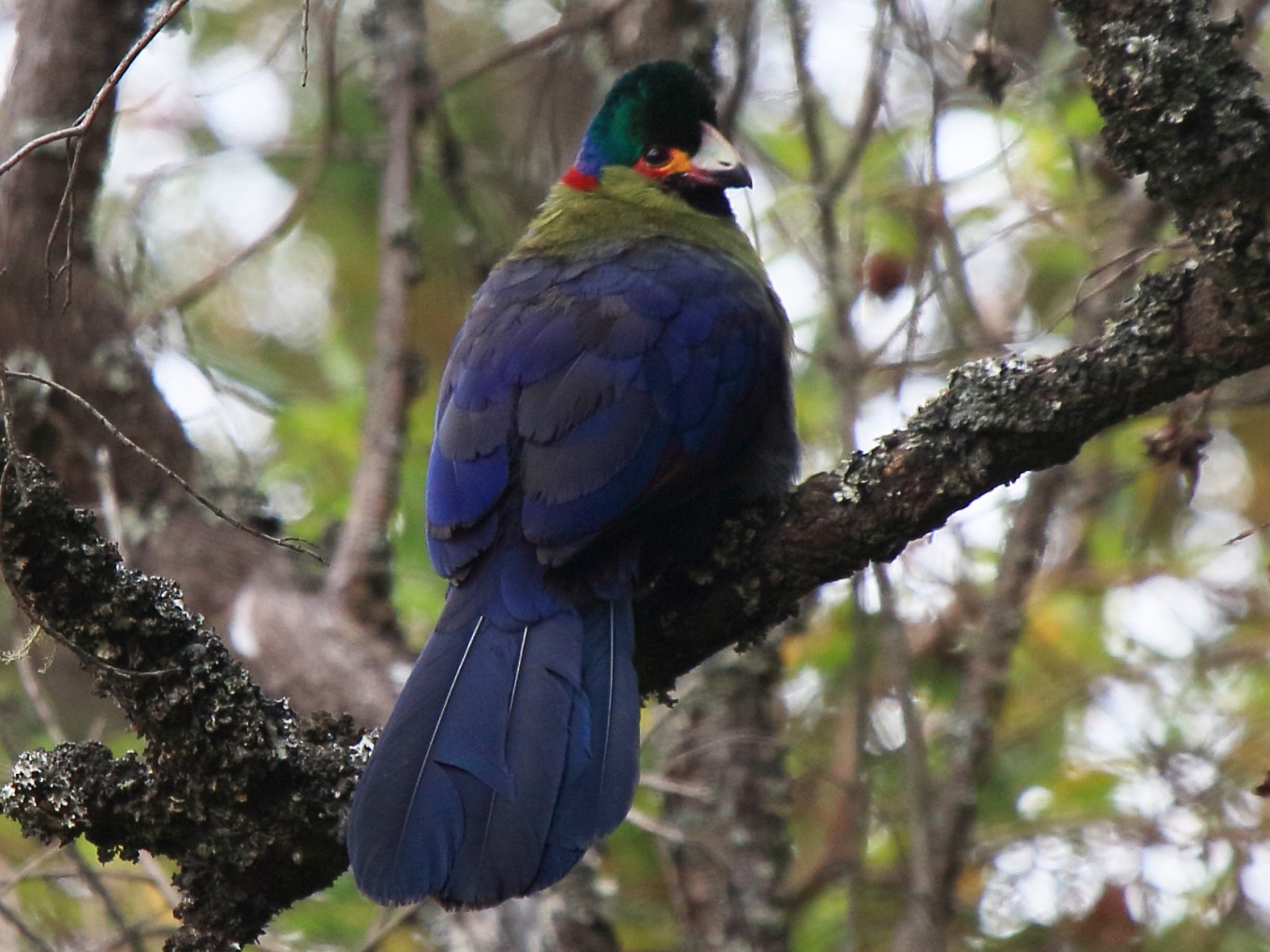
The Rwenzori Turaco (Gallirex johnstoni) is one of the characteristic birds associated with the Albertine Rift’s montane habitats.
Its striking plumage makes it particularly memorable, while its restricted regional distribution increases its appeal to specialist birders.
Potential searches can be incorporated into itineraries visiting appropriate highland habitats in southwestern and western Uganda, including areas associated with Mgahinga and the Rwenzori region.
Grauer’s Broadbill
The bird widely known as Grauer’s Broadbill is the same species commonly called the African Green Broadbill (Pseudocalyptomena graueri).
Because bird names and taxonomic treatments can vary between checklists and authorities, experienced birders should confirm the taxonomy used for their personal or tour checklist before travel.
Rather than counting Grauer’s Broadbill and African Green Broadbill as separate targets, a specialist itinerary should treat them as alternative common names for the same species.
This is particularly important when preparing target lists to avoid accidental duplication.
Shelley’s Crimsonwing
Shelley’s Crimsonwing (Cryptospiza shelleyi) is one of the most sought-after and challenging Albertine Rift birds.
It is associated with montane forest environments and has a restricted regional distribution.
For experienced birders, this is precisely the kind of species that demonstrates why sufficient time is necessary in specialist habitats.
A brief visit cannot guarantee success with difficult forest birds. Searches may involve working suitable habitat patiently while accepting that some targets will remain elusive.
Shelley’s Crimsonwing should therefore be presented as a high-value potential target, never as a guaranteed sighting.
Papyrus Gonolek
The Papyrus Gonolek (Laniarius mufumbiri) represents another side of Uganda’s specialist birding.
Rather than montane rainforest, this species is associated with papyrus wetland habitats.
This illustrates why a comprehensive Uganda birding safari should include wetlands as well as forests and savannahs.
Experienced birders interested in papyrus specialists should allocate time to suitable wetland systems and work with guides familiar with local habitat.
African Finfoot
The African Finfoot (Podica senegalensis) is associated with suitable rivers, lakeshores and quiet waterways where overhanging vegetation provides cover.
It can be particularly rewarding for birders because observation often requires careful scanning of shaded edges rather than searching open water.
Adding suitable waterways to an itinerary can therefore increase habitat diversity while providing opportunities to search for species that would not normally be encountered on conventional forest trails or savannah game drives.
Standard-winged Nightjar
The Standard-winged Nightjar (Caprimulgus longipennis) is especially distinctive because of the extraordinary elongated wing feathers developed by adult males during the breeding season.
Searching for nightjars requires a different approach from daytime birding.
Where appropriate and permitted, evening birding can be incorporated into a specialist itinerary. Such activities should always follow park regulations and avoid unnecessary disturbance.
Night birding can also add other nocturnal species to the trip and provide experienced birders with a completely different field experience.
Other Albertine Rift and Forest Specialties
The species above represent only a small portion of what an experienced birder might target.
Depending on current taxonomy, distribution, itinerary and habitat, a specialist Uganda birding trip may also search for additional Albertine Rift, montane, lowland forest and wetland specialties.
Rather than creating an unrealistic promise-filled list, the best approach is for travelers to provide their existing life list and Uganda target list before the safari.
Wild Planet Safaris can then use the target list to identify appropriate destinations and determine how much time should be allocated to each habitat.
A birder who has already traveled extensively in Kenya or Tanzania, for example, may want to spend less time searching for widespread East African savannah species and considerably more time in Bwindi, Semuliki, Kibale and other specialist forests.
This target-based approach helps transform a general Uganda birding tour into a specialist Uganda birding safari for experienced birders.
Best Birding Destinations in Uganda for Experienced Birders
The best destinations for an Uganda birding safari for experienced birders are not necessarily the places with the highest species totals alone. Serious birders often choose destinations according to restricted-range species, habitat specialization, biome representation and the possibility of adding birds that are difficult to find elsewhere in East Africa.
A comprehensive specialist itinerary can combine montane forests in southwestern Uganda, lowland Guinea-Congo forest in Semuliki, papyrus wetlands around Lake Victoria, savannah parks and the Nile ecosystem.
This habitat-based approach is particularly valuable for experienced birders who already have extensive East African lists and want to concentrate on localized or previously missed species.
Bwindi Impenetrable National Park
Bwindi Impenetrable National Park is one of the most important destinations for specialist birding in Uganda.
Uganda Wildlife Authority records more than 350 bird species in Bwindi and highlights 23 Albertine Rift endemics, making the park especially important for birders interested in restricted-range species.
The attraction for experienced birders goes beyond the overall number. Bwindi’s montane forest provides opportunities to search for some of the species that make the Albertine Rift one of Africa’s particularly important birding regions.
Potential targets include the African Green Broadbill (Pseudocalyptomena graueri), Shelley’s Crimsonwing and numerous other forest and Albertine Rift specialties.
Specialist Forest Birding in Bwindi
Bwindi requires patience.
Dense vegetation can make visual identification difficult, and many birds may initially be detected through calls. Mixed-species flocks can move quickly through different forest levels, while some understory species may remain concealed despite being close to the trail.
Experienced birders should therefore consider spending several days in Bwindi rather than treating the park as a short stop between wildlife destinations.
This allows time to revisit productive areas when important targets are missed.
Important Bwindi Birding Trails
UWA identifies several established trails as particularly useful for birdwatching.
The River Ivi Trail, running between Buhoma and Nkuringo, and Buhoma’s Munyaga River Trail provide forest-birding opportunities.
Around Ruhija, the Bamboo Trail and Mubwindi Swamp Trail are particularly noted for Albertine Rift endemics, including the localized African Green Broadbill.
For specialist birders, spending enough time around Ruhija and other appropriate sectors can be more productive than attempting to cover every part of Bwindi quickly.
Combining Bwindi Birding with Gorilla Trekking
Bwindi also provides the unusual opportunity to combine specialist African birding with mountain gorilla trekking.
A well-designed itinerary should allocate separate time for the two activities.
For example, travelers can dedicate one day to gorilla trekking while reserving additional full mornings or days for specialist birding.
This prevents birding from becoming an incidental activity squeezed around the gorilla experience.
Mgahinga Gorilla National Park
Mgahinga Gorilla National Park provides a different specialist birding environment in Uganda’s far southwest.
The park forms part of the Virunga landscape, where volcanic mountains create a series of high-altitude habitats.
Its vegetation changes with elevation and includes montane forest and bamboo zones, giving experienced birders access to species associated with higher elevations.
UWA identifies both Mgahinga and Bwindi as among Uganda’s most accessible destinations for Albertine Rift endemics.
High-Altitude and Montane Birding
Mgahinga’s elevation is one of its major attractions.
Instead of simply duplicating Bwindi, it gives birders an opportunity to work different montane habitats and elevations.
This makes the two parks complementary components of a specialist southwestern Uganda birding circuit.
Among the notable birds associated with Mgahinga is the spectacular Rwenzori Turaco. UWA’s park information specifically identifies this species among the park’s localized forest birds and Albertine Rift endemics.
Birders should be prepared for cool conditions, steep terrain and changing mountain weather.
Birding and Golden Monkey Tracking
Mgahinga can also be used to combine birding with golden monkey tracking.
For travelers interested in Uganda’s primates as well as its birds, a customized itinerary can allocate separate periods for specialist birding, golden monkey tracking and, where included, gorilla trekking.
Experienced birders should nevertheless reserve sufficient dedicated birding time rather than attempting to complete every activity on the same day.
Semuliki National Park
For an experienced birder, Semuliki National Park can be one of the most important destinations on an entire Uganda itinerary.
The reason is biogeography.
Semuliki lies on the floor of the Albertine Rift and represents the eastern limit of the Congo’s Ituri Forest. UWA describes it as the only tract of true lowland tropical forest in East Africa and notes that it contains numerous Congo-Guinea species at the eastern limits of their ranges.
This gives Semuliki a bird community that differs significantly from Uganda’s montane forests and savannah parks.
Lowland Tropical Forest Birding
Semuliki sits at only about 670–760 metres above sea level, creating a very different environment from high-altitude Bwindi and Mgahinga.
The forest is warm, humid and dense.
Birding can therefore be challenging. Some species remain high in the canopy, while others occupy dense understory vegetation. Vocal identification becomes particularly valuable, and productive sessions can require long periods of patient observation.
This is precisely why Semuliki suits experienced birders.
It is less about easy roadside sightings and more about working a complex tropical forest ecosystem.
Guinea-Congo Biome Species
Semuliki’s greatest specialist attraction is its Guinea-Congo forest influence.
UWA currently lists more than 435 bird species in the park, including numerous Guinea-Congo forest biome species. An earlier UWA park brochure records 441 species and notes that 35 were then considered absent elsewhere in East Africa.
Potential specialist targets identified in UWA material include birds such as the Spot-breasted Ibis, Nkulengu Rail, Lyre-tailed Honeyguide, Black Dwarf Hornbill, Red-billed Dwarf Hornbill and White-crested Hornbill.
These should always be presented as potential targets rather than guaranteed sightings.
Why Experienced Birders Should Consider Semuliki
A conventional Uganda safari can produce a substantial bird list without visiting Semuliki.
But for an experienced birder, the question is often not simply how many birds are seen—it is which birds are added.
Semuliki can contribute species associated with Central African forests that are difficult to obtain on a standard route through Uganda’s savannahs and montane parks.
This makes the park particularly valuable for birders who have already traveled elsewhere in East Africa and want to broaden their regional checklist.
A specialist itinerary should therefore allow enough time for serious forest birding rather than treating Semuliki as a quick sightseeing stop.
Kibale National Park
Kibale National Park is widely known for chimpanzees, but it can also form an important part of a specialist Uganda birding itinerary.
UWA records approximately 370 bird species in the park.
Its tropical forest provides opportunities for experienced birders to search for forest specialists while connecting a western Uganda route between Semuliki, Queen Elizabeth and southwestern birding areas.
Green-breasted Pitta
One of the birds most strongly associated with specialist birding searches in Kibale is the Green-breasted Pitta (Pitta reichenowi).
This is the kind of target that illustrates why serious forest birding cannot be rushed.
Pittas can be difficult to locate in dense vegetation. Birders may need to start early, listen carefully for vocalizations and spend substantial time in appropriate habitat.
A Green-breasted Pitta sighting should never be guaranteed.
Instead, the itinerary should provide enough time and suitable field conditions to make a serious search possible.
Forest Birding and Chimpanzee Trekking
Kibale also allows travelers to combine specialist birding with chimpanzee trekking.
UWA identifies Kibale as one of Uganda’s major chimpanzee destinations, with long-established visitor tracking programs.
For a bird-focused itinerary, however, chimpanzee tracking should complement rather than replace dedicated forest birding.
A traveler might allocate one period to chimpanzees and separate mornings to birding, when forest activity can be particularly productive.
Bigodi Wetland
Nearby Bigodi Wetland adds a useful habitat contrast to Kibale’s interior forest.
Rather than concentrating exclusively on closed-canopy forest, birders can explore wetland, forest-edge, secondary vegetation and community landscapes.
This can help add species that favor more open or transitional habitats.
For experienced birders, Kibale and Bigodi work particularly well together because they increase habitat diversity without requiring a major transfer between destinations.
Budongo Forest
Budongo Forest is another important specialist birding destination, particularly for itineraries continuing north toward Murchison Falls National Park.
Budongo is a moist, semi-deciduous tropical forest situated near the northern end of the Albertine Rift. The Budongo Conservation Field Station identifies Royal Mile, Busingiro and Kaniyo Pabidi as designated tourism areas, with the Royal Mile specifically used for birdwatching.
Birding the Royal Mile
The Royal Mile is Budongo’s best-known birding route.
Unlike some narrow and steep montane forest trails, the Royal Mile provides a forest-road environment where experienced birders can work different levels of the vegetation while listening for forest calls.
The Ugandan government’s Forestry Services platform currently lists birding and nature walks at Royal Mile Budongo Central Forest Reserve.
The area can be particularly interesting for forest kingfishers, hornbills, flycatchers, greenbuls and other forest specialists.
As elsewhere, individual species should be treated as targets rather than guarantees.
Combining Budongo with Murchison Falls
Budongo’s location is strategically useful.
A specialist itinerary can spend dedicated time forest birding at the Royal Mile before continuing into the dramatically different savannah, woodland and Nile environments of Murchison Falls National Park.
This means experienced birders can move from closed-canopy forest species to open-country and water-associated birds without a major detour across the country.
For checklist building, that habitat transition can be extremely valuable.
Mabamba Bay Wetland
Mabamba Bay Wetland is one of Uganda’s most important wetland-birding destinations and is internationally recognized as a Ramsar wetland.
UWA lists Mabamba among Uganda’s Wetlands of International Importance, and Uganda’s 2026 wildlife report identifies it among the country’s major papyrus wetlands used by Shoebills.
For many international birders, the headline target is obvious: the Shoebill.
But experienced birders should not treat Mabamba as a one-bird destination.
Shoebill Searches
Birding at Mabamba usually involves exploring channels and open areas within the wetland by small boat or canoe.
The Shoebill’s extraordinary appearance makes it one of Africa’s most recognizable birding targets.
However, even in an established habitat such as Mabamba, sightings remain dependent on natural bird movement and conditions.
Wild Planet Safaris should therefore describe Mabamba as offering opportunities to search for Shoebill, rather than guaranteeing a sighting.
Papyrus and Wetland Specialists
The surrounding papyrus ecosystem is also important.
Experienced birders can pay attention to wetland specialists, papyrus-associated species, kingfishers, herons, jacanas, weavers and other water-associated birds.
The combination of open water, channels and dense papyrus provides a very different birding environment from Uganda’s forests and savannahs.
Convenient Addition Near Entebbe
Mabamba is particularly useful logistically because it can be included near the beginning or end of a longer Uganda birding safari.
This allows serious birders to add a major wetland habitat without sacrificing several days of their wider circuit.
Murchison Falls National Park
Murchison Falls National Park is particularly valuable to experienced birders because it combines several habitats within one large protected landscape.
UWA currently records more than 550 bird species in Murchison Falls and specifically identifies the park as one of Uganda’s important destinations for the Shoebill and a wide range of other birds.
The birding experience is very different from Bwindi, Kibale or Semuliki.
Instead of spending most of the day inside dense forest, birders can work open savannah, woodland, riverbanks, wetlands and the Nile ecosystem.
Savannah and Woodland Birding
Game drives can double as productive birding sessions when enough time is allocated for careful observation.
Open habitats can produce:
- Raptors
- Hornbills
- Bee-eaters
- Rollers
- Storks
- Grassland species
- Woodland specialists
- Water-associated birds
Experienced birders should avoid treating game drives purely as mammal-viewing excursions. Slow, bird-focused drives can contribute significantly to the overall checklist.
Nile Birding
The Victoria Nile creates another major habitat.
Boat-based birding allows travelers to scan riverbanks, exposed areas and waterside vegetation for kingfishers, herons, fish eagles, storks and other water-associated species.
This provides a useful contrast to vehicle-based savannah birding.
Nile Delta and Shoebill Searches
The Albert Delta Wetland System, where the Victoria Nile reaches Lake Albert, is internationally important for waterbirds.
UWA specifically identifies the shallow delta as important for Shoebills, pelicans, darters and several heron species.
A specialist itinerary can therefore include a dedicated delta excursion rather than relying only on incidental observations elsewhere in the park.
Combining Murchison Falls and Budongo
For experienced birders, one of the strongest reasons to include Murchison is its proximity to Budongo.
Together, Budongo Forest and Murchison Falls provide forest, woodland, savannah, river and wetland birding within the same broader circuit.
That habitat diversity can add significantly to a long Uganda species list.
Queen Elizabeth National Park
Queen Elizabeth National Park is especially valuable for experienced birders who want to increase their overall Uganda checklist through habitat diversity.
UWA records more than 600 bird species in the park. Its varied landscape includes lakes, wetlands, open grasslands, woodland, crater environments and the Kazinga Channel.
Rather than being a destination for only one famous target, Queen Elizabeth is useful because so many different bird communities can be encountered within the same protected area.
Kazinga Channel Birding
The Kazinga Channel connects Lake George and Lake Edward and is one of the park’s most productive areas for water-associated birds.
UWA monitoring describes the channel as important for wintering waders and records species such as African Skimmer among its notable waterbirds.
Boat excursions allow birders to observe shoreline species from a different perspective than conventional game drives.
Savannah and Woodland Birding
Away from the water, open savannah and woodland create opportunities for raptors, grassland species and other open-country birds.
Slow bird-focused game drives can therefore contribute many species that would not be encountered in Uganda’s western forests.
Wetlands and Crater Areas
The park’s lakes, wetlands and crater systems further increase habitat diversity.
These areas can support waterbirds and other species associated with open or saline environments, depending on local conditions.
For experienced birders, the advantage is not merely adding another national park to the itinerary. It is adding multiple habitat types within a single destination.
Why Queen Elizabeth Matters for a Long Bird Checklist
A specialist Uganda itinerary often concentrates heavily on difficult forest targets in Bwindi, Semuliki, Kibale and Budongo.
Queen Elizabeth provides an important counterbalance.
By adding waterbirds, savannah birds, raptors, woodland species and seasonal migrants where present, the park can significantly broaden the overall trip checklist.
It also lies conveniently between Kibale and Bwindi on many western Uganda routes.
This makes Queen Elizabeth National Park an effective bridge between Uganda’s major forest-birding regions, while simultaneously adding an entirely different collection of habitats and species.
Lake Mburo National Park
Lake Mburo National Park is an important addition to an Uganda birding safari for experienced birders because its combination of acacia woodland, open savannah, wetlands, lakeshores and riparian vegetation differs considerably from the dense forests of western and southwestern Uganda.
Uganda Wildlife Authority records more than 315 bird species in Lake Mburo National Park. For experienced birders, however, its value lies particularly in the opportunity to add open-country, woodland and wetland species that may be absent from forest-focused sections of the itinerary.
The park is also conveniently positioned between central Uganda and the major birding destinations of the southwest, making it a practical addition to longer circuits.
Acacia and Woodland Birding
Lake Mburo is particularly useful for birders interested in species associated with acacia woodland and wooded savannah.
Birding slowly along tracks and woodland edges can reveal species occupying open canopy, shrubs and grassland margins.
Hornbills, barbets, woodpeckers, starlings, weavers and various other woodland and savannah birds may be encountered depending on habitat and local conditions.
For experienced birders who have spent several days concentrating on difficult forest species, Lake Mburo provides a welcome change in both birding technique and visibility.
Savannah and Wetland Birding
Open grasslands add another group of species, while Lake Mburo itself and surrounding wetlands support water-associated birds.
Birding can therefore move between dry woodland and aquatic habitats within a relatively compact area.
This variety can be particularly productive for birders whose objective is to build a broad Uganda checklist rather than concentrate exclusively on restricted-range forest species.
Searching for African Finfoot
The African Finfoot (Podica senegalensis) is one of the potential specialist targets associated with suitable waterways in Uganda.
Finfoots favor quiet waters with suitable overhanging vegetation and can be difficult to detect because they frequently remain close to vegetated margins.
Suitable areas around Lake Mburo can provide opportunities to search for this secretive species.
As with all target birds, sightings should never be guaranteed. The best strategy is to spend adequate time scanning appropriate habitat carefully.
Kidepo Valley National Park
For experienced birders with sufficient time, Kidepo Valley National Park can add an entirely different dimension to a Uganda birding itinerary.
Situated in northeastern Uganda, Kidepo is geographically separated from the country’s principal western birding circuit. The longer journey required to reach it means that it is often excluded from shorter itineraries.
For serious birders, however, that geographic isolation is part of its appeal.
UWA records more than 470 bird species in Kidepo and notes that the park supports species not recorded in Uganda’s other national parks.
Northeastern Uganda Birding
Kidepo’s location places birders in an ecological environment very different from Bwindi, Kibale, Semuliki or Queen Elizabeth.
Semi-arid savannah, rocky landscapes, dry woodland and seasonal river environments create opportunities to search for species associated with northeastern Uganda and the broader dry-country ecosystems of East Africa.
Experienced birders who have concentrated heavily on western Uganda can therefore use Kidepo to expand their checklist with species unlikely to be encountered along the main southwestern circuit.
Raptors and Savannah Specialists
Kidepo can be particularly interesting for raptors and open-country species.
The park’s broad valleys and open landscapes provide extensive areas for scanning soaring and perched raptors.
Savannah and dry woodland habitats may also support hornbills, bee-eaters, rollers and numerous grassland and bush-associated species.
For bird photographers, the open landscape can sometimes provide clearer viewing and photographic opportunities than dense tropical forests.
Why Make the Longer Journey?
Kidepo should not automatically be included in every Uganda birding safari because reaching northeastern Uganda requires additional time.
For a 7- or 10-day trip, concentrating on western and southwestern Uganda may be more practical.
For an 18- or 21-day specialist birding safari, however, Kidepo can be highly valuable because it introduces habitats and species that are difficult to add elsewhere on the itinerary
Rwenzori Mountains
The Rwenzori Mountains provide one of Uganda’s most specialized birding environments.
Unlike roadside wetland birding or savannah game drives, birding in the Rwenzori can involve trekking through progressively changing vegetation zones as elevation increases.
The mountains form an important part of the Albertine Rift and provide habitat for montane and high-altitude bird communities.
High-Altitude Birding
Elevation is central to the Rwenzori birding experience.
As birders move upward, changes in temperature, rainfall and vegetation create different ecological zones.
Montane forest gradually gives way to higher-altitude vegetation, meaning the bird community can change significantly with elevation.
This makes the Rwenzori particularly interesting to experienced birders who want to explore species associated with specific altitudinal ranges.
Albertine Rift Species
The Rwenzori landscape is relevant to birders interested in Albertine Rift specialties.
Rather than replacing Bwindi or Mgahinga, the mountains can complement those destinations by providing different elevations and habitat structures.
A comprehensive Albertine Rift-focused itinerary can therefore combine several southwestern and western mountain environments.
Specialist Trekking Requirements
Birding in the Rwenzori requires more preparation than many other Uganda birding destinations.
Depending on the route, travelers may encounter:
- Steep terrain
- Muddy trails
- High rainfall
- Cold conditions at elevation
- Long walking days
- Significant altitude changes
Experienced birders should realistically assess their fitness and available time before adding high-altitude Rwenzori birding.
Suitable hiking equipment, waterproof clothing and appropriate guiding arrangements are essential.
Albertine Rift Birding for Serious Birders
For many experienced international birders, Albertine Rift birding is one of the strongest reasons to choose Uganda.
The region contains an exceptional concentration of restricted-range birds associated with montane forests and highland ecosystems.
Uganda provides access to several important Albertine Rift birding landscapes, particularly Bwindi Impenetrable National Park, Mgahinga Gorilla National Park and the Rwenzori Mountains.
What Is the Albertine Rift?
The Albertine Rift forms the western branch of the East African Rift and extends through parts of Uganda and neighboring countries in the Great Lakes region.
Its landscape includes mountains, volcanoes, valleys and extensive montane forests.
Geographical isolation, elevation and long-term ecological conditions have contributed to high levels of biodiversity and endemism.
This means some species have very limited geographical distributions, making the region particularly important for conservation and specialist birdwatching.
Why the Albertine Rift Matters to Birders
Experienced birders are often interested not only in high species totals but also in restricted-range and endemic species.
The Albertine Rift provides precisely this type of birding.
A birder who has already visited Kenya, Tanzania or southern Africa may have encountered many widespread East African species but still lack birds restricted to the forests and mountains of the Albertine Rift.
Uganda therefore provides an opportunity to concentrate on species that cannot simply be added during a conventional savannah safari.
The birding can be demanding.
Many targets occupy dense montane forest, where visibility is limited and birds may be detected primarily through calls. Several species can also occur at particular elevations or in specialized habitats.
For experienced birders, these challenges are often part of the attraction.
Albertine Rift Birds to Target in Uganda
Potential targets vary according to destination, elevation, season and current taxonomy.
Species that may feature on specialist target lists include:
- African Green Broadbill
- Rwenzori Turaco
- Shelley’s Crimsonwing
- Rwenzori Batis
- Rwenzori Nightjar
- Handsome Francolin
- Red-throated Alethe
- Yellow-eyed Black Flycatcher
- Stripe-breasted Tit
- Regal Sunbird
- Purple-breasted Sunbird
- Dusky Crimsonwing
- Strange Weaver
These should be presented as potential target species rather than guaranteed sightings.
Taxonomic treatments and English names also change over time, so experienced birders should confirm which checklist authority they intend to use before travel.
Bwindi vs Mgahinga for Albertine Rift Birding
Choosing between Bwindi and Mgahinga is not necessarily the best approach.
For serious Albertine Rift birding, the two parks can complement each other.
Bwindi offers extensive montane forest and several established birding areas. Its size and habitat diversity make it particularly valuable for longer target-species searches.
Mgahinga provides higher-altitude environments associated with the Virunga volcanoes, including bamboo and montane habitats.
Birders concentrating heavily on Albertine Rift specialties may therefore benefit from including both parks rather than selecting only one.
The itinerary can then be expanded toward the Rwenzori region if time and physical ability permit.
How Many Days Should Experienced Birders Spend in Southwestern Uganda?
For experienced birders, southwestern Uganda should not be rushed.
A general wildlife traveler may spend only a few nights around Bwindi, but someone arriving with an extensive Albertine Rift target list may need considerably more time.
As a general planning framework:
3–4 days can provide a focused introduction to one principal birding area.
5–7 days allows more serious exploration of Bwindi and potentially Mgahinga.
7–10 days provides greater flexibility for repeat searches, multiple elevations, different trails and the addition of nearby habitats.
The correct duration should ultimately depend on the birder’s target list rather than a fixed package.
Wild Planet Safaris can review a traveler’s priority species before designing the southwestern section of the itinerary.
Forest Birding in Uganda for Experienced Birders
Forest birding is one of the most rewarding and demanding components of a specialist Uganda birding safari.
Uganda’s forests are not all ecologically identical.
Bwindi provides montane Albertine Rift forest. Semuliki introduces lowland Guinea-Congo forest. Kibale and Budongo add different western forest communities, while Mabira provides an accessible central-Uganda forest environment.
For experienced birders, visiting several forests can therefore produce a much more diverse checklist than concentrating on a single site.
Challenges of Tropical Forest Birding
Forest birding requires a different field approach from open-country birdwatching.
Dense vegetation can conceal birds even when they are only a short distance away.
Low light under the canopy can make identification and photography difficult.
Some species spend much of their time high in the canopy, requiring birders to search through small openings between leaves and branches.
Other species are skulking understory birds that rarely remain exposed for long.
Vocal identification therefore becomes extremely important.
Experienced guides and birders often detect forest species by sound before attempting to obtain a visual observation.
Above all, successful forest birding requires patience.
A productive mixed-species flock can suddenly transform a quiet morning, while a difficult target may require several hours or repeated visits.
Best Forests for Specialist Birding
Bwindi Impenetrable National Park is the priority for many birders interested in Albertine Rift specialties and montane forest species.
Semuliki National Park should be strongly considered by experienced birders seeking Guinea-Congo biome species and Central African forest influence.
Kibale National Park provides excellent forest birding and is particularly associated with searches for the Green-breasted Pitta. It can also be combined with chimpanzee trekking.
Budongo Forest is especially useful because of the Royal Mile and its proximity to Murchison Falls, allowing forest and savannah birding within the same wider region.
Mabira Forest provides an accessible central-Uganda forest option and can be useful for travelers with additional time before or after longer western circuits.
These forests should not be viewed as interchangeable. Each contributes a different habitat and bird community.
Tips for Finding Difficult Forest Species
Experienced birders can improve their chances of productive forest birding by using careful and ethical fieldcraft.
Start early when bird activity and vocalizations may be stronger.
Move slowly and minimize unnecessary noise.
Listen before walking continuously through the forest.
Watch for mixed-species feeding flocks because several target birds may move together through productive areas.
Scan multiple forest levels, including the ground, understory, mid-level vegetation and canopy.
Allow enough time at promising locations rather than constantly changing trails.
Use playback sparingly and only where appropriate. Avoid repeated playback around nesting birds or species showing signs of stress.
Never cut vegetation or alter habitat to obtain photographs.
Follow park regulations and local guide instructions.
Most importantly, accept that some difficult species will occasionally remain unseen. Specialist birding should maximize appropriate search effort without compromising bird welfare.
Wetland Birding for Specialist Birders
Uganda’s wetlands are essential components of a serious birding itinerary.
Papyrus swamps, lake margins, river deltas and community wetlands support bird communities that are completely different from those found in montane and lowland forests.
Experienced birders should therefore avoid treating wetland birding as simply a quick Shoebill excursion.
Mabamba Bay
Mabamba Bay Wetland is best known for the Shoebill, but its papyrus and open-water habitats support a much broader wetland bird community.
Exploring the wetland slowly by small boat allows birders to search papyrus edges, channels and open areas.
Its location near Entebbe also makes Mabamba convenient for the beginning or end of a longer specialist safari.
Lutembe Bay
Lutembe Bay on Lake Victoria provides another important wetland environment.
It is internationally recognized as a Ramsar wetland and can become particularly interesting when migratory birds are present.
Including both Lutembe and Mabamba allows serious birders to explore different Lake Victoria wetland habitats rather than relying on a single site.
Murchison Falls Nile Delta
The Nile Delta provides one of the most important wetland-birding experiences within Murchison Falls National Park.
The shallow waters where the Victoria Nile approaches Lake Albert support numerous water-associated birds.
Shoebill searches can be incorporated alongside observations of herons, storks, kingfishers and other wetland species.
Combining the delta with Murchison’s savannah and Budongo’s forest creates one of the most habitat-diverse sections of a longer Uganda itinerary.
Bigodi Wetland
Bigodi Wetland, near Kibale National Park, adds forest-edge and community-landscape birding to a western Uganda circuit.
Its value lies partly in habitat transition.
Birders can move from Kibale’s closed forest into wetland, secondary vegetation and forest-edge environments, potentially adding species that are easier to locate outside the dense canopy.
Papyrus Specialists to Look For
Uganda’s papyrus wetlands can provide opportunities to search for species closely associated with this specialized habitat.
Potential targets may include birds such as:
- Papyrus Gonolek
- Papyrus Canary
- White-winged Swamp Warbler
- Carruthers’s Cisticola
Other wetland-associated birds may also occur depending on location and habitat.
Sightings should never be guaranteed, and target lists should be matched carefully to known distribution and suitable habitat before the safari.
Savannah Birding for Experienced Birders
Uganda’s specialist birding reputation is strongly connected with forests and Albertine Rift species, but experienced birders should not overlook the country’s savannah ecosystems.
Open grasslands, acacia woodland, riverine vegetation and dry-country habitats can add large numbers of species absent from forest-focused routes.
Savannah birding also offers a different field experience. Visibility is generally better, raptors can be scanned over long distances and birding can often be combined with traditional wildlife viewing.
Murchison Falls
Murchison provides a productive combination of savannah, woodland, river and wetland birding.
Experienced birders can search for raptors, hornbills, bee-eaters, rollers and grassland species during slow game drives before switching to waterbird searches along the Nile.
Adding nearby Budongo makes this region particularly useful for maximizing habitat diversity.
Queen Elizabeth
Queen Elizabeth’s mixture of grassland, woodland, lakes, wetlands and the Kazinga Channel makes it particularly valuable for building a large overall checklist.
Savannah drives can produce open-country species and raptors, while boat excursions add waterbirds.
For experienced birders traveling between Kibale and Bwindi, Queen Elizabeth is therefore much more than a convenient overnight stop.
Lake Mburo
Lake Mburo adds acacia woodland, savannah and wetland species.
Its open woodland environment can produce species that may be difficult to find during a forest-dominated western Uganda itinerary.
Waterways also provide opportunities to search for species such as African Finfoot in appropriate habitat.
Kidepo Valley
Kidepo offers perhaps the greatest savannah contrast.
Its northeastern location, semi-arid environment and dry-country habitats can add species not easily encountered on western Uganda circuits.
Experienced birders can concentrate on:
- Raptors
- Hornbills
- Bee-eaters
- Dry-country specialists
- Grassland birds
- Savannah species
- Nocturnal birds where permitted and appropriate
Nightjars can be particularly interesting additions to specialist itineraries, although evening birding should always follow park regulations and responsible wildlife-viewing practices.
For travelers whose priority is a large and ecologically diverse Uganda bird checklist, combining the forests of western Uganda with the wetlands of Lake Victoria and the savannahs of Murchison, Queen Elizabeth, Lake Mburo and potentially Kidepo creates a considerably stronger itinerary than concentrating on forests alone.
Best Time for an Experienced Birding Safari in Uganda
There is no single perfect time for an Uganda birding safari for experienced birders. Uganda can provide productive birdwatching throughout the year, but seasonal changes affect migration, breeding activity, forest trails, road conditions, vegetation and photography.
The best travel period therefore depends on the birder’s priorities.
A traveler interested in Palearctic migrants may choose different dates from someone concentrating on Albertine Rift forest species. Likewise, a photographer seeking clear conditions may have different priorities from a birder interested in nesting activity.
For serious birders, the most useful approach is to match travel dates with the target-species list, habitats and route rather than choosing a month based only on whether it is described as wet or dry.
October to March – Migratory Bird Period
The period from approximately October through March is particularly interesting for birders wanting to include Palearctic migrants on their Uganda checklist.
Uganda Wildlife Authority’s State of Wildlife Resources in Uganda 2026 records approximately 238 migratory bird species, including Palearctic and intra-African migrants. Palearctic migrants generally occur in Uganda between October and March.
During this period, migratory birds join Uganda’s large resident bird population.
Wetlands can be particularly interesting, including areas around:
- Mabamba Bay
- Lutembe Bay
- Murchison Falls
- Queen Elizabeth National Park
- Lake Mburo
Open grasslands, lake margins and other suitable habitats can also produce migrants.
October and March should be regarded as transitional months rather than exact migration boundaries. Individual species have different arrival and departure schedules, and annual environmental conditions can affect movement.
Experienced birders with specific migrant targets should therefore identify those species before finalizing their travel dates.
May and June – Nesting Activity in Southwestern Forests
May and June can be particularly interesting for experienced birders concentrating on southwestern Uganda.
Uganda Wildlife Authority identifies these months as the main nesting season in Bwindi and Mgahinga.
This makes the period relevant to birders interested in breeding behavior and the specialist forest communities of the Albertine Rift.
Bwindi and Mgahinga can provide opportunities to search for montane and Albertine Rift species while exploring different forest types and elevations.
Birders should remember that May can still experience substantial rainfall. Trails may be wet or muddy, and waterproof equipment is important.
The advantage for serious birders is that challenging weather does not necessarily mean poor birding. Seasonal activity within the forests can make these months particularly interesting.
June to September – Drier Birding Conditions
The period from June through September is attractive for birders planning longer Uganda circuits.
Conditions are generally drier in many parts of the country, although rainfall remains possible at any time, particularly in forests and mountainous areas.
Drier conditions can provide several practical advantages:
- Easier forest walking
- Less mud on some trails
- More predictable road travel
- Easier movement between distant birding destinations
- Better conditions for carrying photographic equipment
- More comfortable long birding days
This can be particularly useful for an itinerary combining Mabamba, Murchison Falls, Budongo, Kibale, Queen Elizabeth, Bwindi, Mgahinga and Lake Mburo.
Experienced birders should nevertheless avoid assuming that the driest period automatically produces the best birding for every target species.
Birding During Uganda’s Rainy Seasons
Serious birders should not automatically exclude Uganda’s wetter months.
Rain creates obvious challenges. Forest trails can become muddy, unpaved roads may take longer to navigate and heavy showers can temporarily reduce birding activity.
However, wetter periods also bring lush vegetation, seasonal food resources, breeding activity and excellent photographic backgrounds.
Rain does not normally continue continuously throughout every day. Birding sessions can often be organized around changing conditions.
Experienced birders willing to accept occasional interruptions may find wetter periods rewarding, particularly when searching forests and other habitats where resident species remain present year-round.
The key is flexibility.
A private itinerary allows Wild Planet Safaris to adjust daily birding according to weather, trail conditions and target-species priorities.
How Many Days Do Experienced Birders Need in Uganda?
The ideal duration of a specialist Uganda birding safari depends on whether the objective is a focused target-species search or a broad multi-habitat checklist.
Uganda’s major birding destinations are spread across different regions. Attempting to visit too many sites in a short safari can result in excessive driving and insufficient time in productive habitats.
For experienced birders, fewer destinations with adequate field time can sometimes be more productive than a rushed countrywide circuit.
7-Day Specialist Uganda Birding Safari
A 7-day birding safari should concentrate on one region rather than attempting to cover Uganda comprehensively.
A southwestern route could focus on:
Kigali or Entebbe → Bwindi → Mgahinga → Lake Mburo → Entebbe
Alternatively, birders interested in a northern combination could concentrate on:
Entebbe → Mabamba → Budongo → Murchison Falls → Entebbe
The exact route should depend on target species.
Seven days can work well for experienced birders with a clearly defined objective, but it is too short for a comprehensive Uganda checklist.
10-Day Uganda Birding Safari
A 10-day Uganda birding safari provides more flexibility to combine forests, wetlands and savannahs.
A possible western and southwestern circuit could include:
Mabamba → Kibale → Bigodi → Queen Elizabeth → Bwindi → Mgahinga → Lake Mburo
The itinerary should still remain selective.
Experienced birders with a strong target list may prefer spending additional days in Bwindi or Kibale rather than adding every possible destination.
14-Day Uganda Birding Safari
For many serious birders, 14 days provides a much stronger balance between habitat diversity and actual birding time.
A two-week itinerary can combine:
- Lake Victoria wetlands
- Tropical forest
- Savannah
- Albertine Rift montane forest
- Acacia woodland
- River systems
There is also enough time to combine specialist birding with selected primate or wildlife activities.
Fourteen days does not cover every major Uganda birding destination, but it provides enough time to build a substantial multi-habitat itinerary without spending the entire safari transferring between parks.
18-Day Uganda Birding Safari
An 18-day specialist birding safari provides considerably more flexibility.
Additional time allows birders to:
- Spend longer in Bwindi
- Add Semuliki
- Explore Budongo more thoroughly
- Revisit locations after missed targets
- Include additional wetland birding
- Reduce rushed transfers
- Include gorilla or chimpanzee trekking without sacrificing birding days
This duration is particularly suitable for travelers arriving with a substantial target list.
21-Day Uganda Birding Expedition
A 21-day Uganda birding expedition allows a much more comprehensive approach.
Three weeks can combine major ecosystems across western, southwestern and northern Uganda.
Depending on priorities, the itinerary could include:
Mabamba → Budongo → Murchison Falls → Semuliki → Kibale → Bigodi → Queen Elizabeth → Bwindi → Mgahinga → Lake Mburo
Kidepo can also be considered for travelers specifically interested in northeastern dry-country species, although its distance requires careful route planning.
A 21-day itinerary provides greater opportunities for a large checklist while allowing sufficient time for difficult target-species searches.
Sample 14-Day Uganda Birding Safari for Experienced Birders
The following route is an example rather than a fixed itinerary. A specialist safari should ultimately be built around the traveler’s existing life list, priority species, travel season and preferred habitats.
Day 1: Arrival in Entebbe
Arrive at Entebbe International Airport and meet your safari representative.
Depending on arrival time, introductory birding may be possible around suitable Entebbe and Lake Victoria habitats.
Use the evening to review the target-species list and upcoming route.
Day 2: Mabamba Bay – Shoebill and Wetland Birding
Travel to Mabamba Bay Wetland for a focused wetland birding excursion.
Search for the Shoebill while also paying attention to papyrus-associated birds, waterbirds and other wetland species.
Continue birding around suitable Lake Victoria habitats where time permits.
Days 3–4: Budongo Forest and Murchison Falls
Travel north for specialist forest birding around Budongo, with time allocated to productive forest habitat such as the Royal Mile where included in the itinerary.
Continue into Murchison Falls National Park for savannah, woodland and Nile birding.
Depending on priorities, include a Nile Delta excursion for wetland birds and another opportunity to search for Shoebill.
Days 5–6: Kibale National Park and Bigodi
Continue to the Kibale region.
Dedicate early birding sessions to Kibale’s forest habitats, particularly if Green-breasted Pitta or other forest species feature on the target list.
Visit Bigodi Wetland for forest-edge, wetland and community-landscape species.
Chimpanzee trekking can be included if requested.
Day 7: Queen Elizabeth National Park
Continue to Queen Elizabeth National Park.
Bird the park’s savannah, woodland and wetland habitats, with the possibility of incorporating the Kazinga Channel.
Use the day to add open-country and water-associated species before moving into southwestern montane forests.
Days 8–10: Bwindi Specialist Forest Birding
Allocate three days to Bwindi Impenetrable National Park.
Concentrate on Albertine Rift and montane forest targets.
The exact birding sector should be chosen according to target species, trail conditions and current local information.
A gorilla trek can be included, but serious birders should remember that it will occupy a substantial part of one day.
Days 11–12: Mgahinga Gorilla National Park
Continue to Mgahinga for high-altitude and montane birding.
Search suitable habitats for Albertine Rift species and other highland targets.
Golden monkey tracking can be included for travelers wanting an additional primate experience.
Day 13: Lake Mburo National Park
Transfer to Lake Mburo for acacia woodland, savannah and wetland birding.
Search for species associated with habitats not extensively represented in the forest-heavy southwestern section of the itinerary.
Day 14: Return to Entebbe
Complete final birding around Lake Mburo or along suitable stops before returning to Entebbe.
Review the trip checklist and transfer for onward arrangements.
Important: Experienced birders should send Wild Planet Safaris their existing life list and priority target species before the safari. The route can then be adjusted to spend more time where the most important targets occur.
Target-Species Birding vs Checklist Birding
Experienced birders do not all travel with the same objective.
Some arrive with ten extremely important species they have spent years hoping to see. Others want to maximize their overall Uganda list by visiting as many different habitats as practical.
Understanding this difference is essential when designing a specialist itinerary.
Target-Species Safari
A target-species safari begins with a defined wish list.
The route is then developed around the known habitats and distributions of those birds.
For example, a target list containing African Green Broadbill, Green-breasted Pitta, Shoebill and several Albertine Rift specialties would require very different planning from a general wildlife safari.
Target-species trips may involve:
- Longer stays at fewer destinations
- Repeat visits to productive sites
- Very early starts
- Waiting quietly in suitable habitat
- Changing routes according to recent observations
- Spending substantial time searching for one difficult species
The objective is not necessarily to record the highest possible number of species. It is to maximize opportunities for the birds that matter most to the traveler.
Maximum-Species Safari
A maximum-species safari uses a different strategy.
Instead of concentrating heavily on a small number of targets, the itinerary is designed to cover as many productive habitats as practical.
This could involve combining:
- Montane forest
- Lowland forest
- Papyrus wetlands
- Open water
- Savannah
- Acacia woodland
- Riverine habitat
- High-altitude environments
The route may consequently include more destinations.
For experienced birders interested in building a large Uganda checklist, habitat diversity becomes one of the main itinerary-planning principles.
Send Your Bird Target List Before Arrival
Experienced birders are encouraged to send Wild Planet Safaris their bird target list before arriving in Uganda.
Useful information includes:
- Target species
- Previous Uganda sightings
- Previous East Africa sightings
- Priority bird families
- Species already seen elsewhere
- Photography priorities
- Preferred habitats
- Available travel dates
- Number of safari days
- Gorilla or chimpanzee interests
This information can help determine whether the itinerary should prioritize Bwindi, Semuliki, Kibale, Budongo, wetlands, savannah parks or a broader combination.
It also prevents valuable safari time from being spent deliberately searching for widespread species the traveler has already seen repeatedly elsewhere.
Bird Photography for Experienced Birders
Bird photography introduces additional considerations into a specialist safari.
A birder primarily interested in identification may accept a brief view through dense vegetation. A photographer may require more time, a clearer angle and favorable light.
Wild Planet Safaris should therefore know before the trip whether photography is a major priority.
Forest Bird Photography
Forest photography is technically demanding.
Typical challenges include:
- Low light
- Dense vegetation
- Moving subjects
- High canopy birds
- Dark understory
- Strong contrast between sunlight and shade
- Rain and humidity
Fast lenses and cameras capable of working effectively at higher ISO settings can be useful.
Photographers should also be prepared to wait. Attempting to chase or disturb a bird for a clearer photograph is not appropriate.
Wetland Bird Photography
Wetlands can provide more open viewing opportunities.
Mabamba, the Murchison Nile Delta, Kazinga Channel and other suitable waterways may provide opportunities to photograph waterbirds from boats or wetland edges.
A telephoto lens is valuable, but photographers should consider movement when working from a boat.
Waterproof protection is also important because spray and sudden rain can threaten expensive equipment.
Savannah Bird Photography
Savannah environments often provide excellent opportunities for bird photography because visibility can be better than inside forests.
Raptors, bee-eaters, hornbills, rollers and other open-country birds may sometimes be observed from safari vehicles.
Vehicles can provide a relatively stable photography platform.
Photographers should avoid leaving designated tracks simply to obtain a closer photograph.
Recommended Camera Equipment
Useful equipment may include:
- DSLR or mirrorless camera
- Telephoto lens
- Teleconverter where appropriate
- Spare batteries
- Multiple memory cards
- Battery charger
- Power bank
- Waterproof camera cover
- Lens-cleaning equipment
- Dry bag
- Beanbag or other practical vehicle support
- Comfortable camera strap or harness
A tripod or monopod may be useful in certain circumstances, although it can be cumbersome on narrow forest trails.
Responsible Specialist Birding in Uganda
Experienced birders have an important role in ensuring that the search for difficult species does not negatively affect the birds or their habitats.
A successful sighting or photograph should never come at the expense of animal welfare.
Responsible Use of Playback
Recorded bird calls can sometimes assist with locating species, but playback should be used sparingly and responsibly.
Repeated playback can alter natural behavior by causing birds to investigate what they perceive as a territorial rival or potential mate.
Extra caution is necessary around breeding birds, nesting sites and species already showing signs of agitation.
Follow local guide and protected-area rules regarding playback.
Protecting Nesting Birds
Nesting birds should be given additional space.
Birders should avoid:
- Approaching nests unnecessarily
- Remaining close to nests for long periods
- Clearing vegetation around nests
- Repeatedly flushing adult birds
- Using strong playback near active nests
- Sharing sensitive nest locations irresponsibly
If a bird changes its behavior because observers are present, increasing distance is generally appropriate.
Staying on Appropriate Trails
Leaving established or authorized routes can damage vegetation and disturb wildlife.
This is particularly important in sensitive forest, wetland and montane environments.
Always follow ranger or guide instructions regarding where walking is permitted.
Avoiding Habitat Disturbance for Photography
Never cut branches, remove leaves, manipulate perches or otherwise alter habitat simply to obtain a clearer photograph.
Photographers should work with natural opportunities rather than manufacturing them at the expense of the environment.
Respecting Park and Guide Instructions
Uganda’s protected areas have regulations designed to protect wildlife and visitors.
Experienced birders should follow instructions relating to:
- Trail access
- Walking times
- Night activities
- Wildlife distances
- Boat activities
- Photography
- Sensitive species
- Playback
Responsible birding protects the habitats that make specialist Uganda birding possible.
What to Pack for a Specialist Uganda Birding Safari
A specialist trip often involves long field days, different elevations and rapidly changing weather.
Essential equipment can include:
- High-quality binoculars – the most important birding tool
- Spotting scope – useful in open wetlands and savannahs where practical
- Camera and telephoto lens – particularly for bird photographers
- Uganda or East Africa field guide
- Bird identification apps
- Notebook or digital checklist
- Waterproof hiking boots
- Lightweight rain jacket
- Quick-drying trousers and shirts
- Warm layer for higher elevations
- Insect repellent
- Hat
- Sunscreen
- Small comfortable daypack
- Reusable water bottle
- Spare camera batteries
- Extra memory cards
- Power bank
- Binocular and camera rain protection
- Dry bags for electronics
- Lens-cleaning cloth
Pack as lightly as practical while ensuring that expensive optical and photographic equipment is adequately protected.
Combining Specialist Birding with Other Uganda Experiences
A serious birding safari does not have to exclude Uganda’s other major wildlife experiences.
The key is to allocate enough dedicated birding time so that additional activities complement rather than dominate the itinerary.
Birding and Gorilla Trekking
Bwindi and Mgahinga make birding-and-gorilla combinations particularly practical.
Both are important birding areas and mountain gorilla habitats.
Experienced birders can dedicate several days to forest birding and reserve a separate day for gorilla trekking.
This approach allows travelers to experience one of Uganda’s iconic primate encounters without reducing the entire visit to Bwindi to a gorilla-only stop.
Birding and Chimpanzee Trekking
Kibale National Park provides an excellent setting for combining specialist forest birding with chimpanzee trekking.
A traveler can allocate separate early mornings to birding and another scheduled period to chimpanzee tracking.
Nearby Bigodi adds wetland and forest-edge birding.
Birding and Wildlife Safaris
Uganda’s savannah parks allow experienced birders to combine birdwatching with large-mammal viewing.
Murchison Falls, Queen Elizabeth, Lake Mburo and Kidepo Valley can contribute significant numbers of birds while also providing opportunities to observe Uganda’s larger wildlife.
A bird-focused game drive simply operates at a different pace from a conventional wildlife drive, with more frequent stops for raptors, hornbills, bee-eaters, grassland birds and other targets.
Birding and Shoebill Excursions
Shoebill searches can be incorporated into longer specialist itineraries through destinations such as Mabamba Bay and the Murchison Falls Nile Delta.
For travelers arriving through Entebbe, Mabamba can often be positioned near the beginning or end of the safari.
A serious birder should also pay attention to the wider wetland community rather than ending the excursion immediately after finding the headline target.
Birding and Photography Safaris
Wild Planet Safaris can also structure an itinerary around travelers who want both specialist birding and bird photography.
Photography-focused trips may require:
- Slower daily schedules
- More time with individual species
- Attention to morning and afternoon light
- Suitable vehicle positioning
- Additional equipment space
- More time around wetlands and open habitats
- Flexibility when weather changes
The itinerary should be discussed before travel so that the balance between building a species checklist and obtaining quality photographs matches the traveler’s priorities.
For an experienced birder, the strongest Uganda safari is ultimately not the itinerary containing the greatest number of stops. It is the itinerary that allocates sufficient time to the species, habitats and experiences that matter most to that particular traveler.
Combining Specialist Birding with Other Uganda Experiences
An Uganda safari for experienced birders does not have to concentrate exclusively on birds. Uganda’s primates, savannah wildlife, wetlands and landscapes make it possible to combine specialist birdwatching with other experiences without losing the bird-focused character of the safari.
The key is careful scheduling. Dedicated birding sessions should remain protected rather than being squeezed between unrelated activities.
Birding and Gorilla Trekking
Combining birding and gorilla trekking in Uganda is particularly practical in Bwindi Impenetrable National Park and Mgahinga Gorilla National Park.
Both parks protect mountain gorillas while also providing some of Uganda’s most important Albertine Rift birding habitats.
For experienced birders, Bwindi can be particularly important for searching for restricted-range and montane forest species. Mgahinga adds high-altitude, bamboo and Virunga montane habitats.
A specialist itinerary can dedicate several days to birdwatching and reserve a separate day for gorilla trekking.
This is generally preferable to attempting serious birding and gorilla trekking on the same day.
Travelers with an extensive target list may want several dedicated birding days in southwestern Uganda before or after their gorilla experience.
Birding and Chimpanzee Trekking
Kibale National Park makes it possible to combine specialist forest birding with chimpanzee trekking.
Experienced birders may be particularly interested in Kibale because of its forest community and the possibility of searching for sought-after species such as the Green-breasted Pitta.
A combined itinerary can dedicate early mornings to birding while scheduling chimpanzee trekking separately.
Nearby Bigodi Wetland provides another useful birding environment, adding wetland, forest-edge and community-landscape species to the closed-canopy forest experience.
This combination can work particularly well on longer western Uganda circuits that also include Semuliki and Queen Elizabeth National Park.
Birding and Wildlife Safaris
Uganda’s savannah parks allow experienced birders to combine specialist birdwatching with traditional African wildlife viewing.
Important destinations include:
- Murchison Falls National Park
- Queen Elizabeth National Park
- Lake Mburo National Park
- Kidepo Valley National Park
A bird-focused game drive differs from a conventional wildlife drive because the vehicle can move more slowly and stop frequently for raptors, hornbills, bee-eaters, rollers, grassland birds and woodland species.
Large mammals can still be observed along the way.
This makes Uganda particularly suitable for couples or small groups where one traveler is a serious birder while another has broader wildlife interests.
Birding and Shoebill Excursions
The Shoebill is one of Uganda’s most recognizable specialist birding targets.
Mabamba Bay Wetland can conveniently be incorporated near the beginning or end of an itinerary using Entebbe.
Experienced birders visiting Murchison Falls can also consider a dedicated excursion toward the Nile Delta, another important Shoebill area.
However, a Shoebill excursion should not necessarily end once the headline target has been located.
Papyrus wetlands and waterways support broader bird communities, giving serious birders opportunities to search for wetland specialists, kingfishers, herons, jacanas and other water-associated species.
Shoebill sightings should always be treated as opportunities rather than guarantees.
Birding and Photography Safaris
Experienced birders who are also photographers may require a different safari pace.
Photography often requires more time with individual birds, better vehicle positioning, favorable light and patience while waiting for subjects to move into unobstructed positions.
A specialist bird photography itinerary can therefore allow additional time in productive locations.
Forest photography presents challenges such as low light and dense vegetation, while wetlands and savannahs can sometimes provide more open photographic conditions.
Travelers should tell Wild Planet Safaris before the trip whether photography is a major priority so that the itinerary can balance target-species searches, checklist building and photography time.
Uganda Birding Safari for Experienced Birders from Kigali
Experienced birders do not necessarily have to begin their Uganda safari in Entebbe.
Travelers arriving at Kigali International Airport in Rwanda can use Kigali as a gateway to the specialist birding destinations of southwestern Uganda.
This approach can be particularly useful for birders whose main priorities are Bwindi, Mgahinga and the Albertine Rift, rather than a full Uganda circuit beginning in central Uganda.
Cross-border travel requirements should always be checked before departure because visa and entry regulations can change.
Kigali to Mgahinga
Mgahinga Gorilla National Park is one of the logical first specialist birding destinations for travelers entering southwestern Uganda from Rwanda.
The park’s high-altitude environment, bamboo zones and montane vegetation provide opportunities to search for Albertine Rift and highland species.
The Rwenzori Turaco is among the notable potential targets.
Birding can also be combined with golden monkey tracking or gorilla trekking when these activities form part of the itinerary.
Kigali to Bwindi
Kigali can also provide access to Bwindi Impenetrable National Park, one of Uganda’s most important destinations for experienced birders.
Bwindi’s montane forest is particularly important for Albertine Rift birding and can justify several dedicated birding days.
The exact route and sector should be selected according to the traveler’s target species and wider itinerary rather than simply choosing the nearest part of Bwindi.
Experienced birders searching for difficult forest targets should allocate sufficient time for repeat searches.
Lake Bunyonyi
Lake Bunyonyi can be incorporated between specialist birding destinations in southwestern Uganda.
The lake’s islands, surrounding hills, cultivated landscapes and waterside habitats provide a contrast to the dense forests of Bwindi and the high-altitude habitats of Mgahinga.
Lake Bunyonyi can also provide a quieter overnight stop within a longer southwestern itinerary.
Southwestern Albertine Rift Birding
For serious birders, the main advantage of beginning from Kigali is access to southwestern Uganda’s Albertine Rift birding region.
A focused itinerary might combine:
Kigali → Mgahinga → Bwindi → Lake Bunyonyi
Birders with additional time can continue north through Uganda rather than returning immediately to Rwanda.
This allows a short cross-border birding trip to develop into a more comprehensive Uganda birding circuit.
Continuing to Queen Elizabeth and Kibale
After completing specialist birding in Bwindi and Mgahinga, travelers can continue toward Queen Elizabeth National Park.
Queen Elizabeth adds savannah, wetland, woodland and Kazinga Channel birding to a trip that may previously have concentrated heavily on montane forest.
From Queen Elizabeth, the itinerary can continue to Kibale National Park and Bigodi Wetland for additional forest and wetland birding.
Experienced birders with more time can continue farther toward Semuliki, Murchison Falls and Budongo before finishing in Entebbe.
This creates a useful one-way route such as:
Kigali → Mgahinga → Bwindi → Queen Elizabeth → Kibale → Semuliki → Murchison Falls/Budongo → Entebbe
Travelers planning this type of trip can also read Wild Planet Safaris’ dedicated Birding Safaris in Uganda from Kigali guide for more detailed route-planning information.
Why Book an Experienced Birding Safari with Wild Planet Safaris?
Experienced birders often require a different safari structure from first-time birdwatchers or general wildlife travelers.
The itinerary may need to concentrate on specific habitats, allow repeated searches for difficult birds and spend considerably longer at productive sites.
Wild Planet Safaris can structure private Uganda birding trips around these requirements.
Customized Target-Species Itineraries
Travelers can provide their target-bird list before arriving in Uganda.
The itinerary can then be developed around the destinations and habitats relevant to those species.
A birder concentrating on Albertine Rift species, for example, may need substantially more time in Bwindi and Mgahinga than a traveler primarily interested in savannah and wetland birds.
Likewise, a traveler searching for Guinea-Congo forest species may need Semuliki incorporated into the route.
Target birds remain wild animals, so sightings cannot be guaranteed.
Private Birding Safari Options
Private Uganda birding safaris provide greater flexibility for experienced birders.
Rather than following the pace of a large general-interest group, travelers can devote more time to productive habitats and adjust the daily schedule around birding priorities.
This can be especially valuable for photographers and travelers with extensive target lists.
Flexible Birding Schedules
Serious birding does not always fit neatly into fixed sightseeing schedules.
A productive morning may justify staying longer at one site, while rain may require changing the timing of a forest session.
A missed target may also justify returning to the same area the following morning.
Private arrangements provide greater flexibility to make these adjustments where logistics and park regulations allow.
Multi-Habitat Uganda Birding Routes
Uganda’s bird diversity is closely connected to its range of habitats.
Wild Planet Safaris can structure routes combining environments such as:
- Albertine Rift montane forest
- Lowland tropical forest
- Papyrus wetlands
- Savannah
- Acacia woodland
- Lakes
- River systems
- High-altitude habitats
This approach can be particularly useful for experienced birders seeking a broad checklist.
Birding and Gorilla Safari Combinations
Specialist birding can be combined with gorilla trekking in Bwindi or Mgahinga.
Dedicated birding days can be planned separately from the gorilla trek so that neither experience has to be rushed.
This is particularly useful for travelers making a once-in-a-lifetime visit to the Albertine Rift and wanting both its birds and primates.
Birding, Chimpanzee and Wildlife Combinations
Longer itineraries can combine forest birding with chimpanzee trekking in Kibale, followed by savannah and wetland birding in parks such as Queen Elizabeth or Murchison Falls.
This gives travelers an opportunity to experience Uganda’s birds, primates and larger wildlife within one itinerary.
The number of additional activities can be adjusted according to how bird-focused the traveler wants the safari to remain.
Kigali and Entebbe Starting Options
Wild Planet Safaris can structure Uganda birding itineraries beginning from either Entebbe or Kigali, depending on the route.
Entebbe is particularly practical for broader Uganda circuits and provides convenient access to Mabamba.
Kigali can work well for travelers concentrating first on southwestern Uganda, including Mgahinga and Bwindi.
The best starting point should therefore be chosen according to the traveler’s overall route rather than automatically using the same gateway for every itinerary.
Frequently Asked Questions About Uganda Birding Safaris for Experienced Birders
Is Uganda suitable for experienced birders?
Yes. Uganda is particularly interesting for experienced birders because it combines more than 1,000 recorded bird species with exceptional habitat diversity.
Specialist birders can explore Albertine Rift montane forests, Guinea-Congo-influenced lowland forest, papyrus wetlands, savannahs, acacia woodland and high-altitude habitats within one country.
This allows experienced birders to concentrate on restricted-range species, forest specialists, wetland birds and difficult target species rather than only widespread East African birds.
How many bird species can I see on a Uganda birding safari?
There is no responsible fixed number that can be guaranteed.
The total depends on:
- Safari duration
- Season
- Destinations visited
- Birder experience
- Daily birding hours
- Weather
- Habitat coverage
- Target-species strategy
A long specialist safari covering forests, wetlands and savannahs will generally provide opportunities for a larger and more diverse checklist than a short regional trip.
Experienced birders should concentrate on realistic target species and habitat coverage rather than choosing a safari based solely on a promised species total.
What are the hardest birds to find in Uganda?
Difficulty varies according to season, habitat, location and natural bird behavior.
Some highly sought-after forest and Albertine Rift birds can be challenging because they have restricted ranges, occur at low densities or remain concealed in dense vegetation.
Species such as Shelley’s Crimsonwing, African Green Broadbill and Green-breasted Pitta may feature on specialist target lists.
However, describing any species as reliably easy or difficult can be misleading because field conditions change.
Experienced birders should provide their priority list before the safari so adequate search time can be allocated.
Where can I see Albertine Rift endemic birds in Uganda?
Important areas include Bwindi Impenetrable National Park, Mgahinga Gorilla National Park and the Rwenzori region.
Bwindi and Mgahinga are particularly important for specialist itineraries because they provide access to montane forests and different elevations.
Serious Albertine Rift birders may benefit from spending several days in southwestern Uganda rather than treating these parks as brief stops.
Where can I look for the African Green Broadbill in Uganda?
The African Green Broadbill (Pseudocalyptomena graueri), also known as Grauer’s Broadbill, is associated with montane forest in southwestern Uganda.
Bwindi Impenetrable National Park, particularly appropriate habitat around the Ruhija region, is an important area for searches.
Because the species is localized and can be difficult to locate, birders should allocate adequate time rather than expect a guaranteed sighting during a short visit.
Where can I search for the Green-breasted Pitta in Uganda?
Kibale National Park is one of Uganda’s principal destinations associated with searches for the Green-breasted Pitta (Pitta reichenowi).
Searching for the species can require early starts, careful listening and patience in suitable forest habitat.
Sightings cannot be guaranteed, so experienced birders with the pitta high on their target list should consider allocating more than one birding session to Kibale.
Is Semuliki worth visiting for serious birders?
For many experienced birders, yes.
Semuliki National Park provides a birding environment substantially different from Uganda’s montane forests and savannah parks.
Its lowland forest has strong Guinea-Congo biome influence, creating opportunities to search for Central African forest species that may be difficult to add elsewhere on a typical Uganda itinerary.
Semuliki can therefore be especially valuable for birders who have already traveled extensively elsewhere in East Africa.
How many days do I need for a specialist Uganda birding safari?
A focused regional specialist trip can begin at around 7 days, but serious birders seeking several habitats should consider more time.
As a general planning guide:
7 days: Focused regional birding
10 days: Several western or southwestern habitats
14 days: Strong multi-habitat birding circuit
18 days: More specialist forests and repeat searches
21+ days: Comprehensive birding expedition
The target-species list should ultimately determine the duration.
What is the best month for experienced birders to visit Uganda?
There is no single best month for every experienced birder.
October to March is particularly relevant for Palearctic migrants.
May and June can be interesting for nesting activity in Bwindi and Mgahinga.
June to September generally provides drier conditions that can make longer circuits and forest walking more convenient.
Wet-season birding should not be dismissed because forests remain productive and seasonal activity can make these periods worthwhile.
The best dates depend on the species and habitats the traveler prioritizes.
Can I send Wild Planet Safaris my target bird list?
Yes.
Experienced birders are encouraged to provide their target-species list before the safari.
It is also helpful to include:
- Species already seen in East Africa
- Priority bird families
- Photography targets
- Travel dates
- Number of available days
- Preferred habitats
- Gorilla or chimpanzee interests
This information can be used when developing the itinerary.
Can I combine specialist birding with gorilla trekking?
Yes.
Bwindi and Mgahinga make this combination particularly practical because both provide important birding habitats as well as mountain gorilla trekking.
For serious birders, it is better to allocate separate birding days and a dedicated gorilla trekking day rather than attempting to fit both experiences into a rushed schedule.
Can my Uganda birding safari start from Kigali?
Yes. Selected Uganda birding itineraries can begin in Kigali, Rwanda and enter southwestern Uganda.
This can work particularly well for travelers concentrating on Mgahinga, Bwindi and the wider Albertine Rift region.
The safari can then return to Kigali or continue north through Queen Elizabeth, Kibale and other Uganda birding destinations before finishing in Entebbe.
Travelers should confirm current immigration and cross-border entry requirements before departure.
Plan Your Specialist Uganda Birding Safari with Wild Planet Safaris
An experienced birder should not have to follow a generic Uganda safari itinerary.
A traveler searching for Albertine Rift specialties needs a different route from someone concentrating on Guinea-Congo forest species. A photographer may require more time with individual birds, while a checklist-focused birder may want to cover as many productive habitats as practical.
That is why planning should begin with your birds and your priorities.
Before your safari, send Wild Planet Safaris:
- Your travel dates
- Number of available safari days
- Target-species list
- Existing Uganda or East Africa bird list
- Priority bird families
- Photography interests
- Preferred habitats
- Gorilla trekking interests
- Chimpanzee trekking interests
- Wildlife safari interests
- Preferred starting point — Kigali or Entebbe
Wild Planet Safaris can then develop a private itinerary around the habitats and destinations relevant to your priorities.
Your safari might concentrate heavily on Albertine Rift birding in Bwindi and Mgahinga, add Semuliki for Guinea-Congo forest species, search Kibale for forest specialists, explore Mabamba for Shoebill and wetland birds, or combine forests with the savannah and river systems of Murchison Falls, Queen Elizabeth and Lake Mburo.
For travelers with more time, these habitats can be connected into a longer specialist expedition designed to build a diverse Uganda checklist.
Difficult target birds can never be guaranteed. What a carefully designed itinerary can do is allocate more time to the right habitats, reduce unnecessary rushing and create realistic opportunities to search for the species that matter most to you.
Send Wild Planet Safaris your Uganda target-bird list and travel dates, and let us build a private birding itinerary around the species and habitats you want to explore.